Today in News History
On June 29, several notable moments in the history of News stand out. In 1644, Charles I of England defeats a Parliamentarian detachment at the Battle of Cropredy Bridge. In 1858, George Washington Goethals, American general and engineer, co-designed the Panama Canal (died 1928) was born. In 1897, Fulgence Charpentier, Canadian journalist and publisher (died 2001) was born. In 1918, Gene La Rocque, U.S admiral (died 2016) was born. In 1933, John Bradshaw, American theologian and author (died 2016) was born. In 1946, Ernesto Pérez Balladares, Panamanian politician, 33rd President of Panama was born. In 1950, Korean War: U.S. President Harry S. Truman authorizes a sea blockade of Korea. In 2002, Naval clashes between South Korea and North Korea lead to the death of six South Korean sailors and sinking of a North Korean vessel. In 2012, A derecho sweeps across the eastern United States, leaving at least 22 people dead and millions without power. In 2012, Vincent Ostrom, American political scientist and academic (born 1919) passed away. Together, these milestones provide historical context for today's news news and ongoing narratives.
The quiet erosion of American maritime power
Narrative Analysis: Appeal to Fear
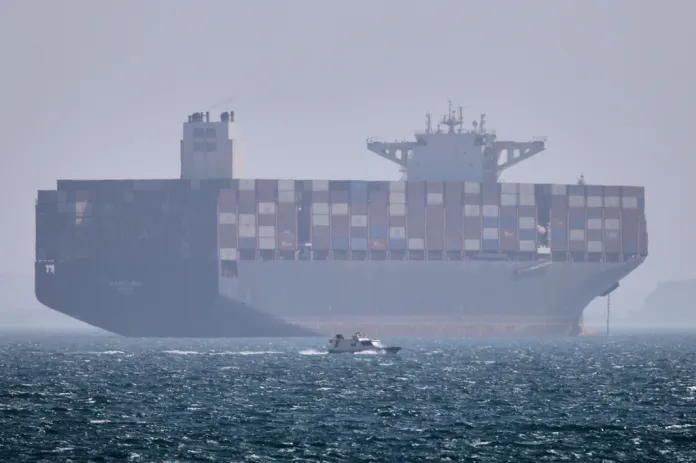
President Donald Trump waived the Jones Act in March, calling it a temporary measure to ease fuel prices after the Iran war cut oil supplies. Prices haven’t fallen, but the market has started recalibrating whether America’s foundational maritime and homeland security law still matters. For most Americans, this feels new. But for the U.S. offshore []
Narrative Intelligence Brief
This article was published by Washington Examiner, a source frequently categorized with a lean right bias based in United States of America. Our narrative intelligence engine continuously monitors coverage from this outlet to track framing, bias, and rhetorical patterns. In this specific piece, our systems detected the potential use of the "Appeal to Fear" technique. This narrative approach is often used to shape reader perception by highlighting specific emotional or rhetorical angles. By understanding the editorial perspective of Washington Examiner, readers can better contextualize the information presented and compare it across our broader media matrix to find the real narrative.
More from Washington Examiner
June 29, 2026
Moscow still has leverage after Armenian election defeat
June 29, 2026
Maine Senate polling stays tight as Platner tries to hammer Collins on abortion
June 29, 2026
The ROAD Act is a detour to housing affordability, not a solution
June 29, 2026
Trump says Iran ‘requested’ meeting after Pezeshkian claims $6 billion in assets will be released
June 29, 2026
Nancy Pelosi to create a new institute at UC Berkeley after retiring from Congress
Reliability Insights
P
Technique: Appeal to Fear
System analysis detected use of specific narrative techniques in this piece.Analysis Methodology
This narrative analysis was generated using the CoDataLab Global Intelligence Engine. Our proprietary AI scans thousands of cross-border sources to identify sentiment patterns, framing techniques, and potential media bias. While AI provides the data-driven foundation, our objective is to empower readers with additional context beyond the standard headline.The content displayed above is a structured summary designed for rapid information processing. For the full original report, please visit the source outlet.More Coverage
Discussion