Today in News History
On June 22, several notable moments in the history of News stand out. In 1932, Prunella Scales, English actress was born. In 1940, Esther Rantzen, English journalist was born. In 1946, Sheila Hollins, Baroness Hollins, English psychiatrist and academic was born. In 1949, Elizabeth Warren, American academic and politician was born. In 1955, Christine Orengo, British academic and educator was born. In 1960, Tracy Pollan, American actress was born. In 1963, Hokutoumi Nobuyoshi, Japanese sumo wrestler, the 61st Yokozuna was born. In 1980, Stephanie Jacobsen, Hong Kong-Australian actress was born. In 1992, Ura Kazuki, Japanese sumo wrestler was born. In 2008, Natalia Bekhtereva, Russian neuroscientist and psychologist (born 1924) passed away. Together, these milestones provide historical context for today's news news and ongoing narratives.
The one change that worked: I saw a woman lift 100kg and decided: ‘I want to do that!’

As a kid, I did my best to avoid exercise. As an adult, I endured it for the sake of my health. Then I set myself a clear goal – and motivation was no longer an issueIt’s fair to say I don’t come from a long line of athletes. When I was growing up in the 1990s, sport was something other people did; we were not a family who cycled, much less jogged. In PE I was the wheezing child hiding behind the bins, pretending I’d twisted an ankle. When I contemplated working out – not often – I had the vague idea it was supposed to turn my body into something other people might find attractive.I evolved from an unsporty child into an unsporty adult. Occasionally, mostly in an attempt to lose weight without having to stop eating croissants, I would attempt something like Couch to 5K, which I’d either abandon after a couple of sessions or see through to the bitter end out of the perverse determination to prove I’d been right all along: exercise was a mug’s game and endorphins an invention of Big Wellness. Continue reading...
Narrative Intelligence Brief
This article was published by Health & wellbeing | The Guardian, a source frequently categorized with a left bias based in United Kingdom. Our narrative intelligence engine continuously monitors coverage from this outlet to track framing, bias, and rhetorical patterns. Our initial algorithmic scan of this specific piece did not flag high-confidence rhetorical techniques, suggesting a generally straightforward reporting style or neutral framing. By understanding the editorial perspective of Health & wellbeing | The Guardian, readers can better contextualize the information presented and compare it across our broader media matrix to find the real narrative.
More from Health & wellbeing | The Guardian
June 22, 2026
World Cup 2026: Cape Verde’s story continues; L’Équipe apologises to Doku over ‘disgusting’ comments – live
June 22, 2026
The pet I’ll never forget: Puff Puff, the stray cat who stayed by my side during chemo
June 22, 2026
Who are ya? Behind the scenes of the official World Cup portrait photographs
June 22, 2026
Paris taxi scam cost £493 but Monzo won’t help me
June 22, 2026
World Cup 2026: Cape Verde continue remarkable story; Messi, Mbappé and Haaland return – live
Analysis Methodology
This narrative analysis was generated using the CoDataLab Global Intelligence Engine. Our proprietary AI scans thousands of cross-border sources to identify sentiment patterns, framing techniques, and potential media bias. While AI provides the data-driven foundation, our objective is to empower readers with additional context beyond the standard headline.The content displayed above is a structured summary designed for rapid information processing. For the full original report, please visit the source outlet.More Coverage
Discussion
"keir starmer"
Breaking! Keir Starmer Steps Down, Trump’s Cuba Threats, Oil Barrel Crisis | PBD #821

Keir Starmer resigns - reaction as it happened | Reuters World News

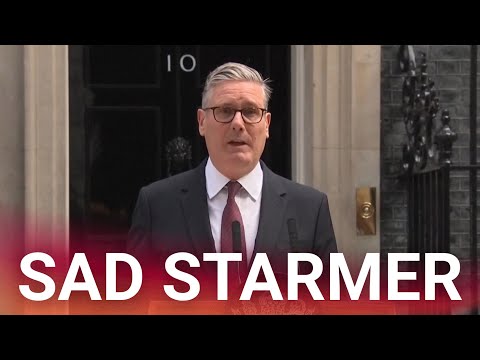
‘Too hard for Starmer’: PM holds back tears as he resigns from office