Today in News History
On June 27, several notable moments in the history of News stand out. In 1350, Manuel II Palaiologos, Byzantine emperor (died 1425) was born. In 1497, Michael An Gof, rebel leader passed away. In 1596, Maximilian, Prince of Dietrichstein (died 1655) was born. In 1927, Prime Minister of Japan Tanaka Giichi convenes an eleven-day conference to discuss Japan's strategy in China. The Tanaka Memorial, a forged plan for world domination, is later claimed to be a secret report leaked from this conference. In 1960, Robert King, English harpsichordist and conductor was born. In 1977, Constitution for the Federation of Earth was adopted by the second session of the World Constituent Assembly, held at Innsbruck, Austria. In 2000, Pierre Pflimlin, French lawyer and politician, Prime Minister of France (born 1907) passed away. In 2007, The Brazilian Military Police invades the favelas of Complexo do Alemão in an episode which is remembered as the Complexo do Alemão massacre. In 2008, In a highly scrutinized election, President of Zimbabwe Robert Mugabe is re-elected in a landslide after his opponent Morgan Tsvangirai had withdrawn a week earlier, citing violence against his party's supporters. In 2024, Kinky Friedman, American country musician (born 1944) passed away. Together, these milestones provide historical context for today's news news and ongoing narratives.
The maestro passes as regime change begins at the Fed
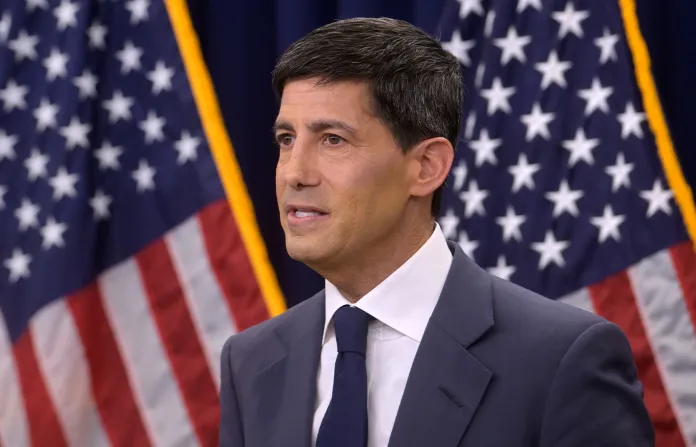
Just five days after Kevin Warsh’s first press conference as Federal Reserve chairman, Alan Greenspan, one of his predecessors, died at age 100. It is, to some extent, a passing of the torch. Warsh made it clear on June 17, in his first interaction with the press, that he is a reform-minded Fed chairman, laser-focused []
Narrative Intelligence Brief
This article was published by Washington Examiner, a source frequently categorized with a lean right bias based in United States of America. Our narrative intelligence engine continuously monitors coverage from this outlet to track framing, bias, and rhetorical patterns. Our initial algorithmic scan of this specific piece did not flag high-confidence rhetorical techniques, suggesting a generally straightforward reporting style or neutral framing. By understanding the editorial perspective of Washington Examiner, readers can better contextualize the information presented and compare it across our broader media matrix to find the real narrative.
More from Washington Examiner
June 27, 2026
Measles is back. Vaccinated children are suffering the consequences, too
June 27, 2026
How socialists took over the Democratic Party
June 27, 2026
Trump-backed Letlow takes on John Fleming in runoff to replace Bill Cassidy
June 27, 2026
Incoming socialist DC mayor has a weak hand against Trump administration
June 27, 2026
One cappuccino, hold the antisemitism, please
Analysis Methodology
This narrative analysis was generated using the CoDataLab Global Intelligence Engine. Our proprietary AI scans thousands of cross-border sources to identify sentiment patterns, framing techniques, and potential media bias. While AI provides the data-driven foundation, our objective is to empower readers with additional context beyond the standard headline.The content displayed above is a structured summary designed for rapid information processing. For the full original report, please visit the source outlet.More Coverage
Discussion