
Today in News History
On July 11, several notable moments in the history of News stand out. In 1302, Battle of the Golden Spurs (Guldensporenslag in Dutch): A coalition around the Flemish cities defeats the king of France's royal army. In 1864, American Civil War: Battle of Fort Stevens; Confederate forces attempt to invade Washington, D.C. In 1882, The British Mediterranean Fleet begins the Bombardment of Alexandria in Egypt as part of the Anglo-Egyptian War. In 1921, A truce in the Irish War of Independence comes into effect. In 1943, World War II: Allied invasion of Sicily: German and Italian troops launch a counter-attack on Allied forces in Sicily. In 1960, Congo Crisis: The State of Katanga breaks away from the Democratic Republic of the Congo. In 1978, Los Alfaques disaster: A truck carrying liquid gas crashes and explodes at a coastal campsite in Tarragona, Spain killing 216 tourists. In 1990, Oka Crisis: First Nations land dispute in Quebec begins. In 1995, Yugoslav Wars: Srebrenica massacre begins; lasts until 22 July. In 2011, Ninety-eight containers of explosives self-detonate killing 13 people in Zygi, Cyprus. Together, these milestones provide historical context for today's news news and ongoing narratives.
The Iran War threatened a food crisis. The next Gulf conflict could do the same.
Modern farming depends on cheap fertilizer. The war made fertilizer more expensive, with ships trapped, fertilizer plants shut down, farmers panicking and world food production thrown into peril. Graphics journalist Travis Hartman breaks down what this means for your grocery bill. #Iran #Fertilizer #StraightofHormuz #Ships #Groceries
Narrative Intelligence Brief
This article was published by Reuters, a source frequently categorized with a center bias based in United Kingdom. Our narrative intelligence engine continuously monitors coverage from this outlet to track framing, bias, and rhetorical patterns. Our initial algorithmic scan of this specific piece did not flag high-confidence rhetorical techniques, suggesting a generally straightforward reporting style or neutral framing. By understanding the editorial perspective of Reuters, readers can better contextualize the information presented and compare it across our broader media matrix to find the real narrative.
More from Reuters
July 11, 2026
Cubans endure second nationwide blackout in a week
July 11, 2026
Collateral damage: The war comes for Iran’s ancient past
July 11, 2026
👰♀️ Dior shows haute couture dresses in Paris after Taylor Swift win
July 11, 2026
Spanish wildfire victims burned in cars while trying to flee
July 11, 2026
Anti-immigrant groups drag people from homes in Johannesburg
Analysis Methodology
This narrative analysis was generated using the CoDataLab Global Intelligence Engine. Our proprietary AI scans thousands of cross-border sources to identify sentiment patterns, framing techniques, and potential media bias. While AI provides the data-driven foundation, our objective is to empower readers with additional context beyond the standard headline.The content displayed above is a structured summary designed for rapid information processing. For the full original report, please visit the source outlet.More Coverage
Discussion
"jayden adams"
World Cup Soccer Player Found Dead at 25

Ramaphosa pays tribute to young sports stars Jayden Adams and Luqobo Makwedini
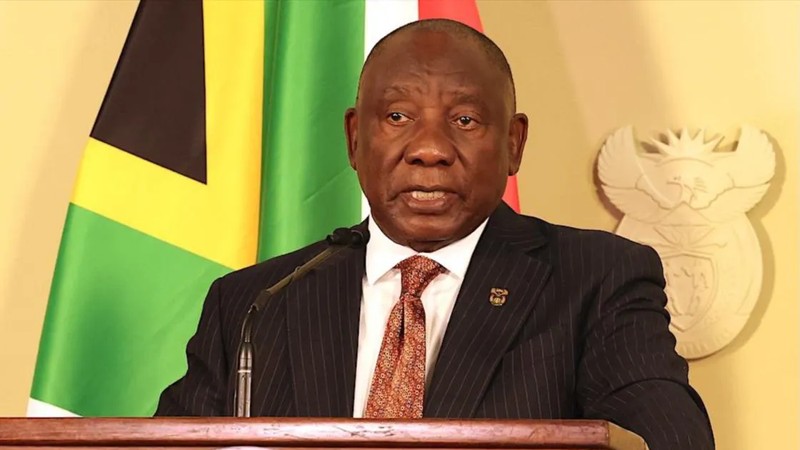
Jayden Adams dead at 25: Tributes flood in after death of South Africa footballer just weeks after playing at 2026 World Cup
