Today in News History
On June 23, several notable moments in the history of News stand out. In 229, Sun Quan proclaims himself emperor of Eastern Wu. In 947, Wang, imperial consort of Later Tang passed away. In 947, Li Congyi, prince of Later Tang (born 931) passed away. In 960, Feng Yanji, chancellor of Southern Tang (born 903) passed away. In 1683, Étienne Fourmont, French orientalist and sinologist (died 1745) was born. In 1806, Mathurin Jacques Brisson, French zoologist and philosopher (born 1723) passed away. In 1912, Alan Turing, English mathematician and computer scientist (died 1954) was born. In 1931, Wiley Post and Harold Gatty take off from Roosevelt Field, Long Island in an attempt to circumnavigate the world in a single-engine plane. In 1943, Vint Cerf, American computer scientist and Internet pioneer was born. In 2013, Kurt Leichtweiss, German mathematician and academic (born 1927) passed away. Together, these milestones provide historical context for today's news news and ongoing narratives.
The I Ching, Leibniz and AI: how old China-West links shaped modern science
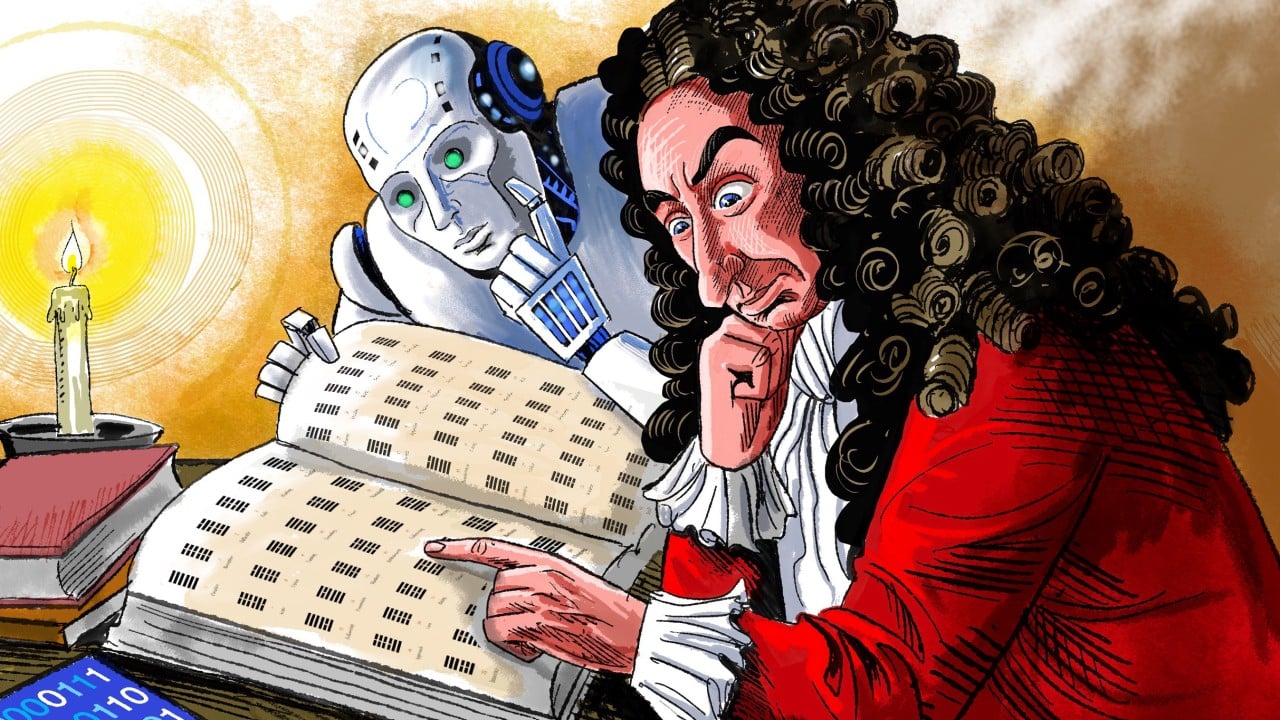
The advent of artificial intelligence (AI) appears sudden and revolutionary, yet its origins stretch deep into history, revealing a profound and forgotten intellectual exchange between China and the West. Long before Alan Turing, Claude Shannon, or even Charles Babbage and Ada Lovelace, there was Gottfried Wilhelm Leibniz – the German polymath born exactly 380 years ago next week. Among his monumental contributions to science is the binary numeral system, which serves as the bedrock of modern...
Narrative Intelligence Brief
This article was published by South China Morning Post, a source frequently categorized with a lean left bias based in Hong Kong. Our narrative intelligence engine continuously monitors coverage from this outlet to track framing, bias, and rhetorical patterns. Our initial algorithmic scan of this specific piece did not flag high-confidence rhetorical techniques, suggesting a generally straightforward reporting style or neutral framing. By understanding the editorial perspective of South China Morning Post, readers can better contextualize the information presented and compare it across our broader media matrix to find the real narrative.
More from South China Morning Post
June 23, 2026
Malaysian woman’s moving hospital honour walk spurs conversation on organ donation
June 23, 2026
Hong Kong needs visionaries to run Kai Tak Cruise Terminal: Rosanna Law
June 23, 2026
How Hong Kong plans to tap popular films, historic buildings to lure tourists
June 23, 2026
North Korea’s Kim says ‘defeated’ Japan transforming into a ‘war state’
June 23, 2026
China zoo offers US$15,000 annual salary for bear costume performer with strict silence clause
Analysis Methodology
This narrative analysis was generated using the CoDataLab Global Intelligence Engine. Our proprietary AI scans thousands of cross-border sources to identify sentiment patterns, framing techniques, and potential media bias. While AI provides the data-driven foundation, our objective is to empower readers with additional context beyond the standard headline.The content displayed above is a structured summary designed for rapid information processing. For the full original report, please visit the source outlet.More Coverage
Discussion
"trump"
Trump’s Surrender Humiliation Deepens With Brutal Poll

Most Americans skeptical of Trump’s Iran deal: Poll

Chicago Mayor ignores another bloody weekend to focus on something called a, quote, “Transfemicide State of Emergency"