Today in News History
On June 24, several notable moments in the history of News stand out. In 843, The Vikings sack the French city of Nantes. In 1907, Arseny Tarkovsky, Russian poet and translator (died 1989) was born. In 1917, David Easton, Canadian-American political scientist and academic (died 2014) was born. In 1924, Yoshito Takamine, American politician (died 2015) was born. In 1945, The first Victory Day Parade takes place on Red Square in Moscow, Soviet Union, symbolizing the victory of the Soviet Union over Nazi Germany. In 1948, Cold War: Start of the Berlin Blockade: The Soviet Union makes overland travel between West Germany and West Berlin impossible. In 1963, The United Kingdom grants Zanzibar internal self-government. In 1989, Jiang Zemin succeeds Zhao Ziyang to become the General Secretary of the Chinese Communist Party after the 1989 Tiananmen Square protests and massacre. In 1995, Andrew J. Transue, American politician and attorney Morissette v. United States (born 1903) passed away. In 2013, Former Italian Prime Minister Silvio Berlusconi is found guilty of abusing his power and engaging in sex with an underage prostitute, and is sentenced to seven years in prison. Together, these milestones provide historical context for today's news news and ongoing narratives.
'The Humiliation Just Compounds': Trump Tells Netanyahu Not to Bomb Iran, Then Israel Strikes Anyway
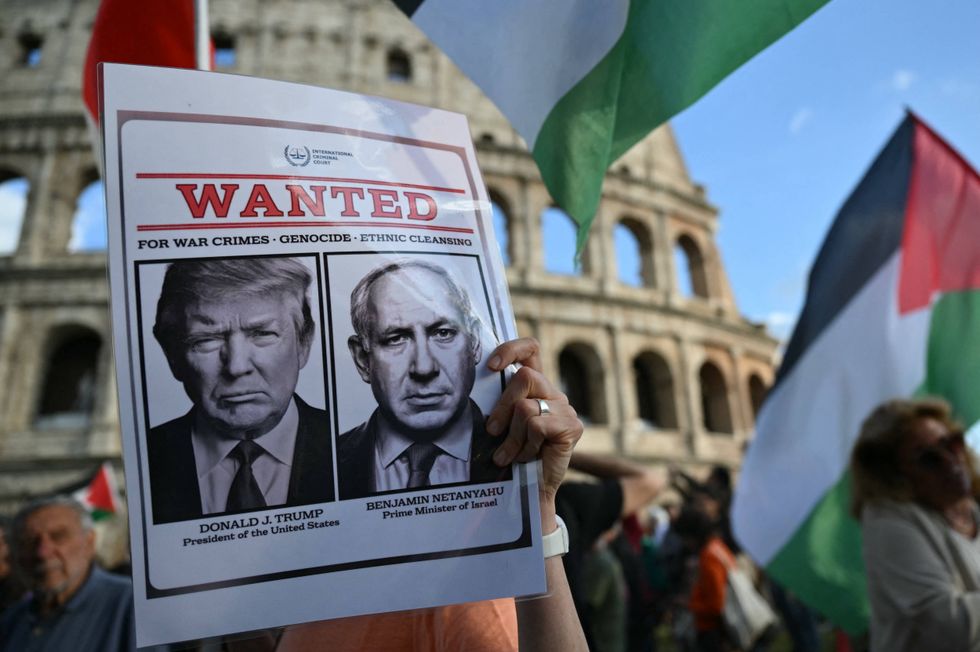
The Israeli military bombed Iran on Monday shortly after US President Donald Trump urged Israeli Prime Minister Benjamin Netanyahu not to respond to an Iranian missile barrage, which came in retaliation for Israel's earlier bombing of Beirut.I am going to call Bibi right now and tell him not to retaliate, Trump told Axios on Sunday, noting that the Iranian strikes did not appear to cause any injuries. Each of them had their fun. Israel had its strike, and Iran had its strike. We don't need another one.Iran's missile attack on Israel was the first since a tenuous ceasefire agreement took effect in early April, and the exchange intensified concerns of a return to full-blown regional war. Iran's Foreign Ministry said the Sunday strikes were a defensive response to the Israeli military's bombing of southern Beirut as well as Israel’s persistent breaches of the April ceasefire, including its collaboration with the US military in attacks on Iranian ships and targets in southern Iran over the past two weeks.The Israel Defense Forces vowed to continue to operate all across Lebanon and said it would not allow fire toward Israel.Esmail Baghaei, a spokesperson for Iran's Foreign Ministry, said during a press conference on Monday that despite Trump's public comments, no one in the region believes that Israel attacked Lebanon or Iran without prior coordination and cooperation with the United States.The United States bears responsibility as a party to the April 8 ceasefire understanding, said Baghaei. Whatever happens in the region, whether the US itself violates the ceasefire by attacking Iranian commercial ships or targeting southern parts of the country, or whether violations are carried out through the Zionist regime in Lebanon with US complicity, the direct responsibility of the United States is clear, and the consequences of any escalation will also fall on Washington.”Trump told the Financial Times following Iran's missile attack on Israel that he did not believe it would undercut the prospects of a diplomatic agreement. The US president also said Netanyahu would have no choice but to accept any agreement the Trump administration reaches with Iran, declaring: I call the shots. I call all the shots. [Netanyahu] doesn't call the shots.But critics of Trump's illegal and costly war of choice in Iran, which he launched in coordination with Israel in late February, said Netanyahu's swift defiance of the president's call for restraint underscored how disastrous the conflict has been for the US.This war has been humiliating for Trump and American power generally, US Sen. Chris Murphy (D-Conn.) wrote on social media. And when Trump announces he is going to call Netanyahu and tell him not to retaliate, and within hours Netanyahu retaliates, the humiliation just compounds.Trita Parsi, executive vice president of the Quincy Institute for Responsible Statecraft, wrote in a blog post following the Israeli attack on Iran that Trump appears unwilling to spend the political capital necessary to rein in Netanyahu—beyond angry phone calls and tough public statements—unless he knows that he has a deal with Iran.From Trump’s perspective, it is only worth doing if an agreement with Iran is already secured. In short, Trump is willing to restrain Israel to preserve a deal, but not to obtain one. Iran, however, wants evidence that Trump can restrain Israel before agreeing to a deal, Parsi wrote. As a result, the most likely scenario is another round of Iranian and Israeli strikes, with Trump declining to meaningfully constrain Israel.The National Iranian American Council noted that Iran's leadership has already threatened a broader and more destructive campaign in response to Israel's strikes.The coming 24 to 72 hours will likely determine whether this becomes a contained crisis or the beginning of a new phase in the regional conflict, the group added.
Narrative Intelligence Brief
This article was published by Common Dreams, a source frequently categorized with a left bias based in United States of America. Our narrative intelligence engine continuously monitors coverage from this outlet to track framing, bias, and rhetorical patterns. Our initial algorithmic scan of this specific piece did not flag high-confidence rhetorical techniques, suggesting a generally straightforward reporting style or neutral framing. By understanding the editorial perspective of Common Dreams, readers can better contextualize the information presented and compare it across our broader media matrix to find the real narrative.
More from Common Dreams
June 23, 2026
'End It Now': Senate Passes War Powers Resolution Rebuking Trump's Iran War
June 23, 2026
Fearing Mass Job Loss, Working-Class US Voters Believe Government Must Act to Prevent Economic Disaster
June 23, 2026
More Than 5 Million People Have Lost Health Coverage Under Trump-GOP Law
June 23, 2026
UN Commission Finds 30 Percent of People Killed in Gaza Genocide Were Children
June 23, 2026
UN Commission Finds 30 Percent of Those Killed in Gaza Genocide Were Children
Analysis Methodology
This narrative analysis was generated using the CoDataLab Global Intelligence Engine. Our proprietary AI scans thousands of cross-border sources to identify sentiment patterns, framing techniques, and potential media bias. While AI provides the data-driven foundation, our objective is to empower readers with additional context beyond the standard headline.The content displayed above is a structured summary designed for rapid information processing. For the full original report, please visit the source outlet.More Coverage
Discussion