Today in News History
On July 2, several notable moments in the history of News stand out. In 1648, Arp Schnitger, German organ builder (died 1719) was born. In 1834, Hendrick Peter Godfried Quack, Dutch economist and historian (died 1917) was born. In 1946, Richard Axel, American neuroscientist and biologist, Nobel Prize laureate was born. In 1947, Ann Taylor, Baroness Taylor of Bolton, English politician, Minister for International Security Strategy was born. In 1961, Ernest Hemingway, American novelist, short story writer, and journalist, Nobel Prize laureate (born 1899) passed away. In 1966, France conducts its first nuclear weapon test in the Pacific, on Moruroa Atoll. In 1985, Chad Henne, American football player was born. In 2013, Anthony Llewellyn, Welsh-American chemist, academic, and astronaut (born 1933) passed away. In 2014, Manuel Cardona, Spanish physicist and academic (born 1934) passed away. In 2014, Harold W. Kuhn, American mathematician and academic (born 1925) passed away. Together, these milestones provide historical context for today's news news and ongoing narratives.
The Hen Report: “Depending on Who You Ask” | NAMs, Animal-Free Science & the Future of Lab Research

In this episode of The Hen Report, Jasmin Singer and Mariann Sullivan welcome flock member and postdoctoral researcher Neha Nataraj from the Perelman School of Medicine at the University of Pennsylvania. Neha attended the Johns Hopkins/PCRM Summer Immersion on Innovative Approaches in Science — a free, four-day conference focused on reducing and replacing animal use in biomedical research and toxicology —
Narrative Intelligence Brief
This article was published by Our Hen House, a source frequently categorized with a center bias based in United States of America. Our narrative intelligence engine continuously monitors coverage from this outlet to track framing, bias, and rhetorical patterns. Our initial algorithmic scan of this specific piece did not flag high-confidence rhetorical techniques, suggesting a generally straightforward reporting style or neutral framing. By understanding the editorial perspective of Our Hen House, readers can better contextualize the information presented and compare it across our broader media matrix to find the real narrative.
More from Our Hen House
July 2, 2026
The Hen Report: “It Doesn’t Seem Fair” | Animal Cruelty Laws, SCOTUS & Constitutional Rights for Animals
June 30, 2026
Chickens Sue Back, Canada Fumbles, and Cows Are Overheating | Rising Anxieties
June 23, 2026
Eggs, Ballots, and Manure Pits: Animal Agriculture’s Worst Week (Again) | Rising Anxieties
June 26, 2026
Wayne Hsiung’s Landmark Animal Rescue Appeal Wins Some, Loses Some: What It Means for the Right to Rescue
June 19, 2026
Can Finance Activism End Factory Farming? AI, Divestment, and Animal Advocacy with Richie Richardson
Analysis Methodology
This narrative analysis was generated using the CoDataLab Global Intelligence Engine. Our proprietary AI scans thousands of cross-border sources to identify sentiment patterns, framing techniques, and potential media bias. While AI provides the data-driven foundation, our objective is to empower readers with additional context beyond the standard headline.The content displayed above is a structured summary designed for rapid information processing. For the full original report, please visit the source outlet.More Coverage
Discussion
"cup"
Markwayne Mullin’s celebration of Iran’s World Cup exit is worse than poor sportsmanship

The 2026 FIFA World Cup… or World War II in Disguise?
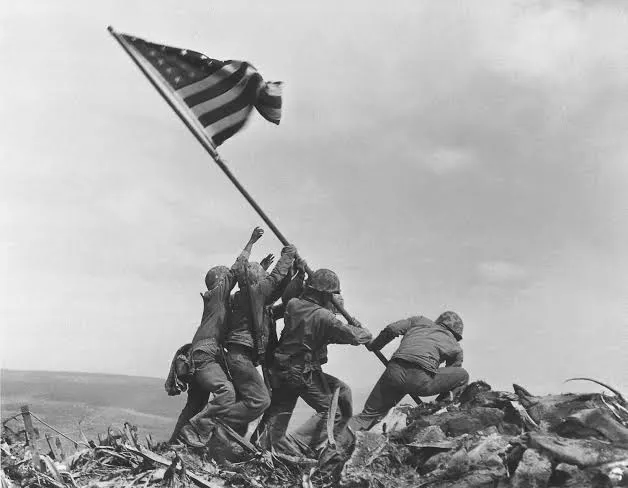
Fans Erupt After Team USA’s Star Player Ejected On Controversial Call