
Today in News History
On July 12, several notable moments in the history of News stand out. In 1477, Jacopo Sadoleto, Italian cardinal (died 1547) was born. In 1789, In response to the dismissal of the French finance minister Jacques Necker, the radical journalist Camille Desmoulins gives a speech which results in the storming of the Bastille two days later. In 1917, The Bisbee Deportation occurs as vigilantes kidnap and deport nearly 1,300 striking miners and others from Bisbee, Arizona. In 1961, ČSA Flight 511 crashes at Casablanca-Anfa Airport in Morocco, killing 72. In 1967, Riots begin in Newark, New Jersey. In 1969, Chantal Jouanno, French politician, French Minister of Youth Affairs and Sports was born. In 1995, Chinese seismologists successfully predict the 1995 Myanmar-China earthquake, reducing the number of casualties to 11. In 2006, The 2006 Lebanon War begins. In 2012, A tank truck explosion kills more than 100 people in Okobie, Nigeria. In 2014, Alfred de Grazia, American political scientist and author (born 1919) passed away. Together, these milestones provide historical context for today's news news and ongoing narratives.
The fragility of the world’s economic resilience

Are we invulnerable or just plain lucky?
Narrative Intelligence Brief
This article was published by Financial Times, a source frequently categorized with a center bias based in United Kingdom. Our narrative intelligence engine continuously monitors coverage from this outlet to track framing, bias, and rhetorical patterns. Our initial algorithmic scan of this specific piece did not flag high-confidence rhetorical techniques, suggesting a generally straightforward reporting style or neutral framing. By understanding the editorial perspective of Financial Times, readers can better contextualize the information presented and compare it across our broader media matrix to find the real narrative.
More from Financial Times
July 12, 2026
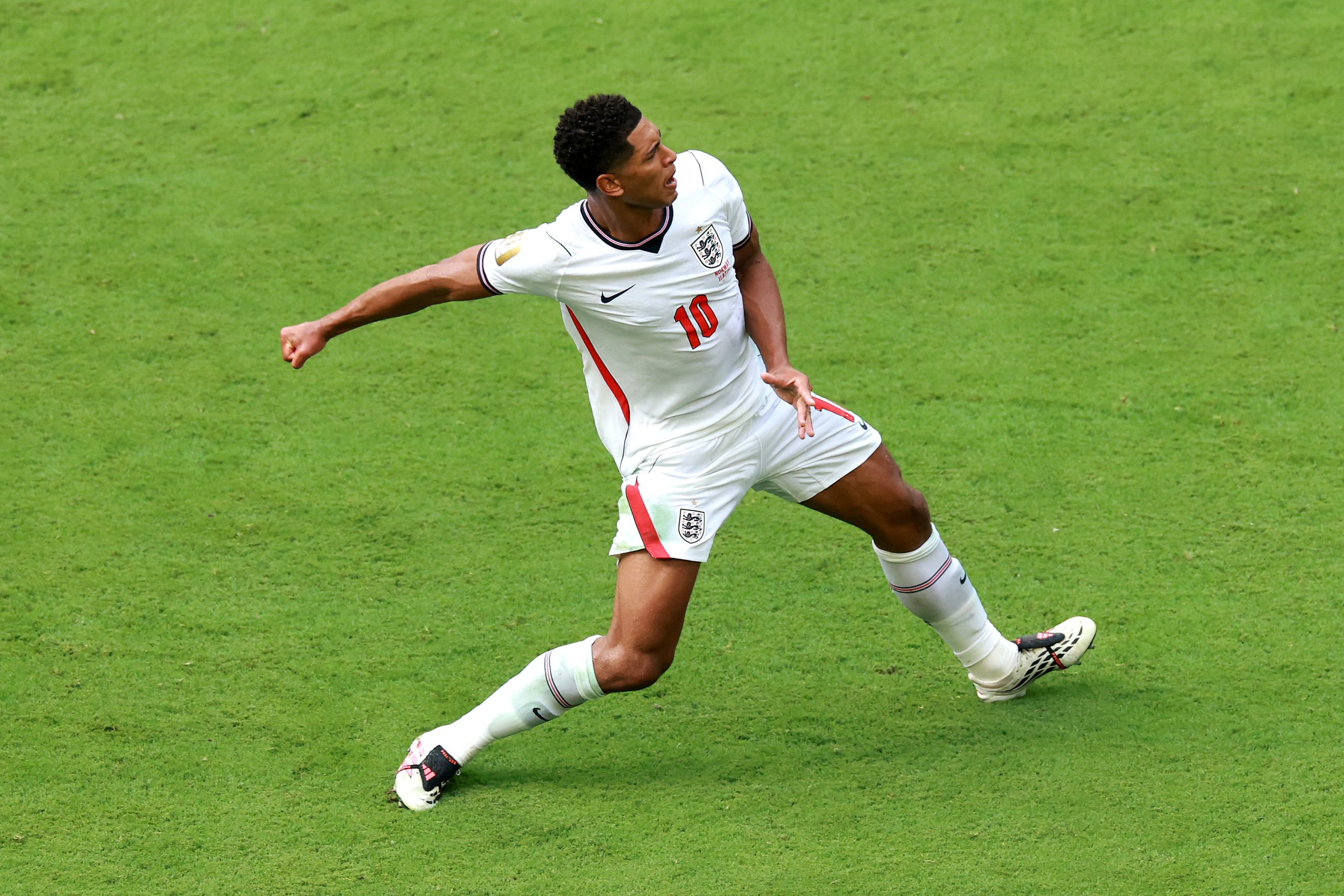
Bellingham brace carries England past Norway into World Cup semi-final
July 12, 2026
US launches more strikes after Iran declares Strait of Hormuz closed
July 12, 2026
US strikes again after Iran declares Strait of Hormuz closed
July 11, 2026
Christopher Harborne suffered serious medical issues while donating £12mn to Reform UK
July 11, 2026
How AI rebrands fail to deliver a lasting share price boost
Analysis Methodology
This narrative analysis was generated using the CoDataLab Global Intelligence Engine. Our proprietary AI scans thousands of cross-border sources to identify sentiment patterns, framing techniques, and potential media bias. While AI provides the data-driven foundation, our objective is to empower readers with additional context beyond the standard headline.The content displayed above is a structured summary designed for rapid information processing. For the full original report, please visit the source outlet.More Coverage
Discussion
"jude bellingham"
Tuchel angry at 'lucky' and 'sloppy' England – can 'mentality' be enough?

Tuchel angry at 'lucky' and 'sloppy' England – can 'mentality' be enough?

2026 World Cup Golden Boot Odds: Jude Bellingham Skyrockets After Brace
How other outlets are covering this story
Compare narratives across 6 related reports from 6 sources. Real Narrative News aggregates the coverage spectrum so you can see who emphasises what — bias tags reflect the outlet, not the story.
Coverage bias distribution
6 sources
Left 17%
Center 33%
Right 33%
Seeking Alpha
· Jul 3, 2026
The Weakness In The Economy Cannot Be Ignored Any Longer
The Weakness In The Economy Cannot Be Ignored Any Longer
The Economic Times
· Jun 22, 2026
Global economy fragile despite US-Iran truce: RBI
Global economy fragile despite US-Iran truce: RBI
Le Monde
· Jun 22, 2026
Branko Milanovic, economist: 'There will be no return to neoliberal ideology'
Asian shock, Western decline and the rise of national-liberalism: The expert on global inequality analyzes the fractures of modern capitalism in an interview with Le Monde.
MyJoyOnline
· Jul 2, 2026
No pay, no drains: How Mahama’s inflation obsession cut spending and stalled Accra’s mega flood project
Macroeconomic stability isn’t just low inflation. It is resilient cities with good roads and drains that work when it rains. It’s paying contractors on time so the work is done before the clouds gather to give real meaning to macroeconomic gains.
ANTARA News
· Jul 6, 2026
Building food self-sufficiency with 'three-network' collaboration
A nation's resilience is measured not only by its economic growth but also by its ability to ensure that every ...
Guineematin.com
· Jul 5, 2026
Épargner aujourd’hui pour mieux vivre demain : ces précieux conseils de l’économiste Abdoulaye Soumah
Face à l’augmentation du coût de la vie et aux incertitudes économiques, l’épargne apparaît de plus en plus comme un levier essentiel pour assurer sa stabilité financière. Pourtant, de nombreuses personnes, notamment les jeunes, peinent encore à intégrer cette habitude dans leur quotidien. Pour mieux comprendre les enjeux, Guineematin.com a interrogé ce vendredi, 3 juillet [] The post Épargner aujourd’hui pour mieux vivre demain : ces précieux conseils de l’économiste Abdoulaye Soumah first appeared on Guineematin.com.
Topics:
Related coverage for "The fragility of the world’s economic resilience": Seeking Alpha — The Weakness In The Economy Cannot Be Ignored Any Longer. The Economic Times — Global economy fragile despite US-Iran truce: RBI . Le Monde — Branko Milanovic, economist: 'There will be no return to neoliberal ideology'. MyJoyOnline — No pay, no drains: How Mahama’s inflation obsession cut spending and stalled Accra’s mega flood project. ANTARA News — Building food self-sufficiency with 'three-network' collaboration. Guineematin.com — Épargner aujourd’hui pour mieux vivre demain : ces précieux conseils de l’économiste Abdoulaye Soumah