
Today in News History
On July 12, several notable moments in the history of News stand out. In 70, The armies of Titus attack the walls of Jerusalem after a six-month siege. Three days later they breach the walls, which enables the army to destroy the Second Temple. In 1913, Willis Lamb, American physicist and academic, Nobel Prize laureate (died 2008) was born. In 1917, The Bisbee Deportation occurs as vigilantes kidnap and deport nearly 1,300 striking miners and others from Bisbee, Arizona. In 1935, Satoshi Ōmura, Japanese biochemist and academic, Nobel Prize laureate was born. In 1947, Richard C. McCarty, American psychologist and academic was born. In 1962, Julio César Chávez, Mexican boxer was born. In 1977, Marco Silva, Portuguese football manager was born. In 1988, Inbee Park, South Korean golfer was born. In 1995, Chinese seismologists successfully predict the 1995 Myanmar-China earthquake, reducing the number of casualties to 11. In 2002, Nico Williams, Spanish footballer was born. Together, these milestones provide historical context for today's news news and ongoing narratives.
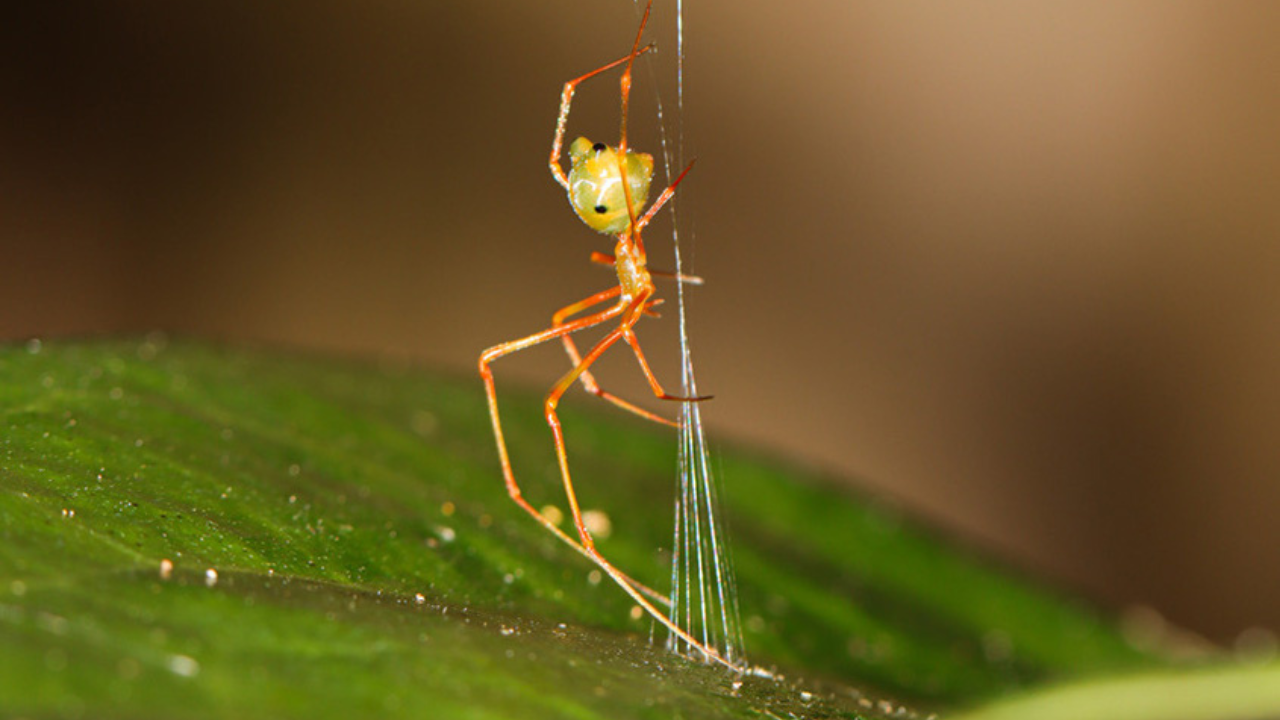
The 'ballista spider': Scientists discover a tiny spider that launches ants with 140 times the force of gravity
Narrative Intelligence Brief
This article was published by Times of India, a source frequently categorized with a lean right bias based in India. Our narrative intelligence engine continuously monitors coverage from this outlet to track framing, bias, and rhetorical patterns. Our initial algorithmic scan of this specific piece did not flag high-confidence rhetorical techniques, suggesting a generally straightforward reporting style or neutral framing. By understanding the editorial perspective of Times of India, readers can better contextualize the information presented and compare it across our broader media matrix to find the real narrative.
More from Times of India
July 12, 2026
Why US, EU and 13 nations are backing 2016 South China Sea ruling against Beijing's claims
July 12, 2026
Watch: Bison flings man eight feet into air in dramatic attack at US Yellowstone National Park
July 12, 2026
Former UK politician Ann Widdecombe murder probe: Police arrest 28-year-old man
July 12, 2026
Qatar’s former Emir Sheikh Hamad bin Khalifa Al Thani passes away at 74
July 12, 2026
Canada gives share of bridge profits to US to get Trump nod
Analysis Methodology
This narrative analysis was generated using the CoDataLab Global Intelligence Engine. Our proprietary AI scans thousands of cross-border sources to identify sentiment patterns, framing techniques, and potential media bias. While AI provides the data-driven foundation, our objective is to empower readers with additional context beyond the standard headline.The content displayed above is a structured summary designed for rapid information processing. For the full original report, please visit the source outlet.More Coverage
Discussion
"cup semifinal"
Former Spanish PM Mariano Rajoy makes racist remarks about France's football team

[Photo] JUST IN: 🇦🇷 Argentina officially advances to the FIFA World Cup semifinal after defeat [...]

Argentina's hero: "We are just two steps away from the goal"

How other outlets are covering this story
Compare narratives across 6 related reports from 6 sources. Real Narrative News aggregates the coverage spectrum so you can see who emphasises what — bias tags reflect the outlet, not the story.
Coverage bias distribution
6 sources
Left 33%
Center 50%
Right 17%
New Scientist
· Jun 22, 2026
New-to-science spider builds trap that flings ants into the air
A spider living in the rainforests of Queensland, Australia, builds a snare trap reminiscent of a Roman-era ballista weapon that it uses to catapult green tree ants into a web 30 centimetres above
MyJoyOnline
· Jun 23, 2026
Spider which uses spring trap to capture prey discovered in Australia
A new species of spider that weaves a catapult-like silk trap to snare a single ant species has been discovered in the remote rainforests of northern Australia.
BoingBoing
· Jul 3, 2026
This spider flings ants 30 centimeters into its trap
A newly described spider in North Queensland rainforest hunts exactly one prey species — the green tree ant, an insect so aggressive most predators avoid it — by building a silk trap that flings the ant into its web. Macquarie University researchers, writing in Current Biology, found the spider builds a cone of 15 to 60 bundled silk lines near the ground, coats it with a pheromone that lures worker ants into biting it, then retreats. — Read the rest The post This spider flings ants 30 centimeters into its trap appeared first on Boing Boing.
Jezebel
· Jun 24, 2026
Newly Discovered Spider Uses a Web Catapult to Launch Ants Into the Air
The ants launched by this spider catapult apparently experience 15 times the G-force felt by fighter jet pilots.
Times of India
· Jul 3, 2026
Scientists found a spider in the Amazon that looks like a parasitic fungus so perfectly they first mistook it for a mushroom
In a groundbreaking discovery in Ecuador's Amazon, scientists have identified a unique spider species, Taczanowskia waska, which artfully impersonates a fungus that preys on spiders. This exceptional adaptation combines pale hues, fungus-like appendages, and a still demeanor that interlaces it seamlessly within its environment, deceiving even seasoned researchers. Highlighted through citizen science, this discovery underscores the complex survival tactics in nature and the enigmatic diversity of rainforests.
Smithsonian Magazine
· Jun 24, 2026
This Newly Discovered Spider Builds a Unique Web That Catapults Ants Through the Air
Flung prey can reach speeds of up to 14.4 feet per second, or a little less than ten miles per hour. An insect will land in the spider's main web about a foot above the spring-loaded trap
Topics:
Related coverage for "The 'ballista spider': Scientists discover a tiny spider that launches ants with 140 times the force of gravity": New Scientist — New-to-science spider builds trap that flings ants into the air. MyJoyOnline — Spider which uses spring trap to capture prey discovered in Australia. BoingBoing — This spider flings ants 30 centimeters into its trap. Jezebel — Newly Discovered Spider Uses a Web Catapult to Launch Ants Into the Air. Times of India — Scientists found a spider in the Amazon that looks like a parasitic fungus so perfectly they first mistook it for a mushroom. Smithsonian Magazine — This Newly Discovered Spider Builds a Unique Web That Catapults Ants Through the Air