Today in News History
On July 2, several notable moments in the history of News stand out. In 1566, Nostradamus, French astrologer and author (born 1503) passed away. In 1621, Thomas Harriot, English astronomer, mathematician, and ethnographer (born 1560) passed away. In 1921, World War I: U.S. President Warren G. Harding signs the Knox-Porter Resolution formally ending the war between the United States and Germany. In 1924, Chia-ying Yeh, Chinese-born Canadian poet and sinologist (died 2024) was born. In 1939, John H. Sununu, American engineer and politician, 14th White House Chief of Staff was born. In 1954, Chris Huhne, English journalist and politician, Secretary of State for Energy and Climate Change was born. In 2013, The International Astronomical Union names Pluto's fourth and fifth moons, Kerberos and Styx. In 2014, Harold W. Kuhn, American mathematician and academic (born 1925) passed away. In 2014, Louis Zamperini, American runner and World War II US Army Air Forces captain (born 1917) passed away. In 2015, Jacobo Zabludovsky, Mexican journalist (born 1928) passed away. Together, these milestones provide historical context for today's news news and ongoing narratives.
Sun is setting on US dominance of the world, scholar Wu Xinbo says
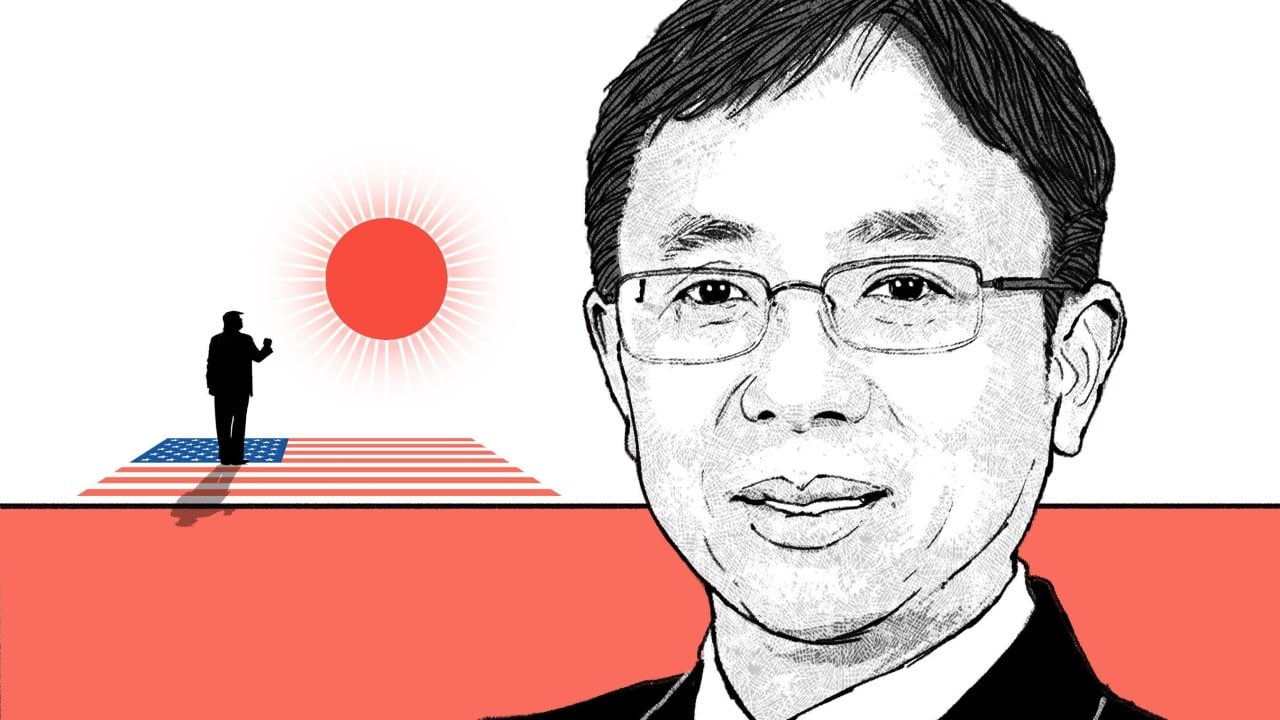
Wu Xinbo is the dean of the Institute of International Studies at Fudan University in Shanghai and a leading Chinese researcher on the US. In this interview, he analyses how shifts in US foreign policy are changing the relationship between the two countries. SCMP Plus readers get early access to articles in the Open Questions series. As the United States celebrates its 250th anniversary, how do you assess US foreign policy and the future direction of its relations with China? Simply put, US...
Narrative Intelligence Brief
This article was published by South China Morning Post, a source frequently categorized with a lean left bias based in Hong Kong. Our narrative intelligence engine continuously monitors coverage from this outlet to track framing, bias, and rhetorical patterns. Our initial algorithmic scan of this specific piece did not flag high-confidence rhetorical techniques, suggesting a generally straightforward reporting style or neutral framing. By understanding the editorial perspective of South China Morning Post, readers can better contextualize the information presented and compare it across our broader media matrix to find the real narrative.
More from South China Morning Post
July 2, 2026
China can help Ukraine recover from war and advance industry, ambassador says
July 2, 2026
Why Hong Kong has become the worst-performing major stock market
July 2, 2026
China food-security risks worsen as extreme weather becomes more common
July 2, 2026
Inside CXMT’s US$4.3b IPO: soaring profits meet US export threat and high-stakes HBM race
July 2, 2026
Unmarried Indonesian couple get 21 lashes each over viral live stream kiss
Analysis Methodology
This narrative analysis was generated using the CoDataLab Global Intelligence Engine. Our proprietary AI scans thousands of cross-border sources to identify sentiment patterns, framing techniques, and potential media bias. While AI provides the data-driven foundation, our objective is to empower readers with additional context beyond the standard headline.The content displayed above is a structured summary designed for rapid information processing. For the full original report, please visit the source outlet.More Coverage
Discussion
"trump"
Disturbing Reality of Trump’s Huge July 4 Fireworks Display Exposed

USMCA Was Once Trump’s Brainchild. Now, It’s a Dead Deal Walking.

Trump DOJ Sues Gavin Newsom’s California Over Glock Ban