
Today in News History
On July 12, several notable moments in the history of News stand out. In 1960, Congo Crisis: The State of Katanga breaks away from the Democratic Republic of the Congo. In 1960, France legislates for the independence of Dahomey (later Benin), Upper Volta (later Burkina Faso) and Niger. In 1968, Michael Geist, Canadian journalist and academic was born. In 1978, Los Alfaques disaster: A truck carrying liquid gas crashes and explodes at a coastal campsite in Tarragona, Spain killing 216 tourists. In 1978, Massimiliano Rosolino, Italian swimmer was born. In 1983, A TAME airline Boeing 737-200 crashes near Cuenca, Ecuador, killing all 119 passengers and crew on board. In 1990, Oka Crisis: First Nations land dispute in Quebec begins. In 2006, Mumbai train bombings: 209 people are killed in a series of bomb attacks in Mumbai, India. In 2010, Spain defeats the Netherlands to win the 2010 FIFA World Cup in Johannesburg. In 2010, The Islamist militia group Al-Shabaab carries out multiple suicide bombings in Kampala, Uganda, killing 74 people and injuring 85 others. Together, these milestones provide historical context for today's news news and ongoing narratives.
South Africa: Blaming Migrants Ignores the Real Causes of South Africa's Economic Crisis
Narrative Analysis: Appeal to Fear
[The Conversation Africa] South Africa is in the midst of its most significant anti-immigrant mobilisation in years.
Narrative Intelligence Brief
This article was published by AllAfrica, a source frequently categorized with a lean left bias based in South Africa. Our narrative intelligence engine continuously monitors coverage from this outlet to track framing, bias, and rhetorical patterns. In this specific piece, our systems detected the potential use of the "Appeal to Fear" technique. This narrative approach is often used to shape reader perception by highlighting specific emotional or rhetorical angles. By understanding the editorial perspective of AllAfrica, readers can better contextualize the information presented and compare it across our broader media matrix to find the real narrative.
More from AllAfrica
July 11, 2026
Africa: The African Union's Corruption Wake-Up Call - Is This the Beginning of Renewal or Just Another Speech?
July 10, 2026
Nigeria: Breaking - Kidnapped Oyo Pupils, Teachers Freed
July 10, 2026
Nigeria: APC Retains Shettima As Tinubu's Running Mate Ahead of 2027 Election
July 10, 2026
West Africa: BRVM Sees Notable Upward Moves - Ecobank Transnational Inc Leads With +36.17 Percent Gain
July 10, 2026
South Sudan: South Sudan - UN Acts Ahead of Drought to Protect Thousands
Reliability Insights
P
Technique: Appeal to Fear
System analysis detected use of specific narrative techniques in this piece.Analysis Methodology
This narrative analysis was generated using the CoDataLab Global Intelligence Engine. Our proprietary AI scans thousands of cross-border sources to identify sentiment patterns, framing techniques, and potential media bias. While AI provides the data-driven foundation, our objective is to empower readers with additional context beyond the standard headline.The content displayed above is a structured summary designed for rapid information processing. For the full original report, please visit the source outlet.More Coverage
Discussion
"cup semifinal"
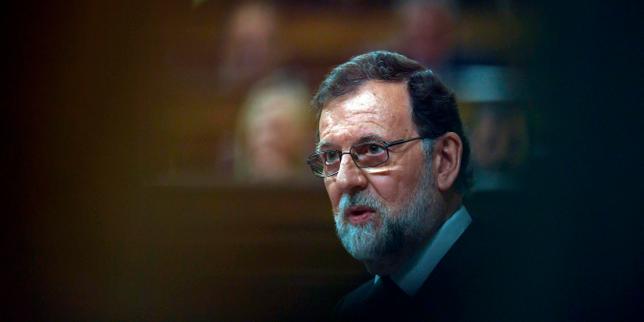
Former Spanish PM Mariano Rajoy makes racist remarks about France's football team
[Photo] JUST IN: 🇦🇷 Argentina officially advances to the FIFA World Cup semifinal after defeat [...]

Argentina's hero: "We are just two steps away from the goal"

How other outlets are covering this story
Compare narratives across 6 related reports from 6 sources. Real Narrative News aggregates the coverage spectrum so you can see who emphasises what — bias tags reflect the outlet, not the story.
Coverage bias distribution
6 sources
Left 17%
Center 50%
Right 33%
TRT World
· Jul 10, 2026
South Africans Rally to Protect Migrants Amid Xenophobic Protests
Following a wave of anti-migrant protests in South Africa, documented migrants are also becoming targets. TRT World's Thuso Khumalo reports from Johannesburg, where community groups and concerned citizens are working to protect vulnerable foreign nationals, oppose xenophobia and Afrophobia, and ensure immigration laws are enforced without violence.
Arise News
· Jun 30, 2026
Femi Otunbanjo: South Africa’s Xenophobia Has Become A Mob Reaction To Socioeconomic Problems
Otunbanjo says South Africans blame foreigners for unemployment, crime and worsening socioeconomic conditions.
The Namibian
· Jul 3, 2026
The economy of hatred: What the anti-migrant wave tells us about SA’s broken economic model
Decades of economic failure has created genuine desperation, into which an ideological campaign by mainstream economic actors has injected the false idea that we are trapped in a world of scarcity. And into this world political entrepreneurs have inserted the figure of the migrant as the illegitimate queue-jumper. In recent weeks South Africa has experienced [] The post The economy of hatred: What the anti-migrant wave tells us about SA’s broken economic model appeared first on The Namibian.
BizNews
· Jul 3, 2026
The migrant scapegoat: Why SA's real crisis isn't foreigners
The migrant scapegoat: Why SA's real crisis isn't foreigners
South Africa Today
· Jul 1, 2026
South Africa Migration Crisis: Wits Expert Unpacks the Link Between Foreign Workers and Unemployment
JOHANNESBURG, Gauteng — As the South Africa migration crisis continues to dominate political and economic discourse, the relationship between foreign workers and local joblessness remains a highly contested issue. With the nation’s economic landscape strained by persistently high unemployment, the influx of regional migrants seeking better opportunities has become a volatile touchpoint. However, experts are urging []
Independent Online
· Jul 7, 2026
Refugees in Durban: Seeking safety and shelter amidst adversity
Refugees in Durban: Seeking safety and shelter amidst adversity
Topics:
Related coverage for "South Africa: Blaming Migrants Ignores the Real Causes of South Africa's Economic Crisis": TRT World — South Africans Rally to Protect Migrants Amid Xenophobic Protests. Arise News — Femi Otunbanjo: South Africa’s Xenophobia Has Become A Mob Reaction To Socioeconomic Problems. The Namibian — The economy of hatred: What the anti-migrant wave tells us about SA’s broken economic model. BizNews — The migrant scapegoat: Why SA's real crisis isn't foreigners. South Africa Today — South Africa Migration Crisis: Wits Expert Unpacks the Link Between Foreign Workers and Unemployment. Independent Online — Refugees in Durban: Seeking safety and shelter amidst adversity