
Today in News History
On July 12, several notable moments in the history of News stand out. In 783, Bertrada of Laon, Frankish queen (born 720) passed away. In 981, Xue Juzheng, Chinese scholar-official and historian passed away. In 1470, The Ottomans capture Euboea. In 1536, Desiderius Erasmus, Dutch priest and philosopher (born 1466) passed away. In 1850, Otto Schoetensack, German anthropologist and academic (died 1912) was born. In 1909, Herbert Zim, American naturalist, author, and educator (died 1994) was born. In 1982, Kenneth More, English actor (born 1914) passed away. In 2014, Kenneth J. Gray, American soldier and politician (born 1924) passed away. In 2015, Tenzin Delek Rinpoche, Tibetan monk and activist (born 1950) passed away. In 2016, Goran Hadžić, Serbian politician (born 1958) passed away. Together, these milestones provide historical context for today's news news and ongoing narratives.
Some of the last Neanderthals were surprisingly genetically diverse

Genetic analysis of Neanderthals in north-western Europe reveals that this population was surprisingly genetically diverse, hinting that inbreeding didn’t lead to the species' demise
Narrative Intelligence Brief
This article was published by New Scientist, a source frequently categorized with a center bias based in United States of America. Our narrative intelligence engine continuously monitors coverage from this outlet to track framing, bias, and rhetorical patterns. Our initial algorithmic scan of this specific piece did not flag high-confidence rhetorical techniques, suggesting a generally straightforward reporting style or neutral framing. By understanding the editorial perspective of New Scientist, readers can better contextualize the information presented and compare it across our broader media matrix to find the real narrative.
More from New Scientist
July 10, 2026
UN space database aimed at easing global tensions is mysteriously down
July 10, 2026
Global warming already causing crop losses of over $20 billion a year
July 10, 2026
Mathematicians put AI to work on Fermat's last theorem
July 10, 2026
The sneaky maths trick for solving problems without answering them
July 10, 2026
2026 eclipse: 5 citizen science projects you can contribute to
Analysis Methodology
This narrative analysis was generated using the CoDataLab Global Intelligence Engine. Our proprietary AI scans thousands of cross-border sources to identify sentiment patterns, framing techniques, and potential media bias. While AI provides the data-driven foundation, our objective is to empower readers with additional context beyond the standard headline.The content displayed above is a structured summary designed for rapid information processing. For the full original report, please visit the source outlet.More Coverage
Discussion
"lindsey graham"
Outrage as Trump and Netanyahu accused of using Lindsey Graham’s death to promote agendas

Celebrity Deaths of 2026: Lindsey Graham and More Stars We’ve Lost This Year
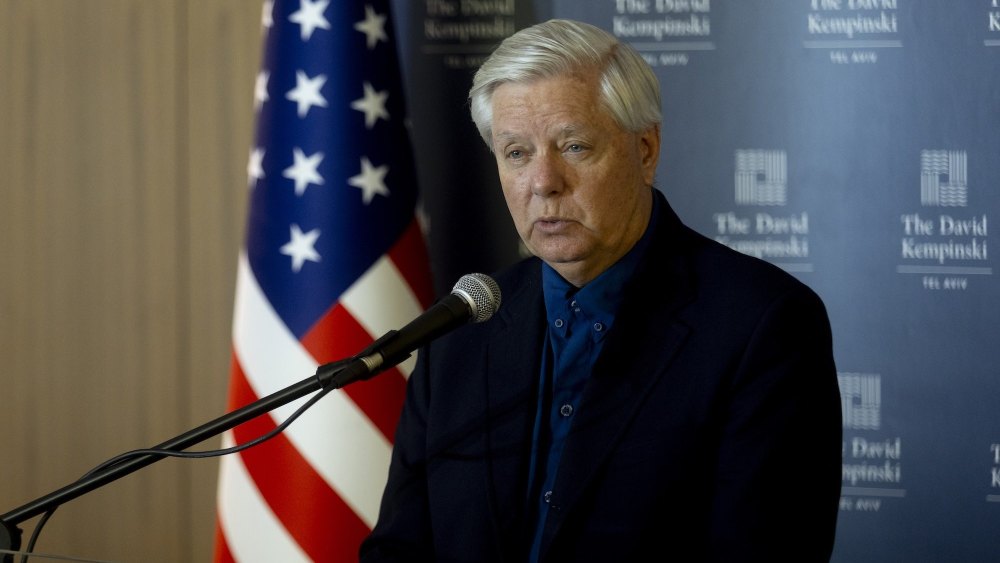
"No Conspiracy": Former Israeli Consul Dismisses Conspiracy Theories about Lindsey Graham's Death

How other outlets are covering this story
Compare narratives across 6 related reports from 6 sources. Real Narrative News aggregates the coverage spectrum so you can see who emphasises what — bias tags reflect the outlet, not the story.
Coverage bias distribution
6 sources
Left 0%
Center 17%
Right 50%
https://cdn.mos.cms.futurecdn.net/bYmkCX7E2THSnNXZAvs4Kg.jpg
· Jun 25, 2026
Some of the last surviving Neanderthals were remarkably diverse — suggesting inbreeding didn't doom them
Some of the last surviving Neanderthals were remarkably diverse — suggesting inbreeding didn't doom them
Smithsonian Magazine
· Jun 30, 2026
Why Did Neanderthals Go Extinct? Inbreeding Probably Wasn't to Blame for Their Demise in Northwestern Europe, a Study Suggests
In contrast to those who resided in Siberia, Neanderthals who lived in what's now Belgium and France shortly before the species vanished seem to have been genetically diverse and healthy
Times of India
· Jul 6, 2026
Rare Neanderthal baby fossil reveals our ancient relatives may have begun life much like modern humans
Rare Neanderthal baby fossil reveals our ancient relatives may have begun life much like modern humans
KROF – 960 AM – Lafayette
· Jul 1, 2026
Bigfoot Hunter Claims DNA Test Reveals Human-Neanderthal Hybrid
Bigfoot Hunter Claims DNA Test Reveals Human-Neanderthal Hybrid
https://cdn.mos.cms.futurecdn.net/mpNwB8YVJPXWns7gXUQJGG.jpg
· Jul 6, 2026
Neanderthals and modern humans may have shared culture 59,000 years ago in Turkey, study finds
Neanderthals and modern humans may have shared culture 59,000 years ago in Turkey, study finds
DNyuz
· Jul 9, 2026
Neanderthals and Humans May Have Shared a Common Culture for 20,000 Years
As we live through an era of rapid expansion in our understanding of our distant ancestors, the Neanderthals, we’re learning they may not have been so distant after all. According to a new study published in Proceedings of the National Academy of Sciences, evidence from Üçağızlı II Cave in southern Türkiye suggests that Neanderthals and []
Topics:
Related coverage for "Some of the last Neanderthals were surprisingly genetically diverse": https://cdn.mos.cms.futurecdn.net/bYmkCX7E2THSnNXZAvs4Kg.jpg — Some of the last surviving Neanderthals were remarkably diverse — suggesting inbreeding didn't doom them . Smithsonian Magazine — Why Did Neanderthals Go Extinct? Inbreeding Probably Wasn't to Blame for Their Demise in Northwestern Europe, a Study Suggests. Times of India — Rare Neanderthal baby fossil reveals our ancient relatives may have begun life much like modern humans. KROF – 960 AM – Lafayette — Bigfoot Hunter Claims DNA Test Reveals Human-Neanderthal Hybrid. https://cdn.mos.cms.futurecdn.net/mpNwB8YVJPXWns7gXUQJGG.jpg — Neanderthals and modern humans may have shared culture 59,000 years ago in Turkey, study finds . DNyuz — Neanderthals and Humans May Have Shared a Common Culture for 20,000 Years