Today in News History
On June 18, several notable moments in the history of News stand out. In 1391, Tokhtamysh-Timur war: Battle of the Kondurcha River: Timur defeats Tokhtamysh of the Golden Horde in present-day southeast Russia. In 1907, Frithjof Schuon, Swiss-American metaphysicist, philosopher, and author (died 1998) was born. In 1913, Sylvia Porter, American economist and journalist (died 1991) was born. In 1940, The "Finest Hour" speech is delivered by Winston Churchill. In 1942, Roger Ebert, American journalist, critic, and screenwriter (died 2013) was born. In 1950, Mike Johanns, American lawyer and politician, 28th United States Secretary of Agriculture was born. In 1951, Mohammed Al-Sager, Kuwaiti journalist and politician was born. In 1984, A major clash between about 5,000 police and a similar number of striking miners takes place at Orgreave, South Yorkshire, during the 1984-85 UK miners' strike. In 1989, I. F. Stone, American journalist and author (born 1907) passed away. In 2015, Allen Weinstein, American historian and academic (born 1937) passed away. Together, these milestones provide historical context for today's news news and ongoing narratives.
So far, so good: The Warsh era at the Fed gets under way
Narrative Analysis: Name Calling
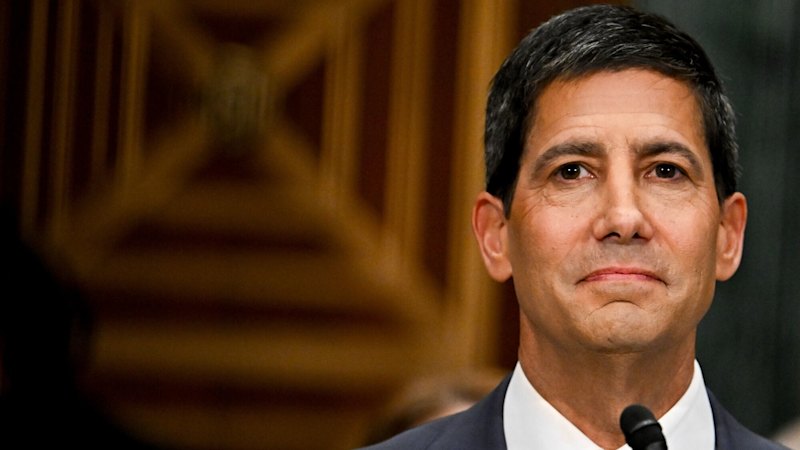
The new Federal Reserve chair has been keen to show the world he’s not Trump’s “sock puppet”. His first performance suggests he’ll be his own man.
Narrative Intelligence Brief
This article was published by Sydney Morning Herald, a source frequently categorized with a lean left bias based in Australia. Our narrative intelligence engine continuously monitors coverage from this outlet to track framing, bias, and rhetorical patterns. In this specific piece, our systems detected the potential use of the "Name Calling" technique. This narrative approach is often used to shape reader perception by highlighting specific emotional or rhetorical angles. By understanding the editorial perspective of Sydney Morning Herald, readers can better contextualize the information presented and compare it across our broader media matrix to find the real narrative.
More from Sydney Morning Herald
June 18, 2026
Viking hits ore sorting success at Nevada tungsten play
June 18, 2026
Jackie O fights to keep date for $82m court battle after Kyle settles case
June 18, 2026
Jackie ‘O’ fights to keep date for $82m court battle after Kyle settles case
June 18, 2026
ASX steady after Wall Street slumps as Fed signals rate rise this year
June 18, 2026
ASX slides lower after Wall Street slumps as Fed signals rate rise this year
Reliability Insights
P
Technique: Name Calling
System analysis detected use of specific narrative techniques in this piece.Analysis Methodology
This narrative analysis was generated using the CoDataLab Global Intelligence Engine. Our proprietary AI scans thousands of cross-border sources to identify sentiment patterns, framing techniques, and potential media bias. While AI provides the data-driven foundation, our objective is to empower readers with additional context beyond the standard headline.The content displayed above is a structured summary designed for rapid information processing. For the full original report, please visit the source outlet.More Coverage
Discussion