
Today in News History
On June 26, several notable moments in the history of News stand out. In 1835, Thomas W. Knox, American journalist and author (died 1896) was born. In 1913, Maurice Wilkes, English computer scientist and physicist (died 2010) was born. In 1921, Robert Everett, American computer scientist (died 2018) was born. In 1941, World War II: Soviet planes bomb Kassa, Hungary (now Košice, Slovakia), giving Hungary the impetus to declare war the next day. In 1946, Candace Pert, American neuroscientist and pharmacologist (died 2013) was born. In 1963, Mark McClellan, American economist and politician was born. In 1976, Chad Pennington, American football player and sportscaster was born. In 1996, Necmettin Hacıeminoğlu, Turkish linguist and academic (born 1932) passed away. In 1997, The U.S. Supreme Court rules that the Communications Decency Act violates the First Amendment to the United States Constitution. In 2007, Pope Benedict XVI reinstates the traditional laws of papal election in which a successful candidate must receive two-thirds of the votes. Together, these milestones provide historical context for today's news news and ongoing narratives.
Silent Reading may be Costing Your Brain Two-Thirds of its Processing Power!
Narrative Analysis: Name Calling
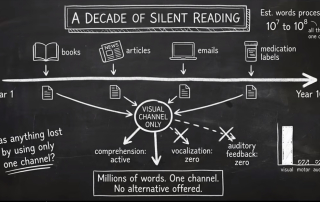
The Telegram account of Don't Speak News posted an amazing video today regarding the health benefits of reading out loud, instead of reading silently. Trained as a linguist myself, I already knew much of what this video, produced by The Feynman Way, explains, but this video certainly enhanced my knowledge by leaps and bounds after watching it. Here is the YouTube description: Discover why silent reading may be costing your brain two-thirds of its processing power — and what just 5 minutes of reading aloud does to memory, comprehension, and cognitive maintenance. This video explores the production effect, triple memory encoding, and the neuroscience of speech circuits. Learn why your own voice is a richer signal to your brain than anyone else's, and find out how respiratory-linguistic coupling shifts your autonomic tone toward calm. Whether you're fascinated by the physics of the brain, curious about what silent reading really costs your memory, or looking for explanations that actually make sense about cognitive decline, this will change how you understand every page you read. Watch now to see what nobody tells you about how your brain encodes language. Recently, I have tried to overcome years of propaganda brainwashing which teaches that talking out loud while all alone is what crazy people do. For me, it is very helpful to speak out loud, and speak directly to God, my heavenly Father, and then when I am speaking out loud and use the first person plural, we, it helps focus my mind (which is my heart) to understand that I am referring to myself together with God. The post Silent Reading may be Costing Your Brain Two-Thirds of its Processing Power! first appeared on Health Impact News.
Narrative Intelligence Brief
This article was published by Health Impact News, a source frequently categorized with a right bias based in United States of America. Our narrative intelligence engine continuously monitors coverage from this outlet to track framing, bias, and rhetorical patterns. In this specific piece, our systems detected the potential use of the "Name Calling" technique. This narrative approach is often used to shape reader perception by highlighting specific emotional or rhetorical angles. By understanding the editorial perspective of Health Impact News, readers can better contextualize the information presented and compare it across our broader media matrix to find the real narrative.
More from Health Impact News
June 24, 2026
Has the AI Crash Begun? The World Economic System is on the Verge of Collapsing
June 25, 2026
U.S. Supreme Court Protects Bayer’s Monsanto Weedkiller with Glyphosate that Causes Cancer from Further Lawsuits
June 16, 2026
The Truth About the “Screwworm Outbreak” and the U.S. Beef Industry’s Rising Prices
June 19, 2026
Is World War III About to Break Out? Talk of Los Angeles False Flag Attack Increases
June 17, 2026
Is Israel Blackmailing Donald Trump Over Epstein Files Not Yet Released to Prevent an Agreement with Iran?
Reliability Insights
P
Technique: Name Calling
System analysis detected use of specific narrative techniques in this piece.Analysis Methodology
This narrative analysis was generated using the CoDataLab Global Intelligence Engine. Our proprietary AI scans thousands of cross-border sources to identify sentiment patterns, framing techniques, and potential media bias. While AI provides the data-driven foundation, our objective is to empower readers with additional context beyond the standard headline.The content displayed above is a structured summary designed for rapid information processing. For the full original report, please visit the source outlet.More Coverage
Discussion
"venezuela"
More than 30,000 missing and 188 dead after Venezuela’s worst earthquake in a century

Forty seconds of chaos that wrecked Venezuela’s comeback

Catastrophic Damage: Deadly Venezuela Quake Marks Country’s Most Powerful Seismic Event Since 1900
