
Today in News History
On June 23, several notable moments in the history of News stand out. In 1906, Tribhuvan of Nepal (died 1955) was born. In 1907, James Meade, English economist and academic, Nobel Prize laureate (died 1995) was born. In 1909, David Lewis, Russian-Canadian lawyer and politician (died 1981) was born. In 1913, William P. Rogers, American commander, lawyer, and politician, 55th United States Secretary of State (died 2001) was born. In 1949, Sheila Noakes, Baroness Noakes, English accountant and politician was born. In 1980, Sanjay Gandhi, Indian engineer and politician (born 1946) passed away. In 1990, Harindranath Chattopadhyay, Indian poet, actor, and politician (born 1898) passed away. In 1996, Andreas Papandreou, Greek economist and politician, 174th Prime Minister of Greece (born 1919) passed away. In 2010, John Burton, Australian public servant and diplomat (born 1915) passed away. In 2017, A series of terrorist attacks take place in Pakistan, resulting in 96 deaths and wounding 200 others. Together, these milestones provide historical context for today's news news and ongoing narratives.
Seven Prime Ministers in just ten years...I know exactly why No10 has become a revolving door
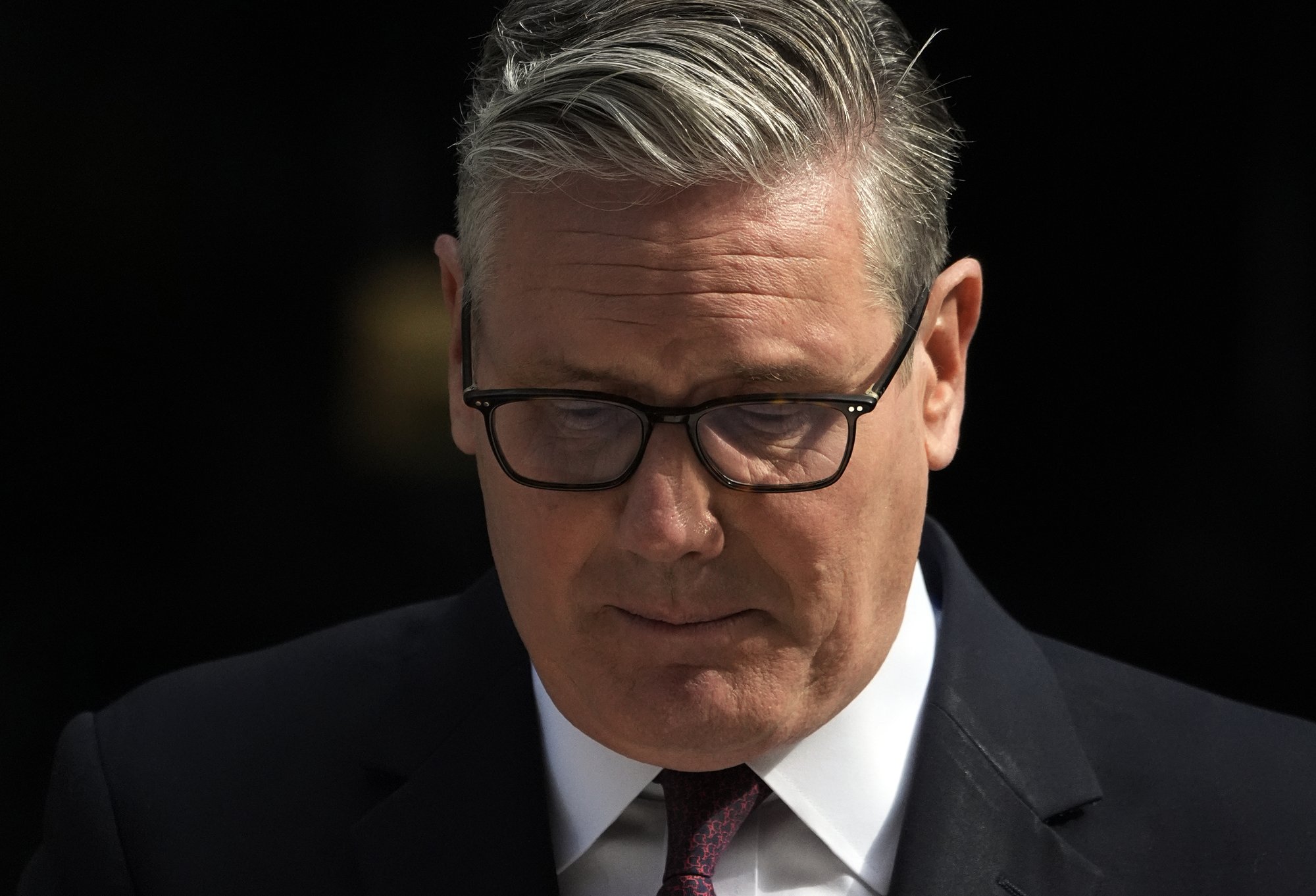
My eldest son turns eighteen this summer. By the time of his birthday in August, he is likely to be living under his eighth Prime Minister, having been born during the premiership of Gordon Brown, who has since been succeeded by David Cameron, Theresa May, Boris Johnson, Liz Truss, Rishi Sunak, Sir Keir Starmer and, probably, Andy Burnham. No generation of children in British history has seen a more rapid turnover of political leaders, with seven Prime Ministers in the last ten years alone.That’s not to say Britain hasn’t experienced turbulent decades in the past. Between 1885 and 1895, there were seven separate prime ministerial terms, although only three different individual PMs (Gladstone and Salisbury had three stints each in that time). From 1922 to 1932, there were six premierships (four separate PMs) and between 1970 and 1980, Britain had four different Prime Ministers serving five periods in office. Those who lived through the 1970s remember it as an especially fractious period with general strikes, economic crises, rampant inflation and even the threat of nuclear war. Day-to-day life is not nearly so insecure for most Brits in 2026, yet it is arguably far less secure for our political leaders. TRENDING Stories Videos Your Say Many people will be relieved that Sir Keir Starmer - the most unpopular Prime Minister since records began - will soon be returning the keys to No10. Yet while Andy Burnham, Starmer’s likely successor, is clearly more likeable, charismatic and politically experienced, he will face exactly the same insoluble problems as his recent predecessors, and be beholden to the same Parliamentary Labour Party that refused to back Sir Keir’s attempted reforms. If Burnham survives more than two years and three months in the job, he will have exceeded the average tenure for his five immediate predecessors, a truly astonishing statistic.So why are we experiencing such an acute period of Prime Ministerial turnover? Why is Britain’s parliamentary democracy - world famous for its stability - beginning to resemble a failed state? I think there are at least seven different phenomena coalescing to create a uniquely challenging environment for modern political leaders.BrexitThe debates that opened up during and after the Brexit referendum were within rather than between political parties.Just as the ‘in or out’ question put pressure on friendships and family relationships, Brexit divided the Tories and, to a lesser extent, the Labour Party. Arguments have not been confined to membership of the EU, but have opened up fissures over the economy, immigration and British identity such that both the Conservative and Labour parties have become difficult to govern. The last Conservative government, like the current Labour administration, had a big majority on paper. In practice, divided parties give rise to instability and this has been reflected in the rapid turnover of Prime Ministers.Expenses scandalThe expenses scandal in 2010 saw the reputation of MPs fall through the floor, and politicians have never since recovered their standing amongst the public. Many might think this fall from grace is well deserved, but the shift has also increased pressure and scrutiny on elected politicians and put off good and capable people from standing for parliament. As an MP, I was once hauled over the coals for claiming 99 pence for a packet of post-it notes - which of course I didn’t; it was just an itemised list of office supplies ordered by a member of my staff - and it is this kind of constant public and media attack that makes being an MP such an unappealing job for many. There will be those who think that MPs are overly well remunerated, but that’s not the point. If we are not willing to pay what is required to attract the best of the best, we will have to accept the mediocre. And by any historical comparison, our MPs and many of our recent Prime Ministers have reflected this mediocrity. When faced with the immense challenges of running a country as complex as Britain, it’s unsurprising that leaders fall quickly if they’re not up to the job.Blairite reformsSir Tony Blair’s premiership saw a whole host of constitutional reforms that robbed Parliament and the Prime Minister’s office of power. Government by quango and judicial review means that PMs have far less ability to deliver meaningful change.Backbenchers become frustrated by this impotence and so become discontented with their leader, itching for a more effective replacement. Yet time and again we find it is the system - not the Prime Minister - that is at fault. The small boat issue is a case in point; it’s easy to say ‘stop the boats’ or ‘smash the gangs.’ But both Rishi Sunak and Sir Keir Starmer have found that comprehensive reform of human rights law is required to end the incentives for small boat migrants, reforms that bank benchers are just not willing to support. Consequently, the Prime Minister begins to look weak and loses support in the country, and MPs are spooked by the fall in the polls.British education failuresSince the abolition of grammar schools, the vast majority of Brits have been educated in comprehensive schools without any publicly-funded system designed to prepare talented youngsters for national leadership. Various educational reforms have left several generations with very little knowledge of British history, or of an understanding of where our civilisational foundations have come from. This is not the case in many other comparable countries where, for example, it is compulsory to learn about your national history to the age of 16 or even 18. Labour have made much of the fact that none of the current Cabinet were privately educated; personally I think this is a resounding endorsement for independent schools. In many ways, the UK has focused on academic education too much in recent years. But when it comes to running the country, without a firm grasp of history, philosophy and economics, it’s easy to see why our leaders blow with the wind.Social MediaThe ability to communicate instantly with unlimited numbers of people all over the world has changed politics beyond recognition. In order to organise a coup, MPs used to have to arrange to meet in person and hold discussions face-to-face. The requirement for physical proximity limited the opportunity for plotting, or complaining about the boss. Now WhatsApp groups and X can accelerate minor grumbles into calls for resignation in a matter of hours. And MPs who regularly pour their hearts out to journalists, soon find their ‘background’ or ‘off-record’ comments have set a rebellion in motion.Demographic changeThe concerning state of Britain's finances - especially our mounting debt - owe more to our changing demographic picture than any single recent government’s economic policies. In 1970, there were four and half workers paying tax to support every pensioner; now there are just three to one. Instead of reforming the pension system, or trying to boost Britain's flagging birth rates, successive governments have buried their heads in the sand and kept the spending taps firmly on. We now find ourselves between a rock and a hard place - desperately needing to invest in infrastructure and industry, but stymied by the cost of borrowing thanks to our own profligacy. With such little room for manoeuvre, it is difficult for any incoming PM to deliver the change that MPs want to see, and even harder to deliver the cuts that must be made. So MPs look to find a new leader.The party member ‘selectorate’In the past, party members were not given a vote in leadership contests. This left MPs free to support the person who they thought was most able to command the support of parliament, rather than the membership as a whole. This system may sound undemocratic, but it was far more likely to result in stable leadership. For better or worse, the opinions of party members are often wildly unrepresentative of the wider views of that party’s voters or indeed the country as a whole. Yet under the current systems, MPs are incentivised to support the candidate who is most popular with members rather than the one who is most suited to command the support of the parliamentary party. A Prime Minister who is popular with members may end up being anathema to the man on the street - for example Liz Truss or Jeremy Corbyn - and so MPs are tempted not to give the members a choice at all, pursuing a ‘coronation’ such as occurred with Rishi Sunak or - as seems likely - with Andy Burnham.There are doubtless many other reasons for a decade of revolving doors in No10 Downing Street. Fundamentally, the cause of this instability is structural and systemic, rather than being the fault of any particular Prime Minister or collection of MPs. Some of these issues will take years to fix such as demographic decline and educational reform. But one urgent and potentially achievable improvement could be made by rewinding the Blairite reforms that have robbed our democratically elected Parliament of so much of its power. As a key member of the New Labour movement, I doubt such reforms will be desirable - or even possible - for Andy Burnham to deliver. As likeable and as charismatic as Burnham undoubtedly is, I give him two years max. Our Standards: The GB News Editorial Charter
Narrative Intelligence Brief
This article was published by GB News, a source frequently categorized with a lean right bias based in United States of America. Our narrative intelligence engine continuously monitors coverage from this outlet to track framing, bias, and rhetorical patterns. Our initial algorithmic scan of this specific piece did not flag high-confidence rhetorical techniques, suggesting a generally straightforward reporting style or neutral framing. By understanding the editorial perspective of GB News, readers can better contextualize the information presented and compare it across our broader media matrix to find the real narrative.
More from GB News
June 23, 2026
'Brexiteers must get back on pitch before next election or risk bottling it,' ex-Vote Leave chief says
June 23, 2026
GB News Daily Reflection — Tuesday 23rd June 2026
June 23, 2026
Seven Prime Ministers in just 10 years... I know exactly why No10 has become a revolving door
June 23, 2026
'Nothing short of shocking' - Police probe infamous video of 'officer punching young girls' in Rotherham
June 23, 2026
'I wish him well!' Donald Trump swipes at Keir Starmer one more time after PM finally resigns
Analysis Methodology
This narrative analysis was generated using the CoDataLab Global Intelligence Engine. Our proprietary AI scans thousands of cross-border sources to identify sentiment patterns, framing techniques, and potential media bias. While AI provides the data-driven foundation, our objective is to empower readers with additional context beyond the standard headline.The content displayed above is a structured summary designed for rapid information processing. For the full original report, please visit the source outlet.More Coverage
Discussion
"erling haaland"
Norway win five-goal thriller against Senegal to make last 32

Norway 3-2 Senegal: Haaland double fires Vikings through as France showdown looms
/https%3A%2F%2Fsportsmole-media-prod.s3.gra.io.cloud.ovh.net%2Fuploads%2F2026%2F06%2Ficonsport-368855-0163-1-6a3a0591aae01390549891.jpg)
Erling Haaland keeps pace with Lionel Messi and Kylian Mbappe as he fires Norway into last 32 with superb double against Senegal - before celebrating with team-mates and fans in viral Viking Row led by Martin Odegaard
