
Today in News History
On July 12, several notable moments in the history of News stand out. In 1850, Otto Schoetensack, German anthropologist and academic (died 1912) was born. In 1920, Bob Fillion, Canadian ice hockey player and manager (died 2015) was born. In 1920, Pierre Berton, Canadian journalist and author (died 2004) was born. In 1933, Victor Poor, American engineer, developed the Datapoint 2200 (died 2012) was born. In 1950, Gilles Meloche, Canadian ice hockey player and coach was born. In 1957, Dave Semenko, Canadian ice hockey player and sportscaster (died 2017) was born. In 1976, Dan Boyle, Canadian ice hockey player was born. In 1989, Nick Palmieri, American ice hockey player was born. In 1998, Arkady Ostashev, Soviet/Russian scientist and engineer (born 1925) passed away. In 2014, Valeriya Novodvorskaya, Russian journalist and politician (born 1950) passed away. Together, these milestones provide historical context for today's news news and ongoing narratives.
Scientists tried to thicken Arctic ice by pumping seawater onto it. The ice did become thicker and brighter, but there is a big catch
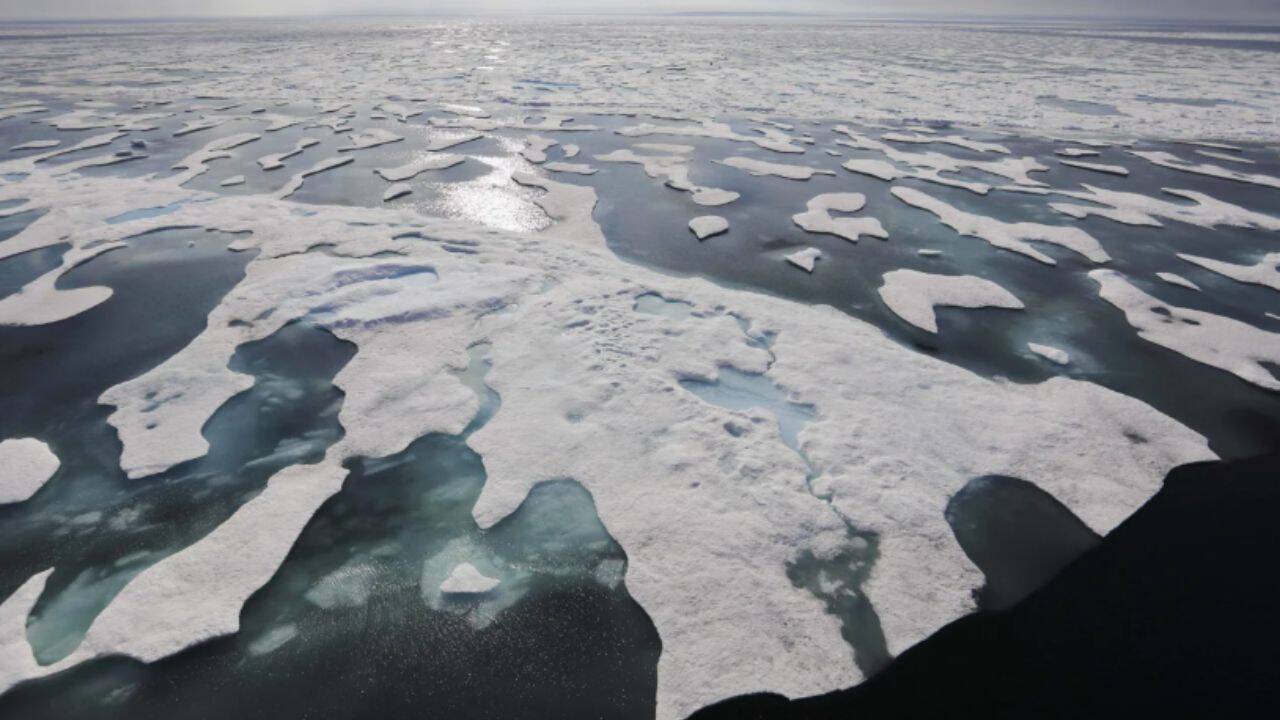
Scientists tested spraying seawater onto Arctic ice, which showed promising initial results. The treated ice became thicker and more reflective, resisting summer melting effectively. This method offers an alternative to controversial geoengineering approaches for ice preservation. While promising, researchers note significant challenges for large-scale implementation across the Arctic. Further work is essential before this technique can be considered for broader application.
Narrative Intelligence Brief
This article was published by Times of India, a source frequently categorized with a lean right bias based in India. Our narrative intelligence engine continuously monitors coverage from this outlet to track framing, bias, and rhetorical patterns. Our initial algorithmic scan of this specific piece did not flag high-confidence rhetorical techniques, suggesting a generally straightforward reporting style or neutral framing. By understanding the editorial perspective of Times of India, readers can better contextualize the information presented and compare it across our broader media matrix to find the real narrative.
More from Times of India
July 12, 2026
Qatar’s former Emir Sheikh Hamad bin Khalifa Al Thani passes away at 74
July 12, 2026
Canada gives share of bridge profits to US to get Trump nod
July 12, 2026
Bangladesh bars media from publishing Hasina statements
July 12, 2026
Martha Lillard, last US polio patient using iron lung, dies
July 11, 2026
US employers told to fire foreign workers who are on the way to lose Temporary Protected Status
Analysis Methodology
This narrative analysis was generated using the CoDataLab Global Intelligence Engine. Our proprietary AI scans thousands of cross-border sources to identify sentiment patterns, framing techniques, and potential media bias. While AI provides the data-driven foundation, our objective is to empower readers with additional context beyond the standard headline.The content displayed above is a structured summary designed for rapid information processing. For the full original report, please visit the source outlet.More Coverage
Discussion
"cup semifinal"
Argentina beat Switzerland to set up World Cup semifinal against England

[Photo] JUST IN: 🇦🇷 Argentina officially advances to the FIFA World Cup semifinal after defeat [...]

Argentina set up titanic World Cup semifinal against England with extra-time victory over Switzerland after Breel Embolo's embarrassing red card

How other outlets are covering this story
Compare narratives across 6 related reports from 6 sources. Real Narrative News aggregates the coverage spectrum so you can see who emphasises what — bias tags reflect the outlet, not the story.
Coverage bias distribution
6 sources
Left 33%
Center 33%
Right 17%
https://cdn.mos.cms.futurecdn.net/9Sb6U7s88MgDktYwWni9LV.jpg
· Jul 6, 2026
First experiment to thicken Arctic ice with seawater shows promise — but there's a big catch
First experiment to thicken Arctic ice with seawater shows promise — but there's a big catch
Canada's National Observer
· Jun 24, 2026
Meet the scientists trying to refreeze the Arctic
Sea ice is melting fast, worsening the climate crisis. But a bold attempt to rethicken it is showing early signs of success.
State of the Planet
· Jul 6, 2026
Massive Calving Episode in Greenland May Foreshadow More Rapid Ice Sheet Loss
Researchers studying a lake drainage event in Greenland determined that large amounts of meltwater drainage can lead to massive glacier calving events and accelerate ice sheet loss.
Free Press
· Jun 22, 2026
ICE ICE Fútbo
ICE ICE Fútbo
CNET
· Jun 30, 2026
Ice, Ice, Maybe? Scientists Are Trying to Regrow Ice in the Arctic With Simple Tech
Arctic sea ice is disappearing at a worrisome rate. What if there were a way to slow that down?
ArcaMax
· Jul 3, 2026
Sea level doesn’t rise at the same rate everywhere – we mapped where Antarctica’s ice melt would have the biggest impact
When polar ice sheets melt, the effects ripple across the world. The melting ice raises average global sea level, alters ocean currents and affects temperatures in places far from the poles. But melting ice sheets don’t affect sea level and ...
Topics:
Related coverage for "Scientists tried to thicken Arctic ice by pumping seawater onto it. The ice did become thicker and brighter, but there is a big catch": https://cdn.mos.cms.futurecdn.net/9Sb6U7s88MgDktYwWni9LV.jpg — First experiment to thicken Arctic ice with seawater shows promise — but there's a big catch . Canada's National Observer — Meet the scientists trying to refreeze the Arctic. State of the Planet — Massive Calving Episode in Greenland May Foreshadow More Rapid Ice Sheet Loss. Free Press — ICE ICE Fútbo. CNET — Ice, Ice, Maybe? Scientists Are Trying to Regrow Ice in the Arctic With Simple Tech. ArcaMax — Sea level doesn’t rise at the same rate everywhere – we mapped where Antarctica’s ice melt would have the biggest impact