
Today in News History
On July 8, several notable moments in the history of News stand out. In 1889, The first issue of The Wall Street Journal is published. In 1921, John Money, New Zealand psychologist and sexologist, known for his research on gender identity, and responsible for controversial involuntary sex reassignment of David Reimer (died 2006) was born. In 1926, David Malet Armstrong, Australian philosopher and author (died 2014) was born. In 1939, Havelock Ellis, English psychologist and author (born 1859) passed away. In 1942, Phil Gramm, American economist and politician was born. In 1950, Othmar Spann, Austrian sociologist, economist, and philosopher (born 1878) passed away. In 1979, Robert Burns Woodward, American chemist and academic, Nobel Prize laureate (born 1917) passed away. In 1979, Sin-Itiro Tomonaga, Japanese physicist and academic, Nobel Prize laureate (born 1906) passed away. In 2013, Rubby Sherr, American physicist and academic (born 1913) passed away. In 2014, Ben Pangelinan, Guamanian businessman and politician (born 1956) passed away. Together, these milestones provide historical context for today's news news and ongoing narratives.
Scientists Or Activists? The Hidden Friction Dividing America’s Top Researchers
Scientists at U.S. land-grant universities take fundamentally different approaches to engaging with the public, ranging from remaining strictly neutral to openly advocating for the public good, according to a new study from the University of Florida Institute of Food and Agricultural Sciences (UF/IFAS). The study, led by researchers at the UF/IFAS Department of Agricultural Education [] Scientists Or Activists? The Hidden Friction Dividing America’s Top Researchers
Narrative Intelligence Brief
This article was published by Tampa Free Press, a source frequently categorized with a right bias based in United States of America. Our narrative intelligence engine continuously monitors coverage from this outlet to track framing, bias, and rhetorical patterns. Our initial algorithmic scan of this specific piece did not flag high-confidence rhetorical techniques, suggesting a generally straightforward reporting style or neutral framing. By understanding the editorial perspective of Tampa Free Press, readers can better contextualize the information presented and compare it across our broader media matrix to find the real narrative.
More from Tampa Free Press
July 8, 2026
$2 Billion Hurricane Lifeline: Federal Aid Finally Flows Back To Florida Communities
July 8, 2026
Wedding Bell Blues: $4K Booze Heist Ends In Handcuffs For Florida Man
July 8, 2026
Don’t Wait For The Storm: St. Petersburg Hosts Weekend Sandbag Giveaway
July 8, 2026
Feds Bypass California To Grant Americans The Right To Fix Their Own Rides
July 8, 2026
Michigan Sues Feds To Protect Homeless Funding After HUD Attempts A New Policy Shift
Analysis Methodology
This narrative analysis was generated using the CoDataLab Global Intelligence Engine. Our proprietary AI scans thousands of cross-border sources to identify sentiment patterns, framing techniques, and potential media bias. While AI provides the data-driven foundation, our objective is to empower readers with additional context beyond the standard headline.The content displayed above is a structured summary designed for rapid information processing. For the full original report, please visit the source outlet.More Coverage
Discussion
"nato summit"
Trump says Ukraine’s escalation inside Russia could help end war
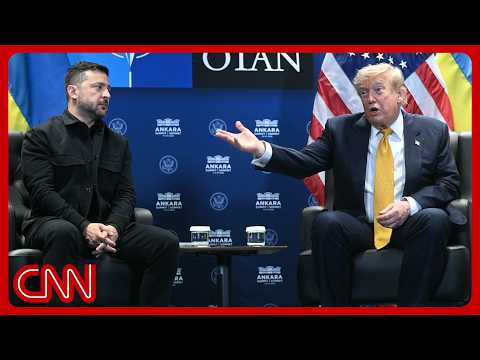
Morning Roundup: Fraud case exposes administrative weakness, US–Iran tensions reignite, and NATO summit begins

Trump excoriates NATO, calls Iranians ‘lying scum,’ and declares MOU over in angry tirade
