Scientists have filmed a rare 125-million-year-old goblin shark alive in its natural deep-sea habitat for the first time, revealing a new depth record and a wider Pacific range
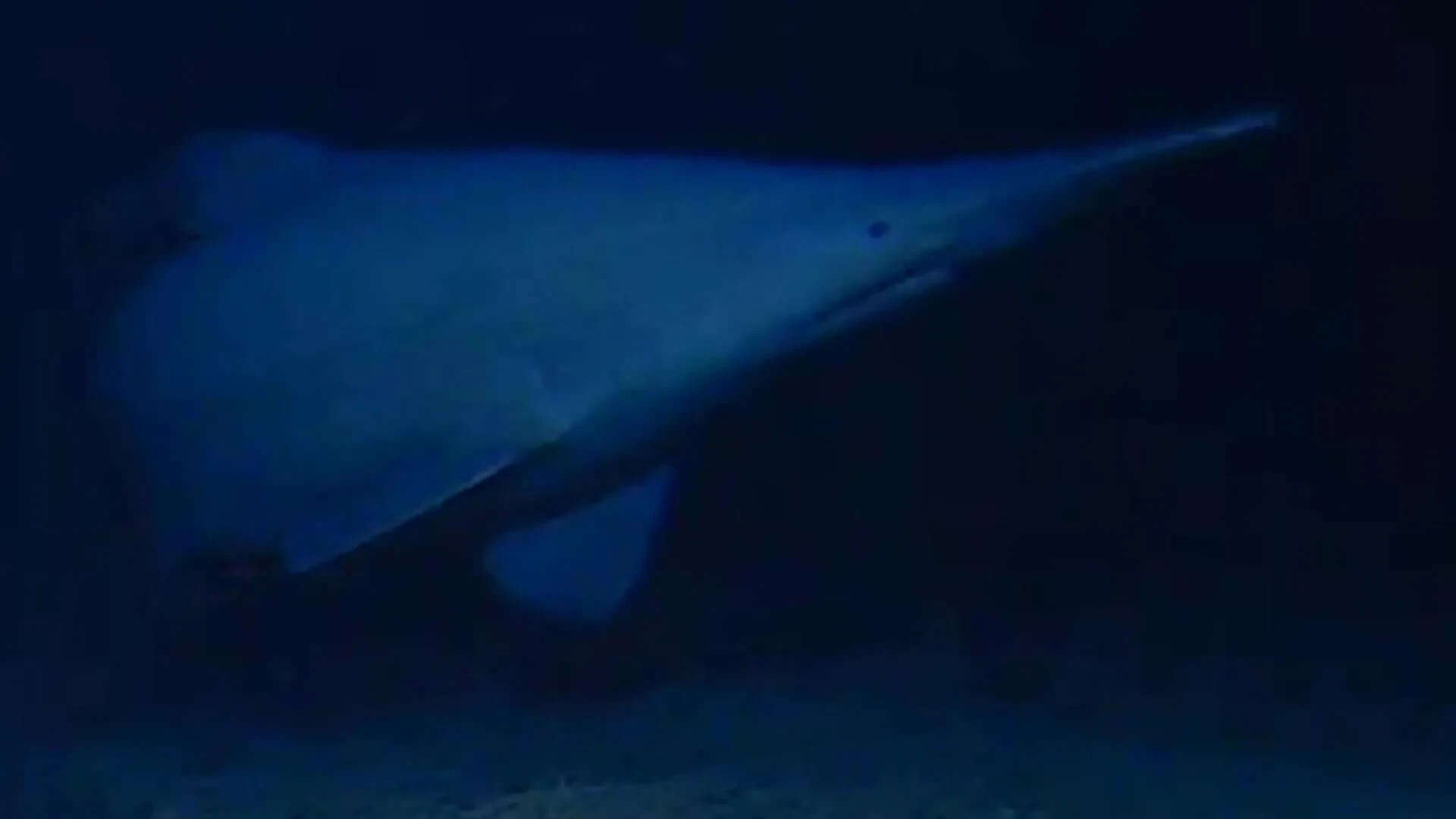
For the very first time, scientists have captured live footage of goblin sharks in their deep-sea environment, revealing new insights into the species. This remarkable finding extends their known depth by almost 700 meters. Observations from two separate instances identified these elusive sharks in previously unknown Pacific Ocean habitats, complemented by archived footage from 2019 that documented an unrecognized encounter. This groundbreaking research broadens the goblin shark's recognized range significantly.
Narrative Intelligence Brief
This article was published by Times of India, a source frequently categorized with a lean right bias based in India. Our narrative intelligence engine continuously monitors coverage from this outlet to track framing, bias, and rhetorical patterns. Our initial algorithmic scan of this specific piece did not flag high-confidence rhetorical techniques, suggesting a generally straightforward reporting style or neutral framing. By understanding the editorial perspective of Times of India, readers can better contextualize the information presented and compare it across our broader media matrix to find the real narrative.
More from Times of India
July 12, 2026
Watch: Bison flings man eight feet into air in dramatic attack at US Yellowstone National Park
July 12, 2026
Former UK politician Ann Widdecombe murder probe: Police arrest 28-year-old man
July 12, 2026
Qatar’s former Emir Sheikh Hamad bin Khalifa Al Thani passes away at 74
July 12, 2026
Canada gives share of bridge profits to US to get Trump nod
July 12, 2026
Bangladesh bars media from publishing Hasina statements
Analysis Methodology
This narrative analysis was generated using the CoDataLab Global Intelligence Engine. Our proprietary AI scans thousands of cross-border sources to identify sentiment patterns, framing techniques, and potential media bias. While AI provides the data-driven foundation, our objective is to empower readers with additional context beyond the standard headline.The content displayed above is a structured summary designed for rapid information processing. For the full original report, please visit the source outlet.More Coverage
Discussion
"cup semifinal"
Former Spanish PM Rajoy makes racist remarks about France's football team

[Photo] JUST IN: 🇦🇷 Argentina officially advances to the FIFA World Cup semifinal after defeat [...]

Argentina's hero: "We are just two steps away from the goal"