
Today in News History
On July 12, several notable moments in the history of News stand out. In 1470, The Ottomans capture Euboea. In 1691, Battle of Aughrim (Julian calendar): The decisive victory of William III of England's forces in Ireland. In 1789, In response to the dismissal of the French finance minister Jacques Necker, the radical journalist Camille Desmoulins gives a speech which results in the storming of the Bastille two days later. In 1863, Paul Drude, German physicist and academic (died 1906) was born. In 1913, Willis Lamb, American physicist and academic, Nobel Prize laureate (died 2008) was born. In 1928, Elias James Corey, American chemist and academic, Nobel Prize laureate was born. In 1944, Simon Blackburn, English philosopher and academic was born. In 1952, Voja Antonić, Serbian computer scientist and journalist, designed the Galaksija computer was born. In 1959, David Brown, Australian meteorologist was born. In 1999, Rajendra Kumar, Indian actor (born 1921) passed away. Together, these milestones provide historical context for today's news news and ongoing narratives.
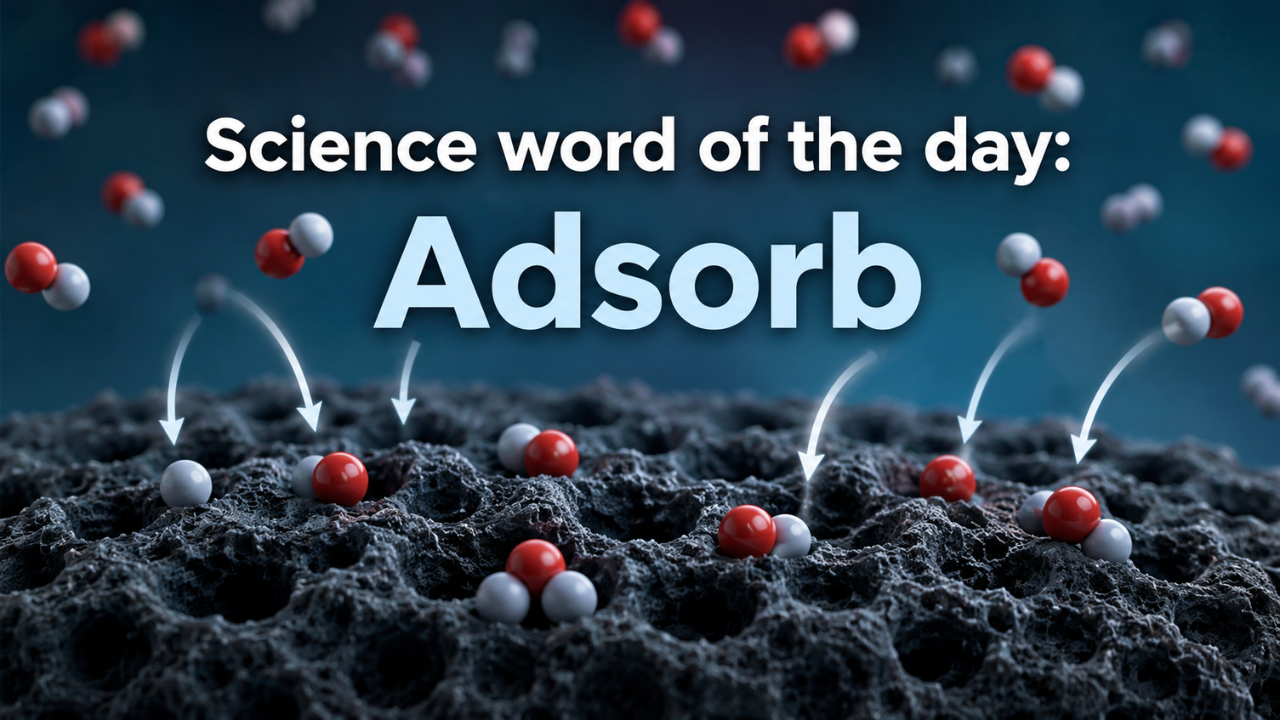
Science word of the day: Adsorb, know its meaning, who introduced the term, and its practical applications
Narrative Analysis: Testimonial
Narrative Intelligence Brief
This article was published by Times of India, a source frequently categorized with a lean right bias based in India. Our narrative intelligence engine continuously monitors coverage from this outlet to track framing, bias, and rhetorical patterns. In this specific piece, our systems detected the potential use of the "Testimonial" technique. This narrative approach is often used to shape reader perception by highlighting specific emotional or rhetorical angles. By understanding the editorial perspective of Times of India, readers can better contextualize the information presented and compare it across our broader media matrix to find the real narrative.
More from Times of India
July 12, 2026
Watch: Bison flings man eight feet into air in dramatic attack at US Yellowstone National Park
July 12, 2026
Former UK politician Ann Widdecombe murder probe: Police arrest 28-year-old man
July 12, 2026
Qatar’s former Emir Sheikh Hamad bin Khalifa Al Thani passes away at 74
July 12, 2026
Canada gives share of bridge profits to US to get Trump nod
July 12, 2026
Bangladesh bars media from publishing Hasina statements
Reliability Insights
P
Technique: Testimonial
System analysis detected use of specific narrative techniques in this piece.Analysis Methodology
This narrative analysis was generated using the CoDataLab Global Intelligence Engine. Our proprietary AI scans thousands of cross-border sources to identify sentiment patterns, framing techniques, and potential media bias. While AI provides the data-driven foundation, our objective is to empower readers with additional context beyond the standard headline.The content displayed above is a structured summary designed for rapid information processing. For the full original report, please visit the source outlet.More Coverage
Discussion
"cup semifinal"
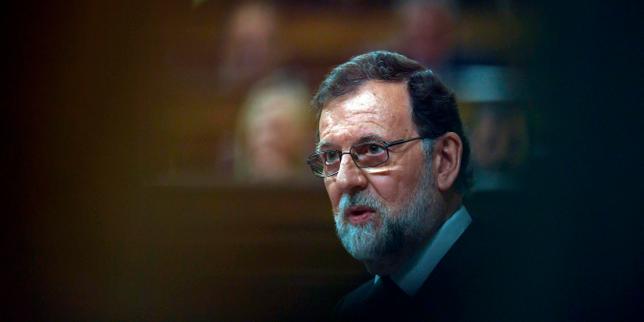
Former Spanish PM Rajoy makes racist remarks about France's football team
[Photo] JUST IN: 🇦🇷 Argentina officially advances to the FIFA World Cup semifinal after defeat [...]

Argentina's hero: "We are just two steps away from the goal"

How other outlets are covering this story
Compare narratives across 6 related reports from 6 sources. Real Narrative News aggregates the coverage spectrum so you can see who emphasises what — bias tags reflect the outlet, not the story.
Coverage bias distribution
6 sources
Left 0%
Center 17%
Right 33%
MIT Technology Review
· Jun 30, 2026
Claude Science is Anthropic’s newest flagship product
At an event for pharmaceutical executives, biotech founders, and researchers on Tuesday, Anthropic announced Claude Science, a major new product intended to support scientific research in the same way that Claude Code supports software engineering. Like Claude Code, Claude Science can autonomously carry out meaningful work when given concise, high-level instructions, and it has access
The New Stack
· Jun 30, 2026
Anthropic launches Claude Science, an AI workbench for scientific research
On Tuesday, Anthropic launched Claude Science, a new application for scientists that can run locally on macOS and Linux, or The post Anthropic launches Claude Science, an AI workbench for scientific research appeared first on The New Stack.
TechCrunch
· Jun 30, 2026
Anthropic’s Claude Science bets on workflow, not a new model, to win over scientists
Anthropic's Claude Science is a workbench that gives scientists one environment to do computational research, saving them from the need to bounce between databases, pipelines, and tools.
India TV News
· Jul 4, 2026
India semiconductor ecosystem makes big leap with Rs 7,500 crore facility in Gujarat; here's why it matters
India's semiconductor manufacturing ecosystem took a major leap on Saturday as Prime Minister Narendra Modi inaugurated the CG Semi Outsourced Semiconductor Assembly and Test (OSAT) facility in Sanand, Gujarat.
Campus Technology: All Articles
· Jul 1, 2026
Anthropic, NVIDIA Move AI Agents Deeper into Scientific Workflows
Anthropic has introduced Claude Science, a new AI workbench for scientists that integrates research tools, produces auditable artifacts, and connects to specialized life sciences models and workflows from NVIDIA.
NaturalNews.com
· Jul 8, 2026
The Death Centers: How digital twins and AI superintelligence are engineering humanity’s end
(NaturalNews) The book claims that the massive, resource-intensive data centers being built are not for consumer demand but for gestating a superintelligence de...
Topics:
Related coverage for "Science word of the day: Adsorb, know its meaning, who introduced the term, and its practical applications": MIT Technology Review — Claude Science is Anthropic’s newest flagship product. The New Stack — Anthropic launches Claude Science, an AI workbench for scientific research. TechCrunch — Anthropic’s Claude Science bets on workflow, not a new model, to win over scientists. India TV News — India semiconductor ecosystem makes big leap with Rs 7,500 crore facility in Gujarat; here's why it matters. Campus Technology: All Articles — Anthropic, NVIDIA Move AI Agents Deeper into Scientific Workflows. NaturalNews.com — The Death Centers: How digital twins and AI superintelligence are engineering humanity’s end