
0
Saudi Arabia dumped LIV—but it’s not getting out of the golf world entirely
May 5, 2026
Posted 4 hours ago by
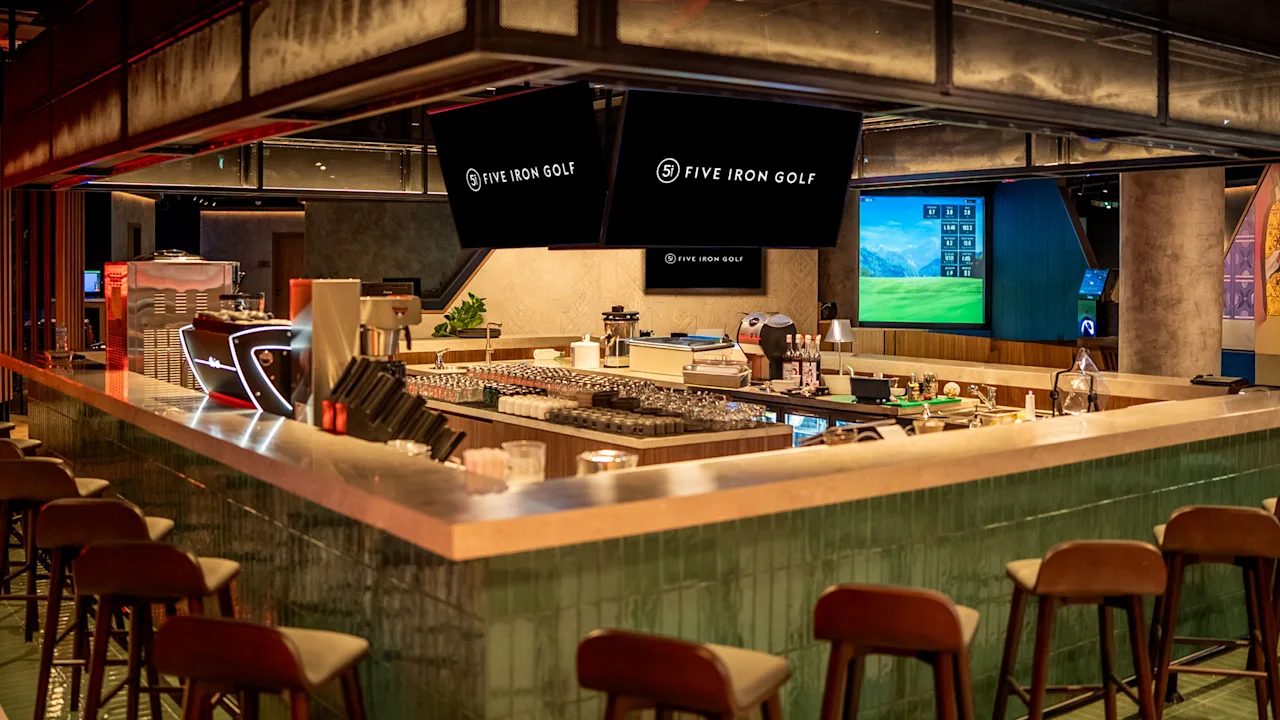
In late April, indoor golf and entertainment brand Five Iron Golf launched its first location in Saudi Arabia after nearly three years of coordination with Golf Saudi, an affiliate of the country’s massive sovereign wealth fund. The golf center, located on the ground floor of the Public Investment Fund Tower—the fund’s headquarters and the tallest building in Riyadh—offers a similar mix of simulators, leagues and lessons, and food and music as other Five Iron locations both in the U.S.
and abroad, says Jared Solomon, cofounder and CEO of the brand. “People are hitting golf balls, they’re having fun, they’re eating food,” he says. “They’re not drinking, because there’s no drinking there, but they’re having a great time.” Five Iron Golf, which launched in Manhattan in 2017 (the name nods to both the club and Fifth Avenue in the Flatiron District, where it opened its first location), now has more than 40 U.S. venues. The company has expanded abroad through franchise deals in Singapore, Dubai, Spain, and Portugal. The Saudi location opened under a similar arrangement with Golf Saudi. Solomon declined to share details, but says franchise agreements typically include fees of 50,000 to 100,000 per location and about 6 of revenue. Solomon hopes the PIF Tower site will be the first of multiple locations in Saudi Arabia. But the Five Iron launch wasn’t the biggest golf news out of the region this spring. That distinction belongs to the announcement by PIF that it would no longer fund the controversial LIV Golf tour, which has received more than 5 billion in PIF backing since its 2022 launch. In a widely circulated statement, PIF said backing LIV Golf no longer aligns with its current investment strategy, pointing to “investment priorities and current macro dynamics.” (The fund didn’t respond to Fast Company’s requests for comment.) “The bone saw tour” The move follows the Saudi-backed LIV tour’s disruption of the golf world, drawing players away from the gold-standard PGA Tour, which banned players from competing in both. It also raises broader questions about the future direction of the trillion-dollar PIF, which has invested heavily in global tech companies (from Uber to Magic Leap) and through vehicles like the 100 billion SoftBank Vision Fund. It’s also set to acquire a substantial stake in a merged Paramount-Warner Bros. Discovery media business. Under the leadership of Crown Prince Mohammed bin Salman, Saudi Arabia has made clear its ambitions under its Vision 2030 project—a sweeping state-led plan to remake the kingdom’s economy—to transition from an oil-based economy to a hub for business, sports, tourism, and entertainment, powered in part by PIF investments. The country will host the 2034 FIFA World Cup and a 2030 world’s fair-style expo, and PIF recently reaffirmed its commitment to Newcastle United Football Club, maintaining its majority ownership of the Premier League team. Those investments are not purely economic. They’re also intended to reshape the kingdom’s global image after years of scrutiny over human rights violations, limits on women’s rights, and the 2018 murder of journalist Jamal Khashoggi inside the Saudi consulate in Istanbul. “The objective of all of this sports funding is twofold,” says Aaron Ettinger, a political science professor at Carleton University in Ottawa. “One is to make money, and the other one is political. The political objective is to make Saudi Arabia look like a normal country and draw international investments and all that kind of stuff.” The decision to pull back from LIV may reflect the tour’s failure to deliver on either front. As Ettinger notes, upstart leagues often struggle to challenge entrenched competitors like the PGA. (Indeed, recent U.S. sports history is full of failed competitors to the National Football League.) LIV relied heavily on Saudi funding, and it’s not clear that it did anything to boost the country’s image abroad. “It was referred to as the ‘bone saw tour’ when it got started,” Ettinger says. “It just ended up drawing more attention to the kind of stuff about Saudi Arabia that makes people in the West really uncomfortable.” The LIV pullback also comes as the U.S.-Israeli war with Iran has disrupted global oil markets, and as Saudi Arabia has stepped back from other ambitious, high-cost projects, including a planned linear city and a massive cubical building in Riyadh. “I think even before the war started, there were already indications that the PIF was reconsidering how sustainable some of its investments are over the long term,” says Andrew Leber, an assistant professor in Tulane University’s political science department and a non-resident fellow at the Middle East Program within the Carnegie Endowment for International Peace. In mid-April, PIF unveiled a new five-year strategy, marking a shift from “rapid growth and acceleration” to a phase centered on sustained value creation, with an emphasis on efficiency, impact, and stronger governance. Leber says that likely means a renewed focus on domestic investments tied to employment and political stability, and less emphasis on speculative global ventures. The pivot also coincides with rising tensions between Saudi Arabia and the United Arab Emirates, which recently announced plans to exit OPEC, as well as a broader global turn toward economic nationalism, says Salar Ghahramani, a law professor at Penn State University and the president of Global Policy Advisors, a sovereign wealth fund advisory to investment banks and asset managers. “An investing partner with deep pockets” Even so, the shift does not signal an end to Saudi investment abroad. Technology deals and large-scale partnerships, including the Paramount-Warner deal, remain central to the country’s diversification strategy. “If PIF, for instance, thinks that a brand-new deal with Tesla would be to its benefit, I think it would go that way,” Ghahramani says. “I think that generally, so long as their decisions are made by market-savvy individuals and not so much politically driven decisions, I think those global investment and partnership collaborations will continue.” And since there’s no claim that PIF violated any deal with LIV in ending its support of the organization, the end of that arrangement is less likely to worry other businesses considering investment from the wealthy Saudi fund, Ghahramani says, noting, “All kinds of companies, in general, can always benefit from an investing partner with deep pockets.” Carleton University’s Ettinger suggests that tech deals also don’t risk the same kind of negative press that followed the rise of Saudi-backed LIV, as Saudi Arabia positions itself to be “the kind of stable centerpiece of the Middle East” when the Iran war ends. For PIF’s current focus, the deal with Five Iron may prove to be a better-suited investment than a continued role in LIV. The much smaller price tag, of course, may also make the deal easier to continue. And Five Iron’s Solomon argues the company can help expand access to golf within Saudi Arabia while offering a viable commercial return. “We’re laser-focused on making sure it’s a good investment for them—making sure that the people like it and it actually does what they want to do, which is hit their goals of growing the sport of golf,” he says. “And if it can do that, I have no doubt that they will live up to their word and keep expanding things.”
Fast Company
Coverage and analysis from United States of America. All insights are generated by our AI narrative analysis engine.