Today in News History
On June 28, several notable moments in the history of News stand out. In 1360, Muhammed VI becomes the tenth Nasrid king of Granada after killing his brother-in-law Ismail II. In 1892, Carl Panzram, American serial killer (died 1930) was born. In 1895, The United States Court of Private Land Claims rules James Reavis's claim to Barony of Arizona is "wholly fictitious and fraudulent.". In 1896, An explosion in the Newton Coal Company's Twin Shaft Mine in Pittston, Pennsylvania results in a massive cave-in that kills 58 miners. In 1922, The Irish Civil War begins with the shelling of the Four Courts in Dublin by Free State forces. In 1934, Carl Levin, American lawyer and politician (died 2021) was born. In 1946, Jaime Guzmán, Chilean lawyer and politician (died 1991) was born. In 1969, Stonewall riots begin in New York City, marking the start of the Gay Rights Movement. In 1976, The Angolan court sentences US and UK mercenaries to death sentences and prison terms in the Luanda Trial. In 2001, Slobodan Milošević is extradited to the ICTY in The Hague to stand trial. Together, these milestones provide historical context for today's news news and ongoing narratives.
Rough sleeping no longer a crime from next week as 200-year-old law repealed
Narrative Analysis: Appeal to Fear
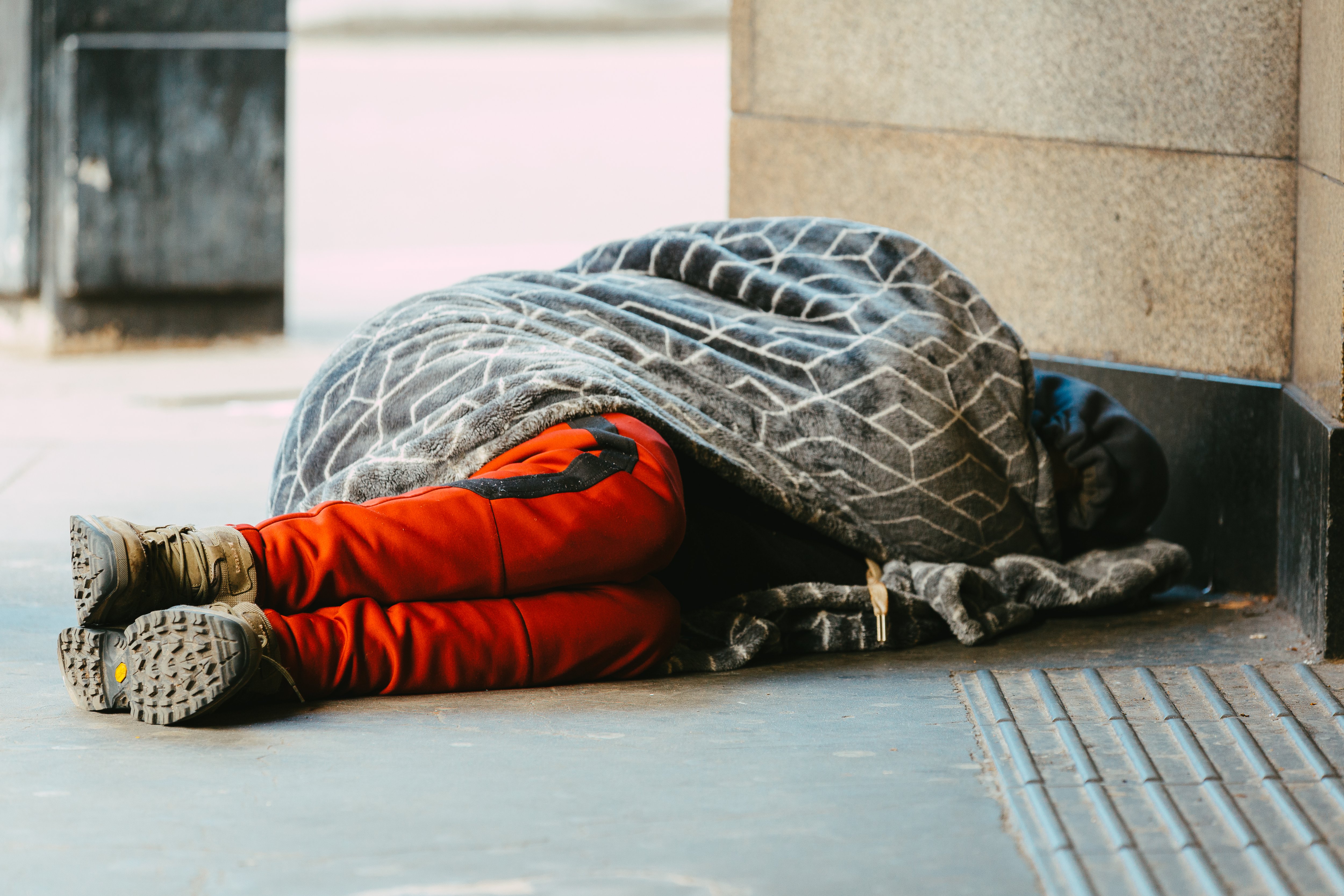
The Government will formally abolish the Vagrancy Act on Monday, bringing an end to a law that has made rough sleeping a criminal offence for more than 200 years.The Ministry of Housing, Communities and Local Government confirmed the Victorian-era legislation will be repealed through secondary legislation.Housing Secretary Steve Reed said the move marked a shift away from punishing homeless people towards supporting them.Homeless people are not criminals, they are people who need help, Mr Reed said. TRENDING Stories Videos Your Say By repealing the outdated Vagrancy Act, we are shifting from punishment to prevention, alongside our investment to tackle homelessness for good.The Act was introduced in 1824 to punish what lawmakers of the time described as idle and disorderly persons, and rogues and vagabonds.Conservative ministers first pledged to repeal the legislation in 2022, but delayed doing so until replacement powers had been put in place.As a result, the Act remained in force for several more years, continuing to criminalise rough sleeping.The repeal will now take effect after ministers confirmed Labour's Crime and Policing Act, passed in April, provides an alternative legal framework.The new legislation introduces offences aimed at tackling organised begging and criminal exploitation rather than homelessness itself.These include powers to target those who facilitate begging for financial gain and individuals who trespass with the intention of committing criminal offences.Ministers said the new measures ensure police retain the powers needed to tackle anti-social behaviour while removing legislation that criminalised people for sleeping rough.POLITICS - READ THE LATEST:Defence investment plan will be published 'imminently' amid pledges for more money to armed forcesKeir Starmer U-turns on manifesto pledge and caves into EU over controversial foie gras‘We’d win!’ Labour has ‘no fear’ over an election with Andy Burnham as PM, Karl Turner declaresHomelessness charities welcomed the repeal.Matt Downie, chief executive of Crisis, described the move as a watershed moment which marks the end of a deeply cruel policy of criminalising people because they are homeless.He said the legislation had punished vulnerable people and driven many away from support services through fear of prosecution.Emma Haddad, chief executive of St Mungo's, also welcomed the decision.She described the repeal as an important shift towards a more humane approach - one that focuses on support, tackles root causes, and helps prevent homelessness.Meanwhile, chief executive of Housing Justice, Bonnie Williams, said repealing the Act should be part of a wider change in approach to helping people off the streets.She argued this “puts the emphasis on compassion, not condemnation, and recognises that homelessness does not truly end until a person has not only housing, but the relationships, community and belonging they need to thrive”.In March 2026, 7,541 people were estimated to be sleeping rough over the month in England alone. Our Standards: The GB News Editorial Charter
Narrative Intelligence Brief
This article was published by GB News, a source frequently categorized with a lean right bias based in United States of America. Our narrative intelligence engine continuously monitors coverage from this outlet to track framing, bias, and rhetorical patterns. In this specific piece, our systems detected the potential use of the "Appeal to Fear" technique. This narrative approach is often used to shape reader perception by highlighting specific emotional or rhetorical angles. By understanding the editorial perspective of GB News, readers can better contextualize the information presented and compare it across our broader media matrix to find the real narrative.
More from GB News
June 28, 2026
Thomas Tuchel issues worrying England injury update after Panama World Cup win
June 28, 2026
Roy Keane tears into Thomas Tuchel after England World Cup win over Panama - 'Hasn't got a clue'
June 28, 2026
Alastair Stewart: Britain's obsession with apps and algorithms is making my life hell
June 28, 2026
World Cup day 18: Reaction after England beat Panama and Ronaldo left frustrated
June 28, 2026
British rescue team left stranded as race to save Venezuela earthquake survivors hangs in the balance
Reliability Insights
P
Technique: Appeal to Fear
System analysis detected use of specific narrative techniques in this piece.Analysis Methodology
This narrative analysis was generated using the CoDataLab Global Intelligence Engine. Our proprietary AI scans thousands of cross-border sources to identify sentiment patterns, framing techniques, and potential media bias. While AI provides the data-driven foundation, our objective is to empower readers with additional context beyond the standard headline.The content displayed above is a structured summary designed for rapid information processing. For the full original report, please visit the source outlet.More Coverage
Discussion