
Today in News History
On July 12, several notable moments in the history of News stand out. In 1807, Thomas Hawksley, English engineer and academic (died 1893) was born. In 1933, Victor Poor, American engineer, developed the Datapoint 2200 (died 2012) was born. In 1947, Richard C. McCarty, American psychologist and academic was born. In 1952, Voja Antonić, Serbian computer scientist and journalist, designed the Galaksija computer was born. In 1995, Chinese seismologists successfully predict the 1995 Myanmar-China earthquake, reducing the number of casualties to 11. In 1997, Malala Yousafzai, Pakistani-English activist, Nobel Prize laureate was born. In 1997, François Furet, French historian and author (born 1927) passed away. In 2001, Space Shuttle program: Space Shuttle Atlantis is launched on mission STS-104, carrying the Quest Joint Airlock to the International Space Station. In 2006, The 2006 Lebanon War begins. In 2015, Cheng Siwei, Chinese engineer, economist, and politician (born 1935) passed away. Together, these milestones provide historical context for today's news news and ongoing narratives.
Research infrastructure: why confidence, not technology is the real challenge
Sara Moverley, JISC, Jul 09, 2026 Good article (and not excessively wordy, which is a treat in the current environment) outlining challenges and trends in research infrastructure procurement. The core challenge isn't technology, it's confidence - how can you make major decisions in such a rapidly changing environment? The trend is toward hybrid infrastructure, allowing partners to opt for capability according to their own current needs. Good link near the end to a resource on mapping federation journeys. Web: [Direct Link] [This Post]
Narrative Intelligence Brief
This article was published by Stephen's Web ~ OLDaily, a source frequently categorized with a center bias based in Canada. Our narrative intelligence engine continuously monitors coverage from this outlet to track framing, bias, and rhetorical patterns. Our initial algorithmic scan of this specific piece did not flag high-confidence rhetorical techniques, suggesting a generally straightforward reporting style or neutral framing. By understanding the editorial perspective of Stephen's Web ~ OLDaily, readers can better contextualize the information presented and compare it across our broader media matrix to find the real narrative.
More from Stephen's Web ~ OLDaily
July 10, 2026
A visual introduction to information theory
July 10, 2026
Guidelines for Designing AI Technologies to Support Adult Learning
July 10, 2026
Before you build AI agents, build your company brain first
July 10, 2026
Thinking Like a Network 2.0
July 10, 2026
Game Design + Pedagogy + Leadership = Experiential Leadership
Analysis Methodology
This narrative analysis was generated using the CoDataLab Global Intelligence Engine. Our proprietary AI scans thousands of cross-border sources to identify sentiment patterns, framing techniques, and potential media bias. While AI provides the data-driven foundation, our objective is to empower readers with additional context beyond the standard headline.The content displayed above is a structured summary designed for rapid information processing. For the full original report, please visit the source outlet.More Coverage
Discussion
"wimbledon"
Sinner outlasts Zverev to win second straight Wimbledon title

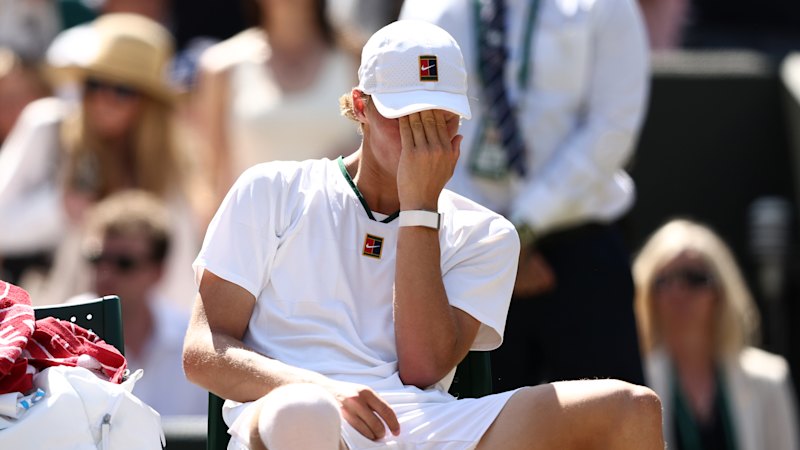
Heartbreak for Cruz Hewitt as teen loses Wimbledon boys’ final thriller
Jannik Sinner receives Gentlemen's Singles Trophy from Catherine after Italian defends Wimbledon title

How other outlets are covering this story
Compare narratives across 6 related reports from 6 sources. Real Narrative News aggregates the coverage spectrum so you can see who emphasises what — bias tags reflect the outlet, not the story.
Coverage bias distribution
6 sources
Left 17%
Center 50%
Right 33%
RAPPLER
· Jun 24, 2026
[Be The Good] It takes a village to keep our kids safe from online extremism
We need to collectively push for safety by design in platforms used by young people
Nepal News
· Jul 2, 2026
सरकारका १०० दिनः विज्ञान प्रविधिसँगै नवप्रवर्तन मन्त्रालयको नयाँ अभ्यास
काठमाडौँ। सरकारले मन्त्रालयहरूको सङ्ख्या घटाइ बेग्लै विज्ञान, प्रविधि तथा नवप्रवर्तन मन्त्रालयको गठन गर्नुलाई यस क्षेत्रमा नयाँ पहलका रूपमा हेरिएको छ। विज्ञान र प्रविधिको खोज, अनुसन्धान, आविष्कार, प्रवद्र्धन तथा विकासलाई संस्थागत बनाउने उद्देश्यसहित बेग्लै मन्त्रालय गठन गरिएको छ। विज्ञान तथा अनुसन्धानको क्षेत्रमा नीतिगत अस्पष्टता र बजेटको अपर्याप्तताका कारण दक्ष जनशक्ति उत्पादनको उचित वातावरण अभाव र प्रतिभा []
ASCD SmartBrief
· Jul 1, 2026
What educators have to say about "Techlash"
-More-
The Hindu BusinessLine
· Jun 21, 2026
America just exposed India’s technology dependency
Why does India finds itself vulnerable every time technology becomes strategically vital
Enrique Dans
· Jun 26, 2026
El enemigo que no duerme: cuando la inteligencia artificial puede convertir el hacking en una guerra híbrida permanente
Durante años, la ciberseguridad se apoyó en una ficción cómoda: atacar sistemas complejos exigía talento, tiempo, paciencia y conocimiento profundo. Un atacante avanzado era escaso, caro y limitado por una variable humana: el cansancio. Había que leer código, entender arquitecturas, probar hipótesis y volver a empezar. Esa fricción nunca garantizó la seguridad, pero mantenía un
MovieGuide
· Jul 7, 2026
How Do Americans Really Feel About Big Tech?
As Americans grow more concerned about Big Tech’s influence on their lives, many are calling for greater transparency and...
Topics:
Related coverage for "Research infrastructure: why confidence, not technology is the real challenge ": RAPPLER — [Be The Good] It takes a village to keep our kids safe from online extremism. Nepal News — सरकारका १०० दिनः विज्ञान प्रविधिसँगै नवप्रवर्तन मन्त्रालयको नयाँ अभ्यास. ASCD SmartBrief — What educators have to say about "Techlash". The Hindu BusinessLine — America just exposed India’s technology dependency. Enrique Dans — El enemigo que no duerme: cuando la inteligencia artificial puede convertir el hacking en una guerra híbrida permanente. MovieGuide — How Do Americans Really Feel About Big Tech?