
Report warns offshore oil exploration could threaten Jamaica’s marine ecosystems — JET
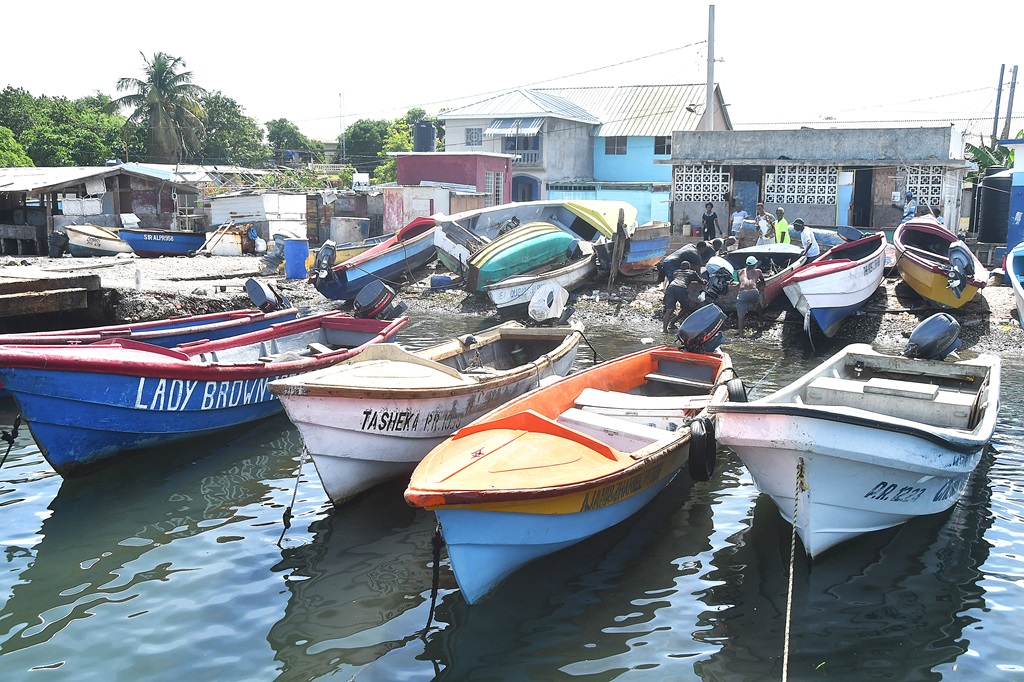
KINGSTON, Jamaica — A new report released Thursday by Earth Insight has warned that some of Jamaica’s most ecologically significant marine habitats could face direct threats from offshore oil and gas exploration in the Walton-Morant block off the island’s south coast.The report, Fossil Fuel Threats to the Ocean: Marine Life and Coastal Communities at Risk, was produced in partnership with the Jamaica Environment Trust (JET) and 10 other civil society organisations worldwide.In a statement, JET said the report uses geospatial analysis to show that the Walton-Morant block and its associated risk zones overlap with nearly all of Jamaica’s coral reefs, seagrass beds and key fishing grounds that have supported coastal communities for generations.The findings were released ahead of World Oceans Day on June 8 and the Our Ocean Conference, a global gathering focused on ocean conservation, scheduled for June 16–18 in Mombasa, Kenya.According to JET, the Walton-Morant block is considered Jamaica’s most prospective hydrocarbon asset. Although exploration activities remain in the preliminary stage, Earth Insight’s analysis found that the project's mapped risk zone overlaps with approximately 11,070 square kilometres of ecologically or biologically significant marine areas (EBSAs), an area nearly equivalent to the size of Jamaica itself.The report further noted that Jamaica’s exclusive economic zone contains a total of 60,159 square kilometres of EBSAs, meaning the Walton-Morant block potentially threatens nearly one-fifth, or 18 per cent, of the country’s most important marine ecosystems.“Jamaica’s marine ecosystems are already under pressure from climate change, pollution and overfishing,” said Dr Theresa Rodriguez-Moodie, chief executive officer of the Jamaica Environment Trust.While noting that offshore activity is currently at the exploration stage, Rodriguez-Moodie cautioned that such developments could pave the way for future extraction in some of the nation’s most valuable marine areas.“Instead of pushing for oil and gas expansion, we must focus on protecting our oceans and investing in healthy ecosystems, resilient communities and sustainable livelihoods,” she said.Key findings from the report include:— Risk zones tied to the Walton‑Morant block overlap with nearly all of Jamaica’s south coast coral reefs (99 per cent) and seagrass areas (97 per cent), threatening habitats that underpin fishing and tourism along the south coast;— About 62 per cent of marine and coastal protected areas (1,680 km²) and 62 per cent of key biodiversity areas (1,900 km²) fall within these mapped risk zones;— The Walton-Morant block overlaps with 11,070 km² of EBSA — an area roughly the size of Jamaica itself;— The Pedro Bank, Jamaica’s primary fishing ground, along with the Pedro and Morant Cays, falls within the block’s risk zone. Oil spills, drilling discharges or seismic surveys in or near these areas could damage habitats, disrupt fish populations and contaminate the seafood supply chains that thousands of Jamaican households depend on;— The Portland Bight Protected Area, a Ramsar Wetland of international importance and one of Jamaica’s largest marine protected areas, lies within the oil and gas risk zone. It is home to threatened species, including the Jamaican iguana, hawksbill turtle and American crocodile;— South coast towns, including Port Royal, Old Harbour Bay, Rocky Point, Alligator Pond, and Treasure Beach, are key artisanal fishing landing sites whose livelihoods depend on the nearshore and offshore grounds now overlapped by the block’s risk zone; and— Tourism destinations along the south coast, including Hellshire Beach, Treasure Beach and the Whitehouse coast, are vulnerable to oil pollution or coastal industrialisation that could undermine both high-end resorts and community-based tourism models.The findings are part of a broader global analysis spanning 11 case studies across Kenya, Tanzania, Cameroon, Norway, Alaska, Jamaica, Trinidad and Tobago, Argentina, Mexico, Indonesia, and Australia.The report found that among the case studies investigated, 38 per cent of coral reefs, 18 per cent of seagrasses, 29 per cent of mangroves, and 27 per cent of marine and coastal protected areas fall within oil and gas risk zones. In addition, 50 per cent of all important marine mammal areas are directly overlapped by oil and gas blocks.Among its recommendations, the report urges governments, financial institutions and international bodies to halt the granting of new licences, permits and approvals for offshore and coastal oil, gas and liquefied natural gas (LNG) projects in or near protected areas, key biodiversity areas, ecologically or biologically significant marine areas, coral reefs, mangroves and seagrass meadows.
Narrative Intelligence Brief
This article was published by Jamaica Observer, a source frequently categorized with a Unknown bias based in Jamaica. Our narrative intelligence engine continuously monitors coverage from this outlet to track framing, bias, and rhetorical patterns. Our initial algorithmic scan of this specific piece did not flag high-confidence rhetorical techniques, suggesting a generally straightforward reporting style or neutral framing. By understanding the editorial perspective of Jamaica Observer, readers can better contextualize the information presented and compare it across our broader media matrix to find the real narrative.
Explore related topics: Stay informed with Real Narrative News as we track unfolding stories. Dive deeper into our coverage of pivotal topics including marjane satrapi, real madrid, مراسل المنار, henry nowak, iran war, war powers, إطلاق النار, جنوب لبنان, nba finals, and mit israel. Our intelligence streams continuously monitor these keywords to bring you unbiased analysis and real-time updates on topics like "Report warns offshore oil exploration could threaten Jamaica’s marine ecosystems — JET".
More from Jamaica Observer
June 4, 2026
JCSA demands urgent resolution on travelling allowance claims and outstanding wage negotiations
June 4, 2026
Applications open for Reggae Boyz head coach position — JFF
June 4, 2026
Report warns offshore oil exploration could threaten Jamaica’s marine ecosystems — JET
June 4, 2026
Uganda’s Ghetto Kids group ‘can’t wait’ to join Shakira at World Cup
June 4, 2026
UK MP sues Musk’s xAI over fake sexualised images of her
Analysis Methodology
This narrative analysis was generated using the CoDataLab Global Intelligence Engine. Our proprietary AI scans thousands of cross-border sources to identify sentiment patterns, framing techniques, and potential media bias. While AI provides the data-driven foundation, our objective is to empower readers with additional context beyond the standard headline.The content displayed above is a structured summary designed for rapid information processing. For the full original report, please visit the source outlet.More Coverage
Discussion