Today in News History
On June 27, several notable moments in the history of News stand out. In 1901, Merle Tuve, American geophysicist and academic (died 1982) was born. In 1927, Prime Minister of Japan Tanaka Giichi convenes an eleven-day conference to discuss Japan's strategy in China. The Tanaka Memorial, a forged plan for world domination, is later claimed to be a secret report leaked from this conference. In 1937, Joseph P. Allen, American physicist and astronaut was born. In 1954, The Obninsk Nuclear Power Plant, the Soviet Union's first nuclear power station, opens in Obninsk, near Moscow. In 1968, Kelly Ayotte, American lawyer and politician, New Hampshire Attorney General was born. In 1977, Constitution for the Federation of Earth was adopted by the second session of the World Constituent Assembly, held at Innsbruck, Austria. In 1981, The Central Committee of the Chinese Communist Party issues its "Resolution on Certain Questions in the History of Our Party Since the Founding of the People's Republic of China", laying the blame for the Cultural Revolution on Mao Zedong. In 2013, NASA launches the Interface Region Imaging Spectrograph space probe to observe the Sun. In 2014, At least fourteen people are killed when a Gas Authority of India Limited pipeline explodes in the East Godavari district of Andhra Pradesh, India. In 2015, Formosa Fun Coast fire: A dust fire occurs at a recreational water park in Taiwan, killing 15 people and injuring 497 others, 199 critically. Together, these milestones provide historical context for today's news news and ongoing narratives.
Red state leader brutally fact checked after glaring mistake: 'What Earth are we on?'
Narrative Analysis: Name Calling
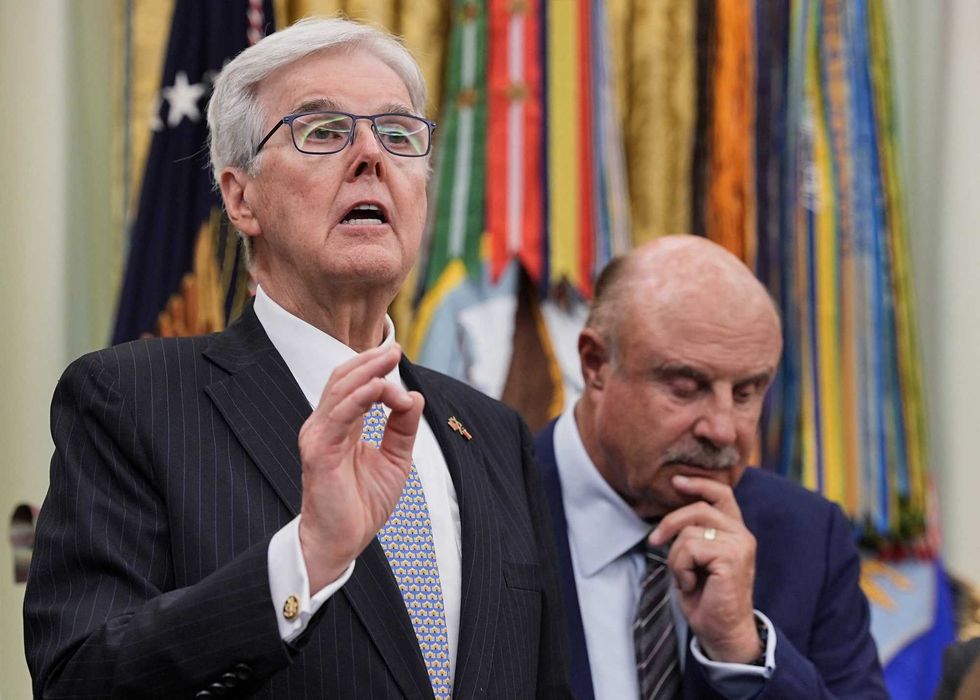
A red state leader's claim during an Oval Office visit was met with an outpouring of corrections by online critics.Texas Lt. Gov. Dan Patrick told reporters on Friday, Separation of Church and state is not in the Constitution, while standing behind Trump. The Texas Board of Education approved a required reading list earlier that day that included passages from the Bible.The reactions online included fact-checking posts that pointed out where the Separation of Church and State comes from and its relationship to the Constitution.The word religion appears in the Constitution twice, writer and podcaster Hemant Mehta posted on X. Both times, it's preceded by the word 'No.''Congress shall make no law respecting an establishment of religion' are the first 10 words in the Bill of Rights, political commentator Jim Stewartson noted. Treaty of Tripoli (1797): The U.S. is 'in no sense founded on the Christian religion.' The Enlightenment the Constitution are ABOUT separation of church state.The Establishment Clause is literally the first protection in the Bill of Rights, Congressman Mike Levin (D-CA) wrote. Thomas Jefferson famously described it as creating a 'wall of separation between church and state.'What Earth are we on? asked editor and reporter Mike Freeman.This is what it sounds like when idiots gather, pound their religious breasts and sow stupidity, conservative MS NOW weeknight host Michael Steele wrote. The words 'separation of church and state' do not appear in the Constitution, but the words are a metaphor (you know what that is, right?) from a 1802 letter written by Thomas Jefferson (since relied on as precedent by our Supreme Court) in which he stated that the First Amendment built a 'wall of separation between Church State.'
Narrative Intelligence Brief
This article was published by Raw Story, a source frequently categorized with a left bias based in United States of America. Our narrative intelligence engine continuously monitors coverage from this outlet to track framing, bias, and rhetorical patterns. In this specific piece, our systems detected the potential use of the "Name Calling" technique. This narrative approach is often used to shape reader perception by highlighting specific emotional or rhetorical angles. By understanding the editorial perspective of Raw Story, readers can better contextualize the information presented and compare it across our broader media matrix to find the real narrative.
More from Raw Story
June 27, 2026
'Please stop': CNN panel teams up against shouting MAGA pundit mid-rant
June 27, 2026
Journalist warns about Trump's bond with devoted aide: 'She is fueling his delusions'
June 27, 2026
Confederate flag display at Great American State Fair ignites firestorm
June 27, 2026
Trump made enemy whose revenge is 'going to be quite, quite sweet': ex-GOP strategist
June 27, 2026
MS NOW host and Bloomberg columnist accuse Trump's son-in-law of corruption
Reliability Insights
P
Technique: Name Calling
System analysis detected use of specific narrative techniques in this piece.Analysis Methodology
This narrative analysis was generated using the CoDataLab Global Intelligence Engine. Our proprietary AI scans thousands of cross-border sources to identify sentiment patterns, framing techniques, and potential media bias. While AI provides the data-driven foundation, our objective is to empower readers with additional context beyond the standard headline.The content displayed above is a structured summary designed for rapid information processing. For the full original report, please visit the source outlet.More Coverage
Discussion
"cape verde"
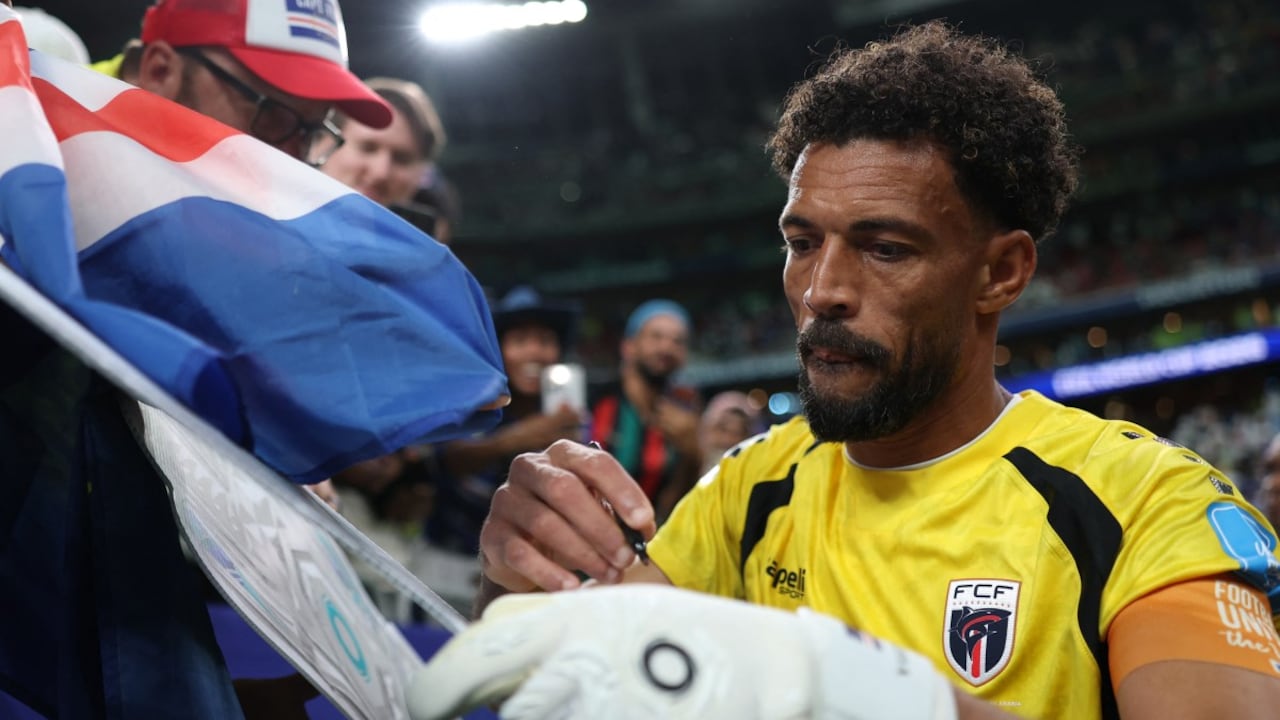
Cape Verde becomes tiniest nation to make World Cup knockouts

Cape Verde 0-0 Saudi Arabia: Debutants make history as three draws prove enough for knockout glory
/https%3A%2F%2Fsportsmole-media-prod.s3.gra.io.cloud.ovh.net%2Fuploads%2F2026%2F06%2Fcape-verde-6a3f5388ac241246143914.jpg)
Vozinha Enters Elite Goalkeeper List As Cabo Verde Reach FIFA WC 2026 Knockouts