Today in News History
On June 20, several notable moments in the history of News stand out. In 1837, William IV of the United Kingdom (born 1765) passed away. In 1866, James Burns, English cricketer (died 1957) was born. In 1895, The Kiel Canal, crossing the base of the Jutland peninsula and the busiest artificial waterway in the world, is officially opened. In 1939, Budge Rogers, English rugby player and manager was born. In 1941, Stephen Frears, English actor, director, and producer was born. In 1947, Bugsy Siegel, American mobster (born 1906) passed away. In 1959, A rare June hurricane strikes Canada's Gulf of St. Lawrence killing 35. In 1964, Pierfrancesco Chili, Italian motorcycle racer was born. In 1973, Aeroméxico Flight 229 crashes on approach to Licenciado Gustavo Díaz Ordaz International Airport, killing all 27 people on board. In 1975, The film Jaws is released in the United States, becoming the highest-grossing film of that time and starting the trend of films known as "summer blockbusters". Together, these milestones provide historical context for today's news news and ongoing narratives.
Razor-toothed poisonous pufferfish causing havoc in popular British tourist hotspot
Narrative Analysis: Appeal to Fear
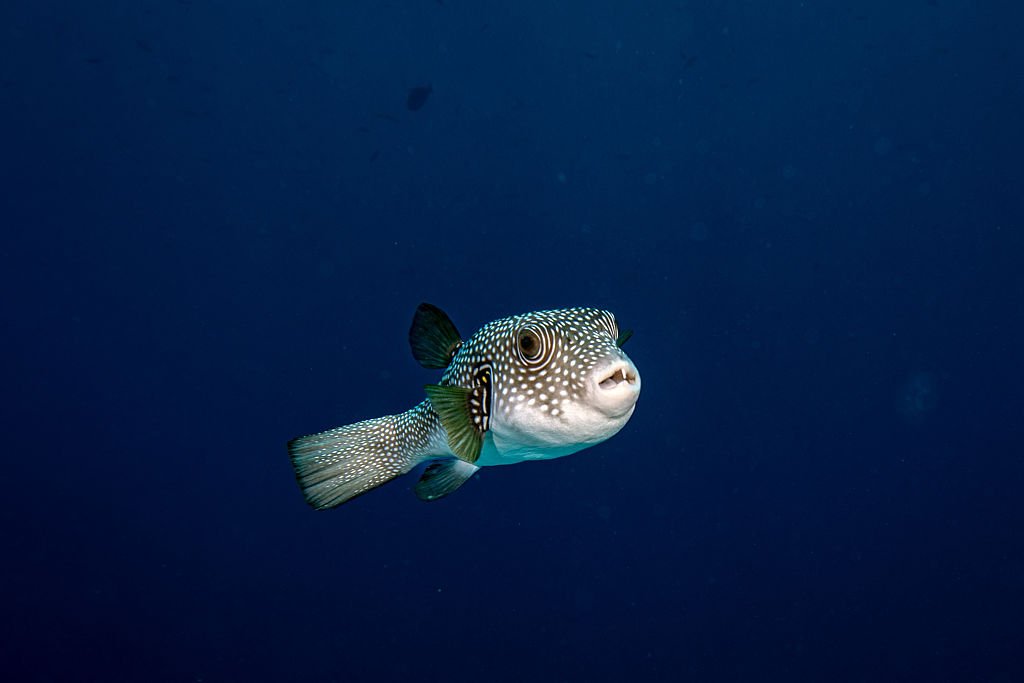
A ferocious fish with razor-sharp teeth capable of biting off swimmers' fingers and toes is spreading through Mediterranean waters frequented by British holidaymakers.The silver-cheeked pufferfish, scientifically known as Lagocephalus sceleratus, has become an increasingly serious problem at popular coastal resorts across Greece and surrounding regions.Beyond its powerful bite that can sever digits, the species poses an additional danger through tetrodotoxin, a potent neurotoxin present throughout its body that can trigger cardiac and respiratory failure, rendering it completely inedible.Originally native to the Indian Ocean, this invasive predator entered Mediterranean waters through the Suez Canal and has thrived due to warming seas and increased salinity linked to climate change. TRENDING Stories Videos Your Say Tourists heading to Greek beaches this summer now face threats beyond the usual hazards of jellyfish and sea urchins, with the aggressive fish adding to potential dangers in the water.An elderly woman required stitches this week after being attacked by one of the fish while bathing at Varkiza, a coastal resort close to Athens.Greek media reported that the pufferfish struck without warning or provocation as she swam.The incident represents the latest in a growing pattern of similar attacks across the Mediterranean, where the species faces no natural predators and its numbers continue to multiply.Nota Peristeraki, a specialist on the fish from the Hellenic Centre for Marine Research, urged caution around the creatures.She told The Telegraph.: If you see this fish approaching you, you really need to avoid it.Some attacks have happened when people have tried to feed or touch the fish. There have been a couple of cases of people losing a finger or a toe. That said, these are rare incidents. You are more likely to encounter a shark.Greek fishermen have described the pufferfish invasion as catastrophic for their livelihoods, with the creatures destroying nets and devouring catches.LATEST DEVELOPMENTSChania: British teenager dies after swimming off red-flagged beach in Greek holiday hotspotBritons allowed to return to holiday hotspot as Foreign Office lifts travel ban after four monthsAnti-tourism protests have devastating impact on growing holiday hotspot as hotel booking cancellations surgeIf one of these bites you, it will take your finger clean off, Cretan fisherman Alexis Charlambakis told local media. They are the destruction of the sea. They leave nothing behind. If this wasn't my boat, I'd quit this profession for good. The situation is dire... we cannot survive.Fellow fisherman Giannis Giankakis explained the scale of the problem: It's an omnivorous fish that eats everything it encounters. Nothing seems to bother it, because it has no natural predators.The financial toll has proved devastating, with estimates suggesting each Greek fishing vessel suffers approximately 8,500 in annual losses and damage.Researchers have discovered remnants of fishing equipment inside the creatures' stomachs, according to Ms Peristeraki.The silver-cheeked pufferfish first appeared in the eastern Mediterranean in 2003 before reaching Greek waters two years later, but recent years have witnessed a dramatic expansion in both population and geographical range.The species has now spread westward towards Italian and Spanish coastlines, with particularly high concentrations around Crete and the Dodecanese Islands, including the popular holiday destination of Rhodes.Cyprus has implemented a bounty system paying fishermen to capture as many pufferfish as possible, with the haul subsequently incinerated as hazardous waste.Greek authorities are now examining whether to introduce a comparable scheme, with fishermen urging swift action to curb the population explosion.Scientists are meanwhile exploring alternative uses for the toxic fish, including processing them into fish meal for aquaculture operations or converting them into agricultural fertiliser. Our Standards: The GB News Editorial Charter
Narrative Intelligence Brief
This article was published by GB News, a source frequently categorized with a lean right bias based in United States of America. Our narrative intelligence engine continuously monitors coverage from this outlet to track framing, bias, and rhetorical patterns. In this specific piece, our systems detected the potential use of the "Appeal to Fear" technique. This narrative approach is often used to shape reader perception by highlighting specific emotional or rhetorical angles. By understanding the editorial perspective of GB News, readers can better contextualize the information presented and compare it across our broader media matrix to find the real narrative.
More from GB News
June 20, 2026
Rory McIlroy pulls out of final signature event of PGA Tour season
June 20, 2026
Jeremy Clarkson delivers health update as he breaks silence after cancer diagnosis
June 20, 2026
White House considering changing travel restrictions for Iran at World Cup
June 20, 2026
'Safer than the car!' Simon Calder assures Britons after fatal Bedford train crash
June 20, 2026
'The most impressive plane I've ever seen!' Ben Leo shares details of Donald Trump’s new Air Force One after exclusive tour
Reliability Insights
P
Technique: Appeal to Fear
System analysis detected use of specific narrative techniques in this piece.Analysis Methodology
This narrative analysis was generated using the CoDataLab Global Intelligence Engine. Our proprietary AI scans thousands of cross-border sources to identify sentiment patterns, framing techniques, and potential media bias. While AI provides the data-driven foundation, our objective is to empower readers with additional context beyond the standard headline.The content displayed above is a structured summary designed for rapid information processing. For the full original report, please visit the source outlet.More Coverage
Discussion