
Today in News History
On June 23, several notable moments in the history of News stand out. In 1940, Derry Irvine, Baron Irvine of Lairg, Scottish lawyer, judge, and politician, Lord High Chancellor of Great Britain was born. In 1940, Stuart Sutcliffe, Scottish painter and musician (died 1962) was born. In 1949, Gordon Bray, Australian journalist and sportscaster was born. In 1955, Pierre Corbeil, Canadian dentist and politician was born. In 1959, Convicted Manhattan Project spy Klaus Fuchs is released after only nine years in prison and allowed to emigrate to Dresden, East Germany where he resumes a scientific career. In 1973, A fire at a house in Hull, England, which kills a six-year-old boy is passed off as an accident; it later emerges as the first of 26 deaths by fire caused over the next seven years by serial arsonist Peter Dinsdale. In 1973, Gerry Birrell, Scottish race car driver (born 1944) passed away. In 1989, Werner Best, German police officer and jurist (born 1903) passed away. In 2010, John Burton, Australian public servant and diplomat (born 1915) passed away. In 2017, A series of terrorist attacks take place in Pakistan, resulting in 96 deaths and wounding 200 others. Together, these milestones provide historical context for today's news news and ongoing narratives.
Police expand live facial recognition to one of Britain's most touristic areas and key crime hotspot
Narrative Analysis: Appeal to Fear
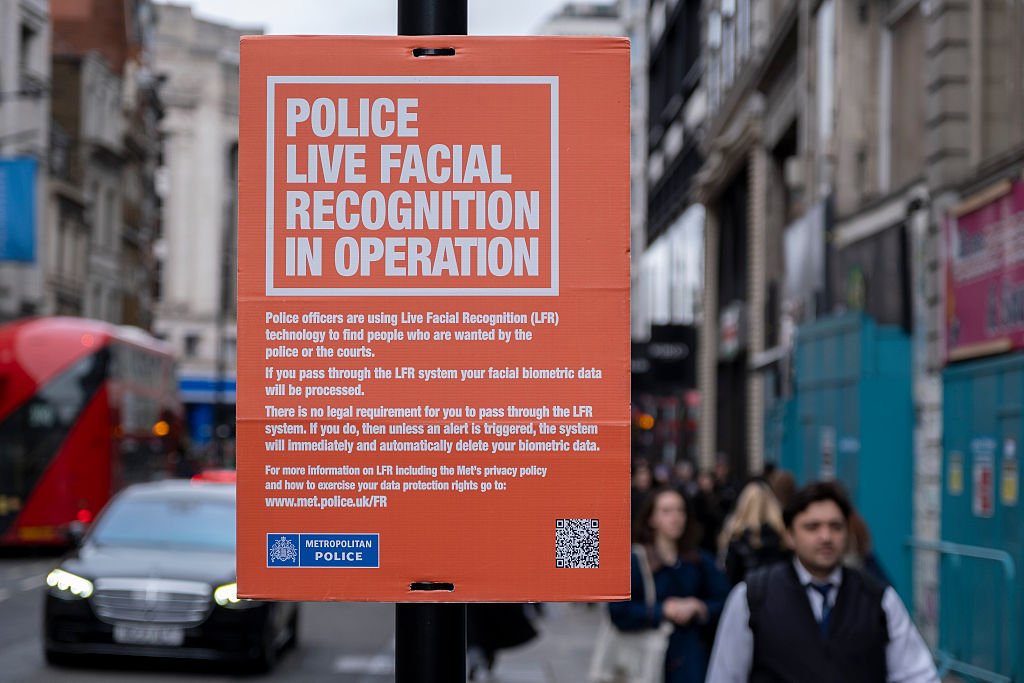
Scotland Yard has announced plans to install live facial recognition cameras throughout London's West End before the end of the year. The Metropolitan Police confirmed that fixed surveillance equipment will be positioned across Soho, near theatre venues, and in major retail areas by December.Officers will retain the flexibility to relocate the cameras should criminal activity patterns change across different locations.The force described the initiative as transformative for some of the capital's busiest and most crime-affected neighbourhoods. TRENDING Stories Videos Your Say According to Scotland Yard, the deployment aims to protect both residents and visitors from criminal activity in these high-footfall zones.The technology operates by linking cameras to a database of photographs of wanted individuals, with facial biometric data extracted and cross-referenced against these images in real time.When the system identifies a potential match, police officers receive an immediate alert.A six-month trial in Croydon, where cameras were attached to lampposts and existing infrastructure, resulted in more than 170 arrests this year.Among those detained was a 36-year-old woman sought in connection with an alleged assault dating back to 2004.Since 2024, the Metropolitan Police has used live facial recognition to apprehend over 2,000 people across the capital, including suspected rapists, domestic violence perpetrators, and repeat shoplifters.Police state that no arrests have resulted from false alerts.Sir Mark Rowley, the Metropolitan Police's commissioner, said: Facial recognition is one of the most revolutionary technology advances in policing in recent years. Public confidence in this is clear around 80 per cent of Londoners support its use. That backing reflects a simple truth: it works.LATEST DEVELOPMENTS'Nothing short of shocking' - Police probe video of 'officer punching young girls' in RotherhamRhiannon Whyte's mother says police 'toned down' statement after asylum seeker murdered daughterMet Police begs for fast-track court system to deal with shoplifting scourge in LondonThe commissioner highlighted the Croydon results, noting the pilot produced just one false alert despite scanning hundreds of thousands of faces.He argued that criminals readily embrace new technology, meaning police forces must keep pace.Sir Mark said: The technology supports officers to target wanted criminals and registered sex offenders.Tomorrow, the commissioner will address the Police Foundation think tank, outlining how technological advances can deliver more effective, visible and transparent policing across the capital.Dee Corsi, chief executive of New West End Company, said: We have long supported the responsible use of live facial recognition as an effective tool in tackling crime, improving public safety and enhancing public confidence. A pilot scheme in the West End presents a significant opportunity that we very much welcome.Privacy campaigners mounted an unsuccessful High Court challenge against the Met's facial recognition programme in April, arguing that the technology could be deployed arbitrarily or discriminatorily.Sir Mark described the ruling as a significant and important victory for public safety.Policing minister Sarah Jones has confirmed the Government intends to expand the deployment of live facial recognition nationwide, backed by record levels of investment to enhance community safety.Our Standards: The GB News Editorial Charter
Narrative Intelligence Brief
This article was published by GB News, a source frequently categorized with a lean right bias based in United States of America. Our narrative intelligence engine continuously monitors coverage from this outlet to track framing, bias, and rhetorical patterns. In this specific piece, our systems detected the potential use of the "Appeal to Fear" technique. This narrative approach is often used to shape reader perception by highlighting specific emotional or rhetorical angles. By understanding the editorial perspective of GB News, readers can better contextualize the information presented and compare it across our broader media matrix to find the real narrative.
More from GB News
June 23, 2026
Britain's largest gardening centre firm warns Ed Miliband's Net Zero rules will cost chain 'millions'
June 23, 2026
Army chief lays out plan for autonomy in future warfare with ambitions to 'strike deep, defend forward and build stronger'
June 23, 2026
Peter Murrell jailed for over five years after embezzling over £400k from SNP funds
June 23, 2026
‘No mandate whatsoever!’ Nigel Farage demands new General Election as he slams ‘flip-flopping’ Andy Burnham
June 23, 2026
AirPods 4 plummet to record-low price in Amazon Prime Day deal
Reliability Insights
P
Technique: Appeal to Fear
System analysis detected use of specific narrative techniques in this piece.Analysis Methodology
This narrative analysis was generated using the CoDataLab Global Intelligence Engine. Our proprietary AI scans thousands of cross-border sources to identify sentiment patterns, framing techniques, and potential media bias. While AI provides the data-driven foundation, our objective is to empower readers with additional context beyond the standard headline.The content displayed above is a structured summary designed for rapid information processing. For the full original report, please visit the source outlet.More Coverage
Discussion
"cup"
DHS’ bizarre post about the U.S. men’s World Cup advancement got it all wrong

Jeremy Doku’s Belgium World Cup return date confirmed as presenter apologises for "completely useless" comment
/https%3A%2F%2Fsportsmole-media-prod.s3.gra.io.cloud.ovh.net%2Fuploads%2F2026%2F06%2Faaa-jd-6a3a27296adb3055463402.jpg)
Portugal's World Cup civil war over Cristiano Ronaldo's last chance: With conspiracy theories, sisters involved, WAGs dragged in and awkward Bruno Fernandes moments - the solution is still complicated
