Today in News History
On July 2, several notable moments in the history of News stand out. In 1902, K. Kanapathypillai, Sri Lankan author and academic (died 1968) was born. In 1929, Imelda Marcos, Filipino politician; 10th First Lady of the Philippines was born. In 1952, Sylvia Rivera, American transgender rights activist (died 2002) was born. In 1955, Kim Carr, Australian educator and politician, 31st Australian Minister for Human Services was born. In 1960, Maria Lourdes Sereno, Filipino lawyer and jurist, 24th Chief Justice of the Supreme Court of the Philippines was born. In 1970, Jessie Street, Australian suffragette and feminist (born 1889) passed away. In 1986, Rodrigo Rojas and Carmen Gloria Quintana are burnt alive during a street demonstration against the dictatorship of General Augusto Pinochet in Chile. In 1990, In the 1990 Mecca tunnel tragedy, 1,400 Muslim pilgrims are suffocated to death and trampled upon in a pedestrian tunnel leading to the holy city of Mecca. In 1997, The Bank of Thailand floats the baht, triggering the Asian financial crisis. In 2004, Mochtar Lubis, Indonesian journalist and author (born 1922) passed away. Together, these milestones provide historical context for today's news news and ongoing narratives.
Philippines’ abortion ban drives women to risky, underground services
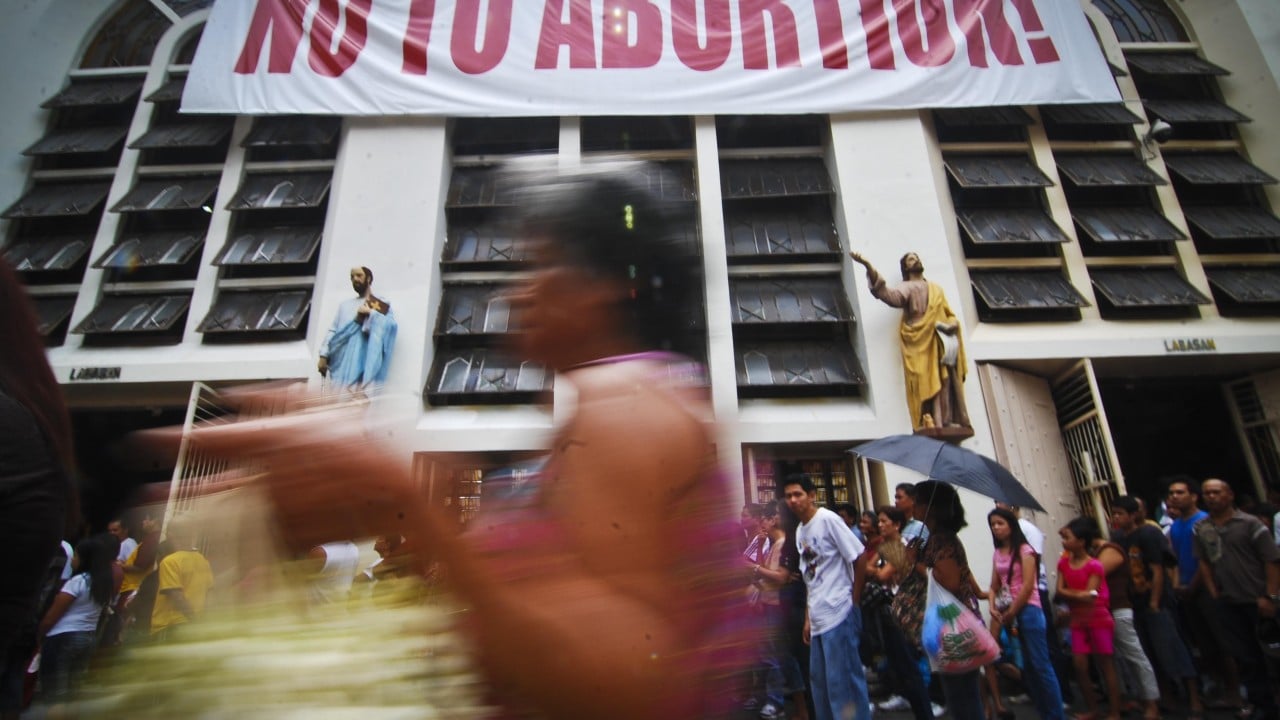
The arrest of a 65-year-old woman accused of selling abortion pills in Manila has offered a glimpse into the shadow economy growing around ending unwanted pregnancies in the Philippines, one of the few countries in the world where the procedure remains criminalised in almost all circumstances. For women and girls trying to end unwanted pregnancies, access often depends on online sellers, market vendors, whispered referrals and the uncertain quality of pills bought far from formal medical care,...
Narrative Intelligence Brief
This article was published by South China Morning Post, a source frequently categorized with a lean left bias based in Hong Kong. Our narrative intelligence engine continuously monitors coverage from this outlet to track framing, bias, and rhetorical patterns. Our initial algorithmic scan of this specific piece did not flag high-confidence rhetorical techniques, suggesting a generally straightforward reporting style or neutral framing. By understanding the editorial perspective of South China Morning Post, readers can better contextualize the information presented and compare it across our broader media matrix to find the real narrative.
More from South China Morning Post
July 2, 2026
Gaza marks 1,000 days of war. Palestinians there face an uncertain future
July 2, 2026
What Philippine president’s visit reveals about Canada’s Indo-Pacific ambitions
July 2, 2026
No more warnings for litterbugs as Malaysia’s Penang deploys bodycams
July 2, 2026
Ferrari owner sues ‘unapologetic’ Chinese parents whose kids scratched $530,000 supercar
July 2, 2026
New technologies power China’s Tesla challengers to monthly sales records
Analysis Methodology
This narrative analysis was generated using the CoDataLab Global Intelligence Engine. Our proprietary AI scans thousands of cross-border sources to identify sentiment patterns, framing techniques, and potential media bias. While AI provides the data-driven foundation, our objective is to empower readers with additional context beyond the standard headline.The content displayed above is a structured summary designed for rapid information processing. For the full original report, please visit the source outlet.More Coverage
Discussion
"usa"
Trump’s Empty Fair Delivers Another Embarrassing Snub

It’s not a they problem, it’s our problem: We must learn to speak up regardless
Allie Beth Stuckey calls out dangerous Islam myth pushed on Tucker Carlson’s podcast