Today in News History
On June 27, several notable moments in the history of News stand out. In 1824, William Thomson, 1st Baron Kelvin, Irish-Scottish physicist and engineer (died 1907) was born. In 1848, End of the June Days Uprising in Paris. In 1898, Willy Messerschmitt, German engineer and businessman (died 1978) was born. In 1909, The Science Museum in London comes into existence as an independent entity. In 1914, Princess Sophie of Greece and Denmark, European royalty (died 2001) was born. In 1924, The American occupation of the Dominican Republic ends after eight years. In 1940, World War II: Under the Molotov-Ribbentrop Pact, the Soviet Union presents an ultimatum to Romania requiring it to cede Bessarabia and the northern part of Bukovina. In 1941, World War II: Soviet planes bomb Kassa, Hungary (now Košice, Slovakia), giving Hungary the impetus to declare war the next day. In 1955, Engelbert Zaschka, German engineer (born 1895) passed away. In 2015, Five different terrorist attacks in France, Tunisia, Somalia, Kuwait, and Syria occurred on what was dubbed Bloody Friday by international media. Upwards of 750 people were either killed or injured in these uncoordinated attacks. Together, these milestones provide historical context for today's news news and ongoing narratives.
Parts of Europe and UK swelter through 40 degree days
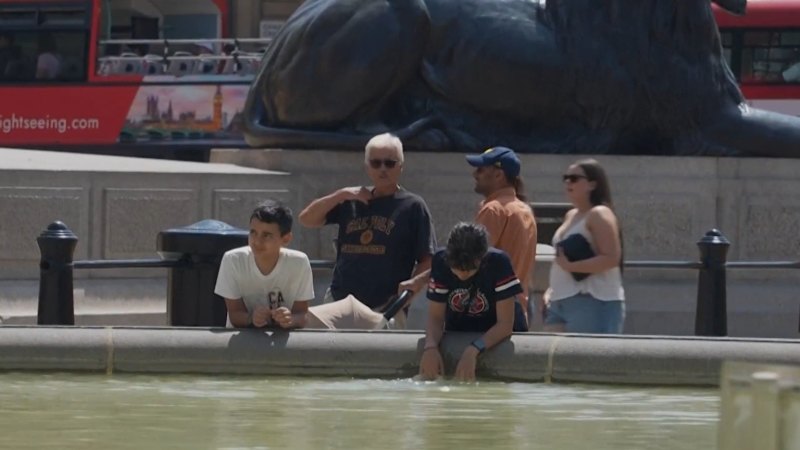
Millions of people have sweltered through 40 degree temperatures in Europe and the UK.
Narrative Intelligence Brief
This article was published by Brisbane Times, a source frequently categorized with a center bias based in Australia. Our narrative intelligence engine continuously monitors coverage from this outlet to track framing, bias, and rhetorical patterns. Our initial algorithmic scan of this specific piece did not flag high-confidence rhetorical techniques, suggesting a generally straightforward reporting style or neutral framing. By understanding the editorial perspective of Brisbane Times, readers can better contextualize the information presented and compare it across our broader media matrix to find the real narrative.
More from Brisbane Times
June 26, 2026
Boy, 15, charged after allegedly abducting girl from Melbourne school
June 26, 2026
The Wallabies play three Tests in July. They must win two to show progress
June 26, 2026
Most brain-training hacks don’t work, but a 20-year study found one that does
June 26, 2026
Santo Cilauro’s greatest fear? Italy not making the World Cup again
June 26, 2026
More than 51,000 missing: The desperate search for Venezuela earthquake survivors as death toll climbs
Analysis Methodology
This narrative analysis was generated using the CoDataLab Global Intelligence Engine. Our proprietary AI scans thousands of cross-border sources to identify sentiment patterns, framing techniques, and potential media bias. While AI provides the data-driven foundation, our objective is to empower readers with additional context beyond the standard headline.The content displayed above is a structured summary designed for rapid information processing. For the full original report, please visit the source outlet.More Coverage
Discussion