
Today in News History
On July 12, several notable moments in the history of News stand out. In 1489, Bahlul Lodi, sultan of Delhi passed away. In 1576, Mughal Empire annexes Bengal after defeating the Bengal Sultanate at the Battle of Rajmahal. In 1799, Ranjit Singh conquers Lahore and becomes Maharaja of the Punjab (Sikh Empire). In 1920, The Soviet-Lithuanian Peace Treaty is signed, by which Soviet Russia recognizes the independence of Lithuania. In 1961, Indian city Pune floods due to failure of the Khadakwasla and Panshet dams, killing at least two thousand people. In 1997, Malala Yousafzai, Pakistani-English activist, Nobel Prize laureate was born. In 1999, Rajendra Kumar, Indian actor (born 1921) passed away. In 2012, Dara Singh, Indian wrestler, actor, and politician (born 1928) passed away. In 2012, Alimuddin, Pakistani cricketer (born 1930) passed away. In 2014, Jamil Ahmad, Pakistani author (born 1931) passed away. Together, these milestones provide historical context for today's news news and ongoing narratives.
Pakistan accuses India of water ‘weaponisation’ over Indus treaty suspension
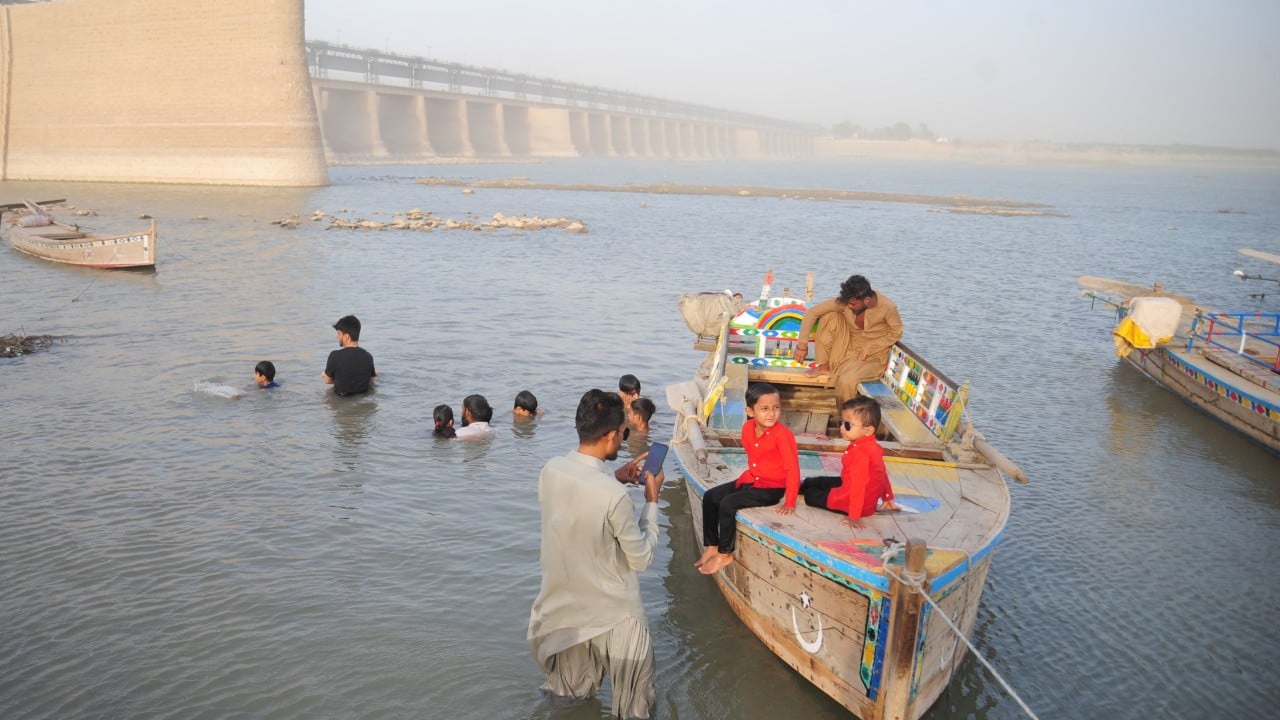
Islamabad has warned that any attempt by India to deprive Pakistan of its share of water under the Indus Waters Treaty would amount to the “weaponisation of water” and could have serious consequences for regional peace and security. Foreign Minister Ishaq Dar and other government officials made the remarks at an international seminar on the 1960 World Bank – brokered treaty, which governs the sharing of water from the Indus River system between the nuclear-armed neighbours. The treaty has come...
Narrative Intelligence Brief
This article was published by South China Morning Post, a source frequently categorized with a lean left bias based in Hong Kong. Our narrative intelligence engine continuously monitors coverage from this outlet to track framing, bias, and rhetorical patterns. Our initial algorithmic scan of this specific piece did not flag high-confidence rhetorical techniques, suggesting a generally straightforward reporting style or neutral framing. By understanding the editorial perspective of South China Morning Post, readers can better contextualize the information presented and compare it across our broader media matrix to find the real narrative.
More from South China Morning Post
July 12, 2026
Hong Kong police arrest 9 in crackdown on dangerous driving
July 12, 2026
US senator and Trump ally Lindsey Graham dies after sudden illness
July 12, 2026
Fifa World Cup: Hong Kong pubs, restaurants enjoy net gains from big matches
July 12, 2026
Gulf capital flowing into Asia as Hong Kong-Middle East trade up 35%: Paul Chan
July 12, 2026
Sheikh Hamad bin Khalifa Al Thani, who raised Qatar’s global profile, dies at 74
Analysis Methodology
This narrative analysis was generated using the CoDataLab Global Intelligence Engine. Our proprietary AI scans thousands of cross-border sources to identify sentiment patterns, framing techniques, and potential media bias. While AI provides the data-driven foundation, our objective is to empower readers with additional context beyond the standard headline.The content displayed above is a structured summary designed for rapid information processing. For the full original report, please visit the source outlet.More Coverage
Discussion
"cup semifinal"
Argentina beat Switzerland to set up World Cup semifinal against England

[Photo] JUST IN: 🇦🇷 Argentina officially advances to the FIFA World Cup semifinal after defeat [...]

Argentina set up titanic World Cup semifinal against England with extra-time victory over Switzerland after Breel Embolo's embarrassing red card

How other outlets are covering this story
Compare narratives across 6 related reports from 6 sources. Real Narrative News aggregates the coverage spectrum so you can see who emphasises what — bias tags reflect the outlet, not the story.
Coverage bias distribution
6 sources
Left 0%
Center 17%
Right 83%
Al Arabiya English
· Jun 30, 2026
Pakistan Warns India Against Water Weaponization
Pakistan's Foreign Minister Ishaq Dar warns that any attempt by India to deprive Pakistan of its share of water under the Indus Waters Treaty would amount to the “weaponization of water” and could have serious consequences for regional peace and security.
Latestly.com
· Jul 4, 2026
Why Is Pakistan Blaming India for Water Shortage?
Pakistan has accused India of reducing water flows under the Indus Waters Treaty after New Delhi suspended its participation in the agreement following the April 2025 terror attack. Islamabad claims India is violating the treaty and warns against the weaponisation of water, while India has not commented on the latest allegations.
UrduPoint
· Jul 6, 2026
Pakistan’s rights under Indus Waters Treaty non-negotiable: Tariq Fazal
Pakistan’s rights under Indus Waters Treaty non-negotiable: Tariq Fazal
Times of India
· Jun 21, 2026
'The moment we ... ' : Pakistan defence minister issues war threat to India over Indus Water Treaty
'The moment we ... ' : Pakistan defence minister issues war threat to India over Indus Water Treaty
The Tribune
· Jul 2, 2026
India making efforts to control rivers, Pakistan alleges yet again
Pakistan on Thursday rejected the alleged Indian effort to control rivers by treating water as a “strategic asset,” especially in the case of the Indus basin. Foreign Office spokesperson Tahir Andrabi’s comments during his weekly press briefing were in response to a question about India’s decision to put the Indus Water Treaty (IWT) in “abeyance”. []
Modern Diplomacy
· Jul 4, 2026
Indus Waters Treaty Crisis: Why South Asia’s Power Balance Is Shifting
Last month, Pakistan formally objected to India’s Bhakara Dam expansion. This was the third major dispute filed under the Indus Waters Treaty in eighteen months. What might appear to international observers as routine treaty administration masks a fundamental geopolitical realignment: the institutional framework that has prevented water conflict in South Asia for 63 years is [] The post Indus Waters Treaty Crisis: Why South Asia’s Power Balance Is Shifting appeared first on Modern Diplomacy.
Topics:
Related coverage for "Pakistan accuses India of water ‘weaponisation’ over Indus treaty suspension": Al Arabiya English — Pakistan Warns India Against Water Weaponization. Latestly.com — Why Is Pakistan Blaming India for Water Shortage?. UrduPoint — Pakistan’s rights under Indus Waters Treaty non-negotiable: Tariq Fazal. Times of India — 'The moment we ... ' : Pakistan defence minister issues war threat to India over Indus Water Treaty. The Tribune — India making efforts to control rivers, Pakistan alleges yet again. Modern Diplomacy — Indus Waters Treaty Crisis: Why South Asia’s Power Balance Is Shifting