Today in News History
On July 11, several notable moments in the history of News stand out. In 1882, James Larkin White, American miner, explorer, and park ranger (died 1946) was born. In 1899, E. B. White, American essayist and journalist (died 1985) was born. In 1906, Murder of Grace Brown by Chester Gillette in the United States, inspiration for Theodore Dreiser's An American Tragedy. In 1916, Mortimer Caplin, American tax attorney, educator, and IRS Commissioner (died 2019) was born. In 1923, Richard Pipes, Polish-American historian and academic (died 2018) was born. In 1930, Ezra Vogel, American sociologist (died 2020) was born. In 1960, Congo Crisis: The State of Katanga breaks away from the Democratic Republic of the Congo. In 1961, Antony Jenkins, English banker and businessman was born. In 1968, Michael Geist, Canadian journalist and academic was born. In 2014, John Seigenthaler, American journalist and academic (born 1927) passed away. Together, these milestones provide historical context for today's news news and ongoing narratives.
Outsiders with major chops lead Fed task forces
Narrative Analysis: Name Calling
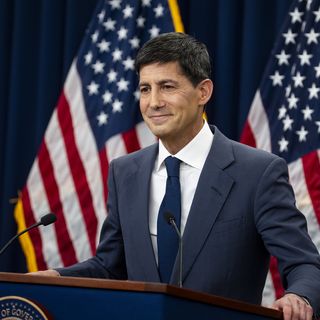
Federal Reserve chairman Kevin Warsh has created five task forces to rethink the central bank's policymaking process. They are likely to bring outside-the-box ideas combined with intellectual chops to an often insular institution.The big picture: The task forces consist of economists and business leaders who bring serious credibility to the table but also are not part of the Fed Borg — that is, not among the usual lineup of people who have recently worked at the central bank.It is particularly telling that the task forces are lean, with three members assigned to each (with support from Fed staff).As anyone familiar with organizational dynamics knows, a three-person committee is more likely to arrive at crisp, potentially contrarian ideas than a larger and more unwieldy panel would.Catch up quick: The task force leaders include a leading venture capitalist (Marc Andreessen), a former Walmart CEO (Doug McMillon) and former central bank heads (Mervyn King, Raghuram Rajan, Arminio Fraga).Top-flight economists include Harvard's Raj Chetty and Greg Mankiw and Nobel laureate Thomas Sargent.The full lineup — and their assignments — is here.State of play: The panels are tasked with coming up with recommendations for the policy-setting Federal Open Market Committee by year-end, on topics including Fed communications, economic data collection, AI and productivity.That's a lightning-fast pace by the standards of Fed policy frameworks.Between the lines: Even of those task force members who have worked at the Fed, none have done so recently. (Peter R. Fisher ran the New York Fed's markets desk a quarter-century ago, Karen Dynan left the staff in 2009, and Jeremy Stein's time as a governor ended in 2014.)While the panels include plenty of people who have expressed skepticism of elements of modern central bank orthodoxy, they do not do so from a systematically hawkish or dovish frame.They also don't come at things from a politically partisan lens, even those who have served in a presidential administration (as Mankiw did for President George W. Bush and Dynan, for President Obama).Zoom in: We're particularly intrigued by the panel on economic data collection.Chetty is perhaps the world's leading expert in using administrative data — actual records of individuals' actions, as opposed to survey results — to glean economic insights.He is deeply versed in the thorny analytical, technical and legal challenges in deriving useful information from vast troves of privacy-sensitive data.While McMillon is at first glance an unconventional choice, his inclusion aligns with an observation we've often made over the years: Why does it take the Census Bureau weeks to produce an estimate of retail sales, while the Walmart CEO gets fresh data every day?The intrigue: The task force on AI, labor markets and productivity is sure to generate interesting discussions, but could be the hardest to predict how its insights may map onto monetary policy.Andreessen is a techno-optimist who is bullish on AI's potential to create jobs; Stanford economist Charles I. Jones, currently on leave at the AI firm Anthropic, sees a productivity boom underway; and Microsoft executive Asha Sharma is in the trenches of wrestling with AI-driven change.Reality check: The task forces have no power on their own, but rather their influence will rest on their ability to persuade the FOMC that their critiques hold up to criticism.The bottom line: The experts chosen skew some to those who differ in at least some respects with current Fed practice, Evercore ISI's Krishna Guha and Gang Lyu wrote in a note.But in each case there is a serious and broadly balanced group that will be taken seriously by the market, Fed staff and the members of the FOMC who in most cases will ultimately have to agree to material changes.
Narrative Intelligence Brief
This article was published by Axios, a source frequently categorized with a center bias based in United States of America. Our narrative intelligence engine continuously monitors coverage from this outlet to track framing, bias, and rhetorical patterns. In this specific piece, our systems detected the potential use of the "Name Calling" technique. This narrative approach is often used to shape reader perception by highlighting specific emotional or rhetorical angles. By understanding the editorial perspective of Axios, readers can better contextualize the information presented and compare it across our broader media matrix to find the real narrative.
More from Axios
July 10, 2026
U.S. gives Iran Saturday deadline to publicly renounce Hormuz attacks
July 10, 2026
Apple sues OpenAI for trade secret theft
July 10, 2026
Inside Mike Johnson's déjà vu cycle of failed rule votes
July 10, 2026
GOP senators dread pre-election shutdown fight
July 10, 2026
Trump says Iran talks will continue, but "ceasefire is OVER"
Reliability Insights
P
Technique: Name Calling
System analysis detected use of specific narrative techniques in this piece.Analysis Methodology
This narrative analysis was generated using the CoDataLab Global Intelligence Engine. Our proprietary AI scans thousands of cross-border sources to identify sentiment patterns, framing techniques, and potential media bias. While AI provides the data-driven foundation, our objective is to empower readers with additional context beyond the standard headline.The content displayed above is a structured summary designed for rapid information processing. For the full original report, please visit the source outlet.More Coverage
Discussion
"cup semifinals"
France fans celebrate World Cup semifinal berth after 2-0 Morocco win

Mbappe and Dembele fire France past Morocco into World Cup semifinals

Lamine Yamal Thinks France, Not Spain, Should Be Worried About World Cup Semifinals