Today in News History
On July 1, several notable moments in the history of News stand out. In 1881, General Order 70, the culmination of the Cardwell and Childers reforms of the British Army, comes into effect. In 1941, Myron Scholes, Canadian-American economist and academic, Nobel Prize laureate was born. In 1955, Li Keqiang, Chinese economist and politician, 7th Premier of the People's Republic of China (died 2023) was born. In 1957, The International Geophysical Year begins. In 1960, Ghana becomes a republic and Kwame Nkrumah becomes its first President as Queen Elizabeth II ceases to be its head of state. In 1984, Moshé Feldenkrais, Ukrainian-Israeli physicist and academic (born 1904) passed away. In 1990, German reunification: East Germany accepts the Deutsche Mark as its currency, thus uniting the economies of East and West Germany. In 1994, Merriam Modell, American author (born 1908) passed away. In 2013, Croatia becomes the 28th member of the European Union. In 2020, The United States-Mexico-Canada Agreement replaces NAFTA. Together, these milestones provide historical context for today's news news and ongoing narratives.
Outdated policies cause energy inflation to skyrocket. The path forward is simple
Narrative Analysis: Appeal to Fear
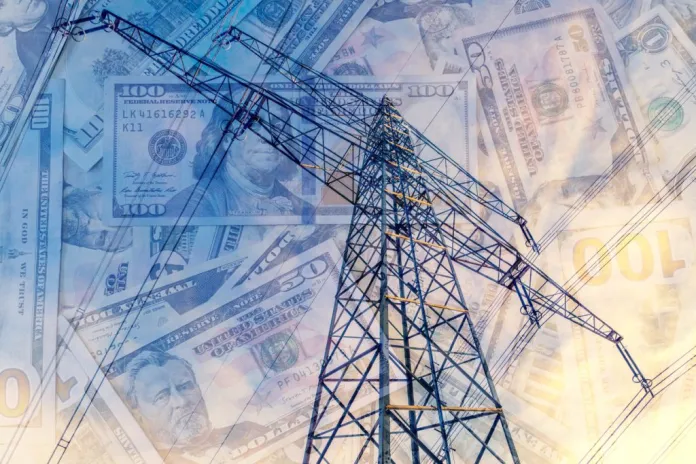
It’s no secret: Electricity prices are rising faster than general inflation, stressing American budgets and businesses’ bottom lines. At a time when America needs every available source of electricity to power economic growth, bad and outdated policies take affordable power off the table. Those policies won’t just raise electricity prices. They could undermine U.S. competitiveness []
Narrative Intelligence Brief
This article was published by Washington Examiner, a source frequently categorized with a lean right bias based in United States of America. Our narrative intelligence engine continuously monitors coverage from this outlet to track framing, bias, and rhetorical patterns. In this specific piece, our systems detected the potential use of the "Appeal to Fear" technique. This narrative approach is often used to shape reader perception by highlighting specific emotional or rhetorical angles. By understanding the editorial perspective of Washington Examiner, readers can better contextualize the information presented and compare it across our broader media matrix to find the real narrative.
More from Washington Examiner
July 1, 2026
How Mike Rowe’s ‘Build Freedom’ aims to restore the dignity of American work
July 1, 2026
Jay Clayton confirmation hearing rescheduled for mid-July
July 1, 2026
When politics becomes personal: Policy invades even the most sacred boundaries
July 1, 2026
World Cup reminds world why air conditioning matters. Regulators threaten our ability to provide it
July 1, 2026
Wisconsin voters must decide if they want to keep school choice for their kids
Reliability Insights
P
Technique: Appeal to Fear
System analysis detected use of specific narrative techniques in this piece.Analysis Methodology
This narrative analysis was generated using the CoDataLab Global Intelligence Engine. Our proprietary AI scans thousands of cross-border sources to identify sentiment patterns, framing techniques, and potential media bias. While AI provides the data-driven foundation, our objective is to empower readers with additional context beyond the standard headline.The content displayed above is a structured summary designed for rapid information processing. For the full original report, please visit the source outlet.More Coverage
Discussion
"supreme court"
Angry Trump lambasts Supreme Court’s birthright citizenship decision, urges Congress to act: ‘too bad for our Country’

LIVE: Fed chief Warsh attends ECB forum with Lagarde, Bailey & Macklem

SCOTUS Declines To Stop Blockade On Trump’s Library Of Congress Firing