
Today in News History
On June 27, several notable moments in the history of News stand out. In 1848, End of the June Days Uprising in Paris. In 1892, Pearl S. Buck, American novelist, essayist, short story writer Nobel Prize laureate (died 1973) was born. In 1913, Aimé Césaire, French poet, author, and politician (died 2008) was born. In 1915, Charlotte Zolotow, American author and poet (died 2013) was born. In 1922, Enzo Apicella, English artist, cartoonist, designer, and restaurateur (died 2018) was born. In 1931, Colin Wilson, English philosopher and author (died 2013) was born. In 1936, Edith Pearlman, American short story writer (died 2023) was born. In 2004, Ott Arder, Estonian poet and translator (born 1950) passed away. In 2008, A suicide bomber dressed as an Iraqi policeman detonates an explosive vest, killing 25 people. In 2015, Five different terrorist attacks in France, Tunisia, Somalia, Kuwait, and Syria occurred on what was dubbed Bloody Friday by international media. Upwards of 750 people were either killed or injured in these uncoordinated attacks. Together, these milestones provide historical context for today's news news and ongoing narratives.
One Metaphor to End Them All
Narrative Analysis: Name Calling

So long, metaphor. We had a good run. Goodbye, “All the world’s a stage.” Farewell, “She’s a brick house.” See you later, the swamp (drained or undrained). Now we have a symbolic black hole in the middle of Washington, D.C., that is pulling all other symbols into its orbit and devouring them, one by one. []
Narrative Intelligence Brief
This article was published by DNyuz, a source frequently categorized with a lean right bias based in Armenia. Our narrative intelligence engine continuously monitors coverage from this outlet to track framing, bias, and rhetorical patterns. In this specific piece, our systems detected the potential use of the "Name Calling" technique. This narrative approach is often used to shape reader perception by highlighting specific emotional or rhetorical angles. By understanding the editorial perspective of DNyuz, readers can better contextualize the information presented and compare it across our broader media matrix to find the real narrative.
More from DNyuz
June 27, 2026
Former executive sues Meta over attempts to ‘silence’ her memoir, ‘Careless People’
June 27, 2026
Dave Grohl’s Favorite Way to Leave the Stage After a Concert Proves He’s the World’s Sweetest Dad
June 26, 2026
Fox News host ridiculed over New York City tirade: ‘He’s historically illiterate’
June 26, 2026
Trump DOJ’s own star witness torpedoed its case against indicted journalist: report
June 26, 2026
Red flag warning for critical fire weather in place across swath of Southern California
Reliability Insights
P
Technique: Name Calling
System analysis detected use of specific narrative techniques in this piece.Analysis Methodology
This narrative analysis was generated using the CoDataLab Global Intelligence Engine. Our proprietary AI scans thousands of cross-border sources to identify sentiment patterns, framing techniques, and potential media bias. While AI provides the data-driven foundation, our objective is to empower readers with additional context beyond the standard headline.The content displayed above is a structured summary designed for rapid information processing. For the full original report, please visit the source outlet.More Coverage
Discussion
"venezuela"
Venezuela earthquakes: 589 confirmed dead so far as international rescue teams arrive – as it happened

Forty seconds of chaos that wrecked Venezuela’s comeback
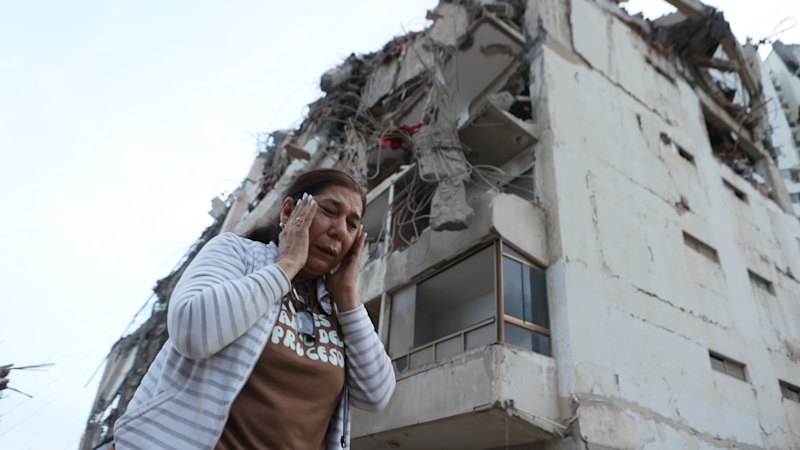
Desperate Search For Quake Survivors in Venezuela’s La Guaira
