
One in four children leaves primary school unable to swim as child deaths double
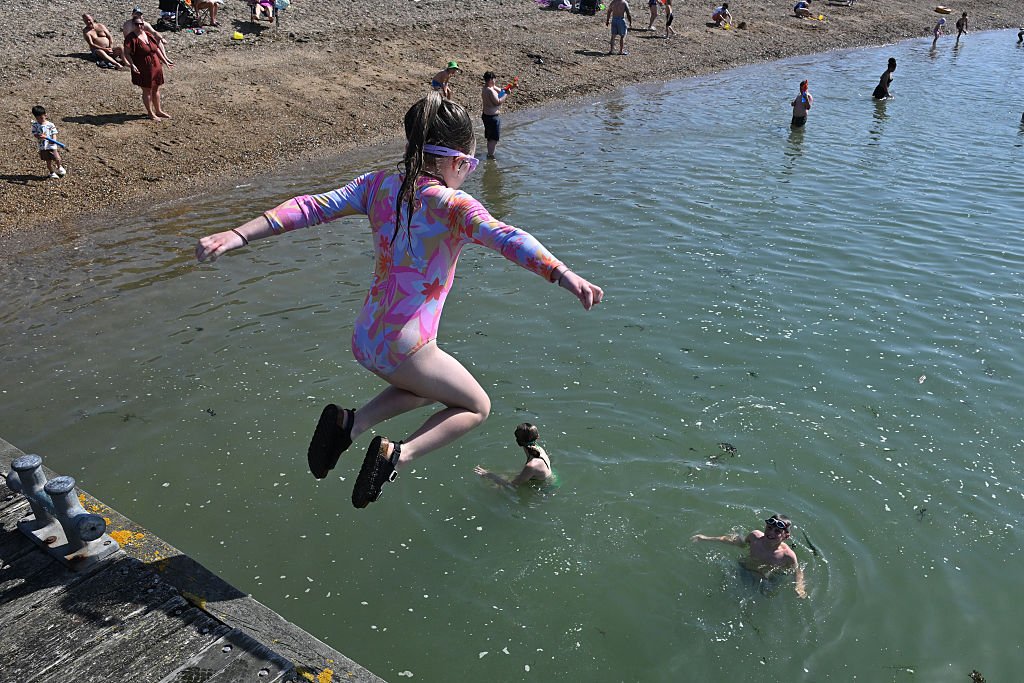
A leading Oxford academic has called for every child to prove they can swim before leaving primary school after new analysis revealed one in four children cannot swim and child drowning deaths have doubled in England.Professor Carl Heneghan, Director of Oxford University's Centre for Evidence-Based Medicine, spoke out after 11 heartbreaking drowning deaths during Britain's record-breaking May heatwave. The urgent care GP said new rules should be introduced, ensuring every child can demonstrate basic water safety skills before leaving primary school.Prof Heneghan carried out research showing the recent tragedies are not isolated incidents but part of a national “swimming crisis”. His analysis reveals more than one in four children leave primary school unable to swim 25 metres unaided, despite swimming being a compulsory part of the national curriculum. This means hundreds of thousands of youngsters are leaving school without a basic life-saving skill. And the numbers are far higher – 35 per cent – among low-income families. TRENDING Stories Videos Your Say His research also shows an estimated 14 million adults cannot swim a 25-metre length. His warning comes after seven child and teenage and four adult drowning tragedies during the recent spell of exceptionally warm weather.Among those who lost their lives was Junior Slater, 12, after getting into difficulty in the River Ribble in Lancashire. Reco Pinnock, 13, died after entering Leadbeater Dam in Yorkshire, while Declan Sawyer, 15, was killed after getting into difficulty at Swanholme Lakes in Lincolnshire.Lillianna Tomlinson, 16, lost her life after entering the water at Kingsbury Water Park in Warwickshire. Baltazar L'Quy, 14, also passed away after getting into difficulty in the River Thames in Oxfordshire.Several other major water rescue operations involving children and teenagers were launched across the country during the same period as soaring temperatures drew large numbers of people to rivers, lakes, reservoirs and beaches. Water safety experts have repeatedly warned open water can remain dangerously cold even during hot weather, increasing the risk of cold-water shock.The condition can cause involuntary gasping, breathing difficulties and panic, making it difficult even for competent swimmers to stay afloat. But Professor Heneghan said the recent tragedies should not simply be viewed as a consequence of unusual weather conditions.He said: These should be ‘never events’ which means they should not happen at all, and yet we have dozens every year. The UK has a swimming crisis. Improving swimming and water safety skills from an early age onward would make a huge impact in preventing these tragedies. We urgently need to take steps to improve primary school swimming provision. This is a straightforward public health and safety priority. Swimming is a curriculum requirement and life-saving skill, yet a significant minority of children leave school unable to swim safely. The UK’s geography – extensive coastline, rivers, canals and water recreation – makes water safety particularly important.”LATEST DEVELOPMENTS:Peak District U-turns on warning telling Britons never to enter water following number of heatwave deathsHeatwave to fizzle in a week of rain as Britain prepares for a soggy start to summerRecord spring heat 'a taster of what's to come' as Britain gears up for three months of sunHis analysis comes as concern grows over child drowning deaths in England. Figures from the National Child Mortality Database, highlighted by the Royal Life Saving Society UK, show child drowning deaths in England doubled from 20 in 2019-20 to 41 in 2022-23.The data recorded 125 child drowning deaths during the four years from April 2019 to March 2023. More recent National Child Mortality Database figures show 165 children aged under 18 died in drowning incidents in England between April 2019 and March 2024 – an average of 33 deaths every year.The Royal Life Saving Society UK said: No child should drown. The charity added: The tragic findings from this update emphasise the importance of competent adult supervision, as well as a renewed focus on how to stay safe when in and around water at home.Prof Heneghan's analysis argues the latest deaths highlight longstanding concerns about swimming attainment among schoolchildren. Despite swimming and water safety being compulsory elements of the national curriculum, around 27 per cent of children in England still leave primary school unable to swim 25 metres unaided.Pupils are expected to swim competently, confidently and proficiently over a distance of at least 25 metres. They should also be able to use a range of strokes effectively and perform safe self-rescue in different water-based situations.However, substantial numbers continue to leave primary school without meeting those standards. Prof Heneghan’s analysis also highlights concerns about access to swimming lessons.Around 76 per cent of public access to water spaces has been lost in the last 15 years, with 500 swimming pools closed since 2010, reducing local access to facilities in many areas. Schools and local authorities have also faced increasing financial pressures, while transport costs and shortages of qualified instructors have been identified as barriers to delivering lessons.His review found significant differences in swimming attainment across the UK and concluded access to swimming education remains uneven. The analysis argues improving swimming provision in primary schools is an essential public health and safety intervention.Prof Heneghan said: “The policy challenge is less about whether swimming matters and more about funding pools and transport, guaranteeing lesson quality and teacher capacity and making attainment monitoring meaningful rather than aspirational. This should be simple to do if there was the political will to do it.”A Department for Education spokesman said: “The latest figures show that 73 per cent of children can swim 25m by the time they leave primary school, but it’s vital even more children benefit for this lifesaving skill.“Our reforms to the PE curriculum will ensure there is a clear emphasis on swimming, and our new PE and Sport Partnerships network will bring the expertise of national governing bodies including Swim England directly into schools, so every child benefits from high quality PE and sport.”Our Standards: The GB News Editorial Charter
Narrative Intelligence Brief
This article was published by GB News, a source frequently categorized with a lean right bias based in United States of America. Our narrative intelligence engine continuously monitors coverage from this outlet to track framing, bias, and rhetorical patterns. Our initial algorithmic scan of this specific piece did not flag high-confidence rhetorical techniques, suggesting a generally straightforward reporting style or neutral framing. By understanding the editorial perspective of GB News, readers can better contextualize the information presented and compare it across our broader media matrix to find the real narrative.
Explore related topics: Stay informed with Real Narrative News as we track unfolding stories. Dive deeper into our coverage of pivotal topics including champions league, psg arsenal, league final, ligue champions, سان جيرمان, kennedy center, حزب الله, باريس سان, أبطال أوروبا, and عيد الأضحى. Our intelligence streams continuously monitor these keywords to bring you unbiased analysis and real-time updates on topics like "One in four children leaves primary school unable to swim as child deaths double".
More from GB News
May 30, 2026
One in four children leaves primary school unable to swim as child deaths double
May 30, 2026
Fast & Furious star Jason Statham's New Forest estate hit by planning row over protected newts
May 30, 2026
The Saturday Five - Saturday 30th May 2026
May 30, 2026
PSG win Champions League for second year in a row after beating Arsenal in tense penalty shootout
May 30, 2026
Britons left baffled after rare 'Fata Morgana' mirage spotted off Cornish coast
Analysis Methodology
This narrative analysis was generated using the CoDataLab Global Intelligence Engine. Our proprietary AI scans thousands of cross-border sources to identify sentiment patterns, framing techniques, and potential media bias. While AI provides the data-driven foundation, our objective is to empower readers with additional context beyond the standard headline.The content displayed above is a structured summary designed for rapid information processing. For the full original report, please visit the source outlet.More Coverage
Discussion