Today in News History
On June 17, several notable moments in the history of News stand out. In 1910, George Hees, Canadian football player and politician (died 1996) was born. In 1929, The town of Murchison, New Zealand is rocked by a 7.8 magnitude earthquake killing 17. At the time it was New Zealand's worst natural disaster. In 1940, World War II: RMS Lancastria is attacked and sunk by the Luftwaffe near Saint-Nazaire, France. At least 3,000 are killed in Britain's worst maritime disaster. In 1942, Doğu Perinçek, Turkish lawyer and politician was born. In 1952, Estelle Morris, Baroness Morris of Yardley, English educator and politician, Secretary of State for Education was born. In 1963, A day after South Vietnamese President Ngô Đình Diệm announced the Joint Communiqué to end the Buddhist crisis, a riot involving around 2,000 people breaks out. One person is killed. In 1966, Tory Burch, American fashion designer and philanthropist was born. In 1992, A "joint understanding" agreement on arms reduction is signed by U.S. President George Bush and Russian President Boris Yeltsin (this would be later codified in START II). In 2009, Ralf Dahrendorf, German-English sociologist and politician (born 1929) passed away. In 2014, Éric Dewailly, Canadian epidemiologist and academic (born 1954) passed away. Together, these milestones provide historical context for today's news news and ongoing narratives.
New UK party emerges as a threat to Farage. And, it’s even more far-right
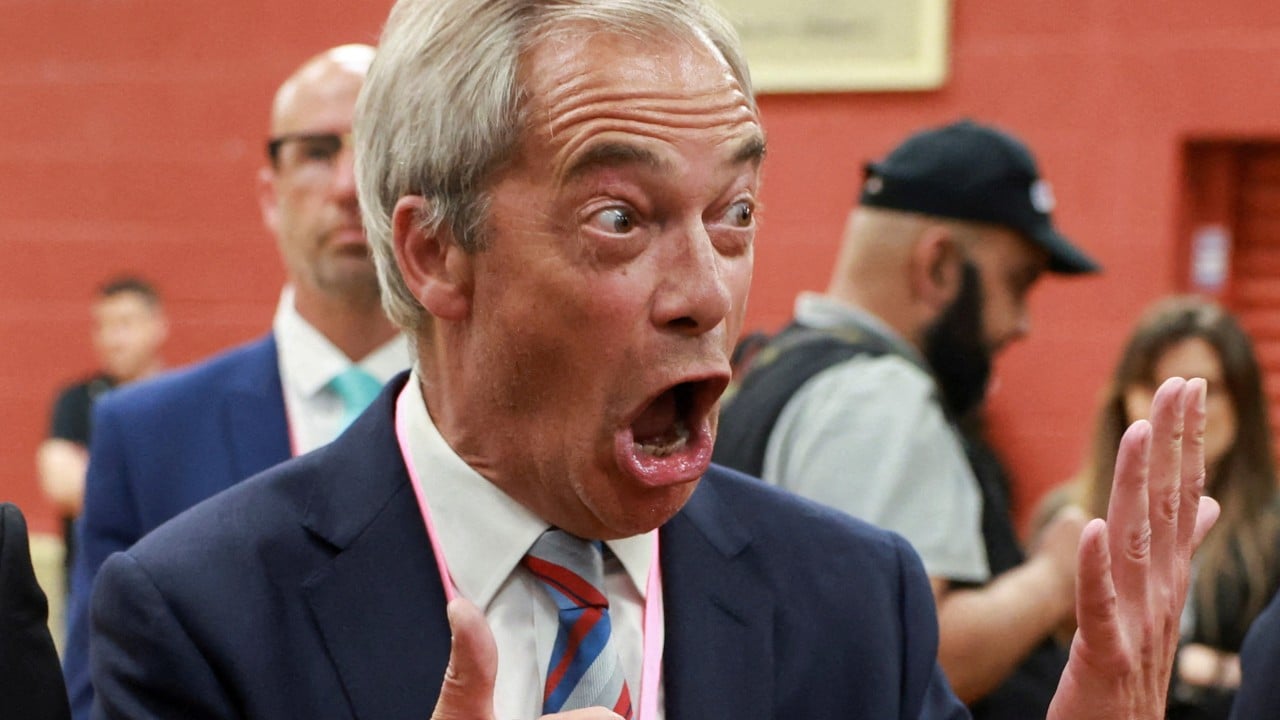
A new political party called Restore Britain is threatening the rise of Nigel Farage’s hard-right group, with a tougher anti-immigrant stance and the backing of tech trillionaire Elon Musk. Led by businessman and ex-football chairman Rupert Lowe, Restore is tipped to deprive Farage’s Reform UK party of victory over the ruling Labour Party in a crunch special election on Thursday. Lowe, 68, formed Restore as an alternative on the right of British politics in February following his split from...
Narrative Intelligence Brief
This article was published by South China Morning Post, a source frequently categorized with a lean left bias based in Hong Kong. Our narrative intelligence engine continuously monitors coverage from this outlet to track framing, bias, and rhetorical patterns. Our initial algorithmic scan of this specific piece did not flag high-confidence rhetorical techniques, suggesting a generally straightforward reporting style or neutral framing. By understanding the editorial perspective of South China Morning Post, readers can better contextualize the information presented and compare it across our broader media matrix to find the real narrative.
More from South China Morning Post
June 17, 2026
Hong Kong’s top court rejects challenge to law banning calls for election boycotts
June 17, 2026
Hong Kong to mandate health checks for commercial drivers aged 65 and above
June 17, 2026
PLA’s plan to destroy US carriers; world’s largest whale graveyard: 7 science highlights
June 17, 2026
Filmmaker Raymond Wong begins jail sentence, giving up bail as he awaits appeal
June 17, 2026
Zheng Yuxiu: modern China’s ‘xia nu’ assassin and first female PhD who fought for justice
Analysis Methodology
This narrative analysis was generated using the CoDataLab Global Intelligence Engine. Our proprietary AI scans thousands of cross-border sources to identify sentiment patterns, framing techniques, and potential media bias. While AI provides the data-driven foundation, our objective is to empower readers with additional context beyond the standard headline.The content displayed above is a structured summary designed for rapid information processing. For the full original report, please visit the source outlet.More Coverage
Discussion