Today in News History
On June 17, several notable moments in the history of News stand out. In 1863, American Civil War: Battle of Aldie in the Gettysburg Campaign. In 1885, The Statue of Liberty arrives in New York Harbor. In 1932, Bonus Army: Around a thousand World War I veterans amass at the United States Capitol as the U.S. Senate considers a bill that would give them certain benefits. In 1933, Union Station massacre: In Kansas City, Missouri, four FBI agents and captured fugitive Frank Nash are gunned down by gangsters attempting to free Nash. In 1963, A day after South Vietnamese President Ngô Đình Diệm announced the Joint Communiqué to end the Buddhist crisis, a riot involving around 2,000 people breaks out. One person is killed. In 1966, Mohammed Ghazy Al-Akhras, Iraqi journalist and author was born. In 1967, Nuclear weapons testing: China announces a successful test of its first thermonuclear weapon. In 1971, U.S. President Richard Nixon in a televised press conference called drug abuse "America's public enemy number one", starting the War on drugs. In 1972, Watergate scandal: Five White House operatives are arrested for burgling the offices of the Democratic National Committee during an attempt by members of the administration of President Richard M. Nixon to illegally wiretap the political opposition as part of a broader campaign to subvert the democratic process. In 1992, A "joint understanding" agreement on arms reduction is signed by U.S. President George Bush and Russian President Boris Yeltsin (this would be later codified in START II). Together, these milestones provide historical context for today's news news and ongoing narratives.
New Iran peace deal details leak as CNN obtains unreleased 14-point memo
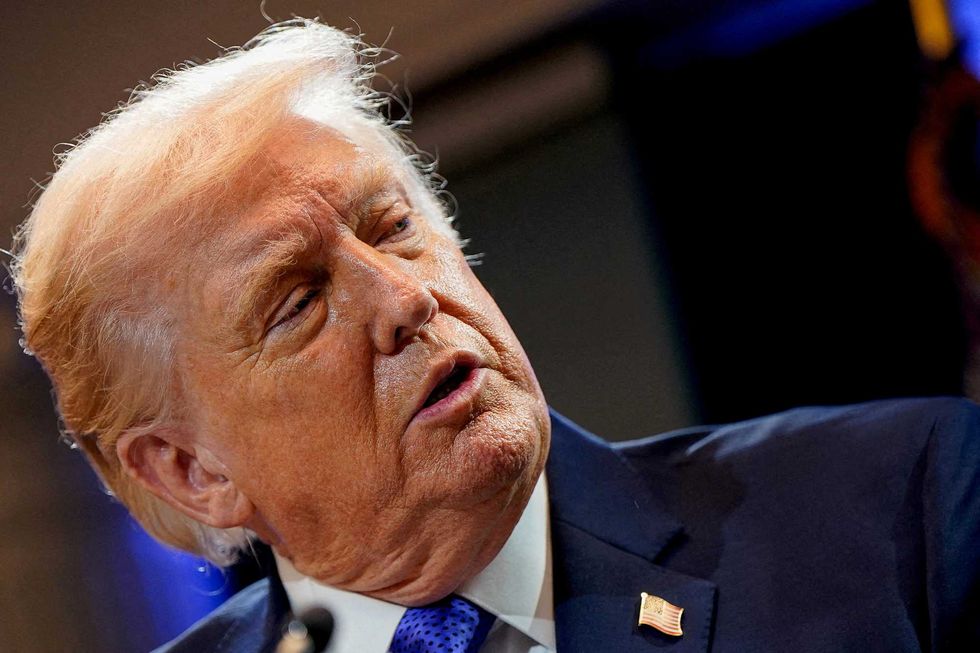
New details from a so-called peace deal between the U.S. and Iran have leaked, but the document shows few specific agreements to end the nearly four-month-long conflict.CNN has obtained the 14-point memorandum of understanding reached by negotiators for the two nations, and senior White House correspondent Kevin Liptak informed CNN This Morning viewers on Wednesday morning of the details he had reviewed moments earlier.This text has not been officially released by either side of this, Liptak said. We've heard from American officials over the last couple of days that they were planning to release this officially, after it is formally signed here in Switzerland on Friday.We've gotten a copy from a U.S. official, he continued. We've gotten a version of it from a diplomat who has seen copies of it circulating here at the G7 summit, and two additional sources. So we have four sources from which we have obtained the text of this document, and in some ways, it does reflect how American officials have been characterizing it over the last several days. It is vague in a lot of its terms, particularly when it comes to Iran's nuclear program. It lays out in broad terms how the Strait of Hormuz will be reopened, how the U.S. will lift its blockade on Iranian ports, and it does spell out what the financial relief that Iran can expect as part of this deal if it meets its commitments.The document specifies that Iran will be able to gain access to a 300 billion development fund, although American officials have insisted the funding would not come from the U.S., and the agreement states that the U.S. will issue waivers for some sanctions to allow Iran to start exporting oil.One of the reasons that the president has said that he started the war in the first place is to eliminate Iran's ability to obtain a nuclear weapon, and this is what the memorandum of understanding says on this point, Liptak said. The Islamic Republic of Iran and the United States have agreed that the fate of enriched material and the fate of all other mutually agreed, agreed nuclear-related issues, including Iran's nuclear needs, will be adequately addressed in a final agreement.The final agreement will confirm the provisions of this article, and so it is what we expected, Liptak added. It's punting the really thorny issues about enrichment around the fate of Iran's nuclear stockpile to these future technical negotiations. The memo specifies that those will last 60 days, but that they could also be extended.Trump has hyped the deal as a peace agreement, but Liptak said other U.S. officials have not sounded so confident.We have been talking to American officials about the language in this document, and in a lot of ways, they have been downplaying it, Liptak said. They have suggested that this is essentially a political document meant to create the conditions to get around to the table for these much more technical negotiations going forward. But I still think the lack of specificity around the nuclear issues, I think, will be a surprise to some people who have been following all this, and in particular, the fact that it doesn't say anywhere in the document that the United States will be involved in the destruction of Iran's highly enriched uranium.One official told us yesterday is that, quote, people shouldn't read too much into the language of the MOU, he added. That's what's more important than the actual document is the understandings that we have with each other. Of course, all of that is, I think, going to risk some backlash from Iran hawks, even from some of the president's own allies, who will argue that the U.S. is putting too much faith in the Iranians' word in all of this, and not necessarily in what they're willing to put in writing in these documents. But certainly what you've heard from the president over the last days, including here at the G7, is really proclaiming this as a triumph. - YouTube youtu.be
Narrative Intelligence Brief
This article was published by Raw Story, a source frequently categorized with a left bias based in United States of America. Our narrative intelligence engine continuously monitors coverage from this outlet to track framing, bias, and rhetorical patterns. Our initial algorithmic scan of this specific piece did not flag high-confidence rhetorical techniques, suggesting a generally straightforward reporting style or neutral framing. By understanding the editorial perspective of Raw Story, readers can better contextualize the information presented and compare it across our broader media matrix to find the real narrative.
More from Raw Story
June 17, 2026
Trump-ousted GOP senator baffles onlookers with ‘weird’ depiction of Republican colleague
June 17, 2026
Ex-prosecutor warns women's right to vote may be next on chopping block: 'Handmaid's Tale'
June 17, 2026
'He is not well': Onlookers say Trump's 'profane' Obama jab reveals president's jealousy
June 17, 2026
Trump's birthday bash inadvertently exposed 'MAGA male weakness': analysis
June 17, 2026
Trump's Reflecting Cesspool mirrors a much more festering mess
Analysis Methodology
This narrative analysis was generated using the CoDataLab Global Intelligence Engine. Our proprietary AI scans thousands of cross-border sources to identify sentiment patterns, framing techniques, and potential media bias. While AI provides the data-driven foundation, our objective is to empower readers with additional context beyond the standard headline.The content displayed above is a structured summary designed for rapid information processing. For the full original report, please visit the source outlet.More Coverage
Discussion