Today in News History
On July 6, several notable moments in the history of News stand out. In 1614, Raid on Żejtun: The south east of Malta, and the town of Żejtun, suffer a raid from Ottoman forces. This was the last unsuccessful attempt by the Ottomans to conquer the island of Malta. In 1751, Pope Benedict XIV suppresses the Patriarchate of Aquileia and establishes from its territory the Archdiocese of Udine and Gorizia. In 1768, Conrad Beissel, German-American religious leader (born 1690) passed away. In 1917, World War I: Arabian troops led by T. E. Lawrence ("Lawrence of Arabia") and Auda ibu Tayi capture Aqaba from the Ottoman Empire during the Arab Revolt. In 1939, Anti-Jewish legislation in prewar Nazi Germany closes the last remaining Jewish enterprises. In 1947, Referendum held in Sylhet to decide its fate in the Partition of India. In 1975, Amir-Abbas Fakhravar, Iranian journalist and activist was born. In 1989, The Tel Aviv-Jerusalem bus 405 suicide attack: Sixteen bus passengers are killed when a member of the Palestinian Islamic Jihad took control of the bus and drove it over a cliff. In 2003, Çelik Gülersoy, Turkish lawyer, historical preservationist, writer and poet (born 1930) passed away. In 2012, Hani al-Hassan, Palestinian engineer and politician (born 1939) passed away. Together, these milestones provide historical context for today's news news and ongoing narratives.
Netanyahu says some Lebanese Christian villages 'asked to be annexed' by Israel
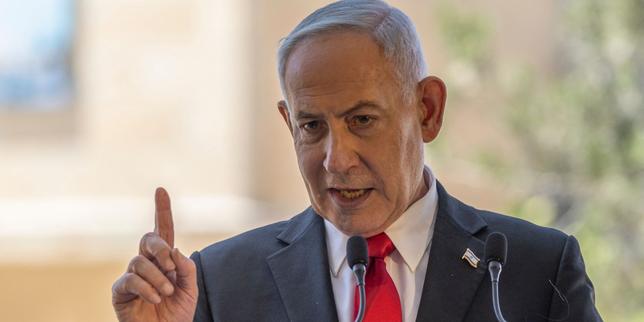
Israeli Prime Minister Benjamin Netanyahu insisted on Sunday that some Christian villages in southern Lebanon have asked for Israel's protection from Hezbollah militants. A mayor of one such Christian village denies the claim, adding that '15 Christian towns had issued a statement' also denying these allegations.
Narrative Intelligence Brief
This article was published by Le Monde, a source frequently categorized with a lean left bias based in France. Our narrative intelligence engine continuously monitors coverage from this outlet to track framing, bias, and rhetorical patterns. Our initial algorithmic scan of this specific piece did not flag high-confidence rhetorical techniques, suggesting a generally straightforward reporting style or neutral framing. By understanding the editorial perspective of Le Monde, readers can better contextualize the information presented and compare it across our broader media matrix to find the real narrative.
More from Le Monde
July 5, 2026
'Diverse France, that of Kylian Mbappé and the national team, is too promising a reality to be used as an electoral punching bag'
July 5, 2026
Vladimir Putin, or the loneliness of 'Homo Sovieticus'
July 5, 2026
Formula 1: Leclerc delivers Ferrari's 250th victory in British GP
July 5, 2026
2026 Tour de France: Del Toro wins second stage
July 5, 2026
Pope Leo XIV visits Lampedusa, delivers powerful and symbolic message to 'protect migrants'
Analysis Methodology
This narrative analysis was generated using the CoDataLab Global Intelligence Engine. Our proprietary AI scans thousands of cross-border sources to identify sentiment patterns, framing techniques, and potential media bias. While AI provides the data-driven foundation, our objective is to empower readers with additional context beyond the standard headline.The content displayed above is a structured summary designed for rapid information processing. For the full original report, please visit the source outlet.More Coverage
Discussion
"cup"
South Korea’s World Cup loss spurs anger over ‘cartel’ of elites, favouritism

FIFA Makes Good And Right And Not At All Corrupt Decision To Rescind Folarin Balogun’s Red Card Suspension

Meet the UK’s Terrible Next Prime Minister: Andy Burnham