
Today in News History
On July 13, several notable moments in the history of News stand out. In 1807, Thomas Hawksley, English engineer and academic (died 1893) was born. In 1849, William Osler, Canadian physician and author (died 1919) was born. In 1895, Buckminster Fuller, American architect and engineer, designed the Montreal Biosphère (died 1983) was born. In 1913, Willis Lamb, American physicist and academic, Nobel Prize laureate (died 2008) was born. In 1920, Pierre Berton, Canadian journalist and author (died 2004) was born. In 1928, Alastair Burnet, English journalist (died 2012) was born. In 1946, Sian Barbara Allen, American television actress (died 2025) was born. In 1948, Richard Simmons, American fitness trainer and actor (died 2024) was born. In 1957, Rick Husband, American colonel, pilot, and astronaut (died 2003) was born. In 1959, David Brown, Australian meteorologist was born. Together, these milestones provide historical context for today's news news and ongoing narratives.
NASA’s Webb Studies How Planet Survived Death of its Star
NASA’s James Webb Space Telescope is giving us new insight into the far-future of solar systems like our own, as the agency continues to reveal the secrets of the universe and our place in it. Billions of years ago, a Sun-like star nearing the end of its life swelled tremendously in size to become a []
Narrative Intelligence Brief
This article was published by NASA, a source frequently categorized with a center bias based in United States of America. Our narrative intelligence engine continuously monitors coverage from this outlet to track framing, bias, and rhetorical patterns. Our initial algorithmic scan of this specific piece did not flag high-confidence rhetorical techniques, suggesting a generally straightforward reporting style or neutral framing. By understanding the editorial perspective of NASA, readers can better contextualize the information presented and compare it across our broader media matrix to find the real narrative.
More from NASA
Analysis Methodology
This narrative analysis was generated using the CoDataLab Global Intelligence Engine. Our proprietary AI scans thousands of cross-border sources to identify sentiment patterns, framing techniques, and potential media bias. While AI provides the data-driven foundation, our objective is to empower readers with additional context beyond the standard headline.The content displayed above is a structured summary designed for rapid information processing. For the full original report, please visit the source outlet.More Coverage
Discussion
"strikes iran"
US Strikes Iranian Missile Systems, IRGC Boats Near Hormuz

‘Now they pay’: US strikes Iran again after regime declares Strait of Hormuz closed
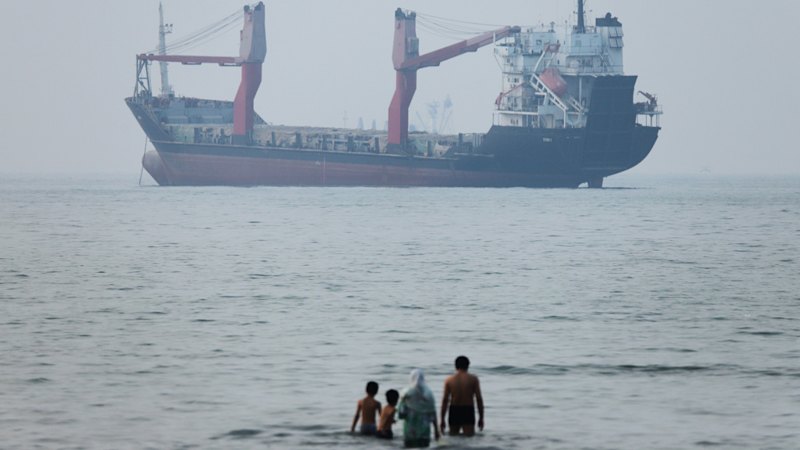
U.S. Strikes Iran After Iran Fires on Ship in Strait of Hormuz
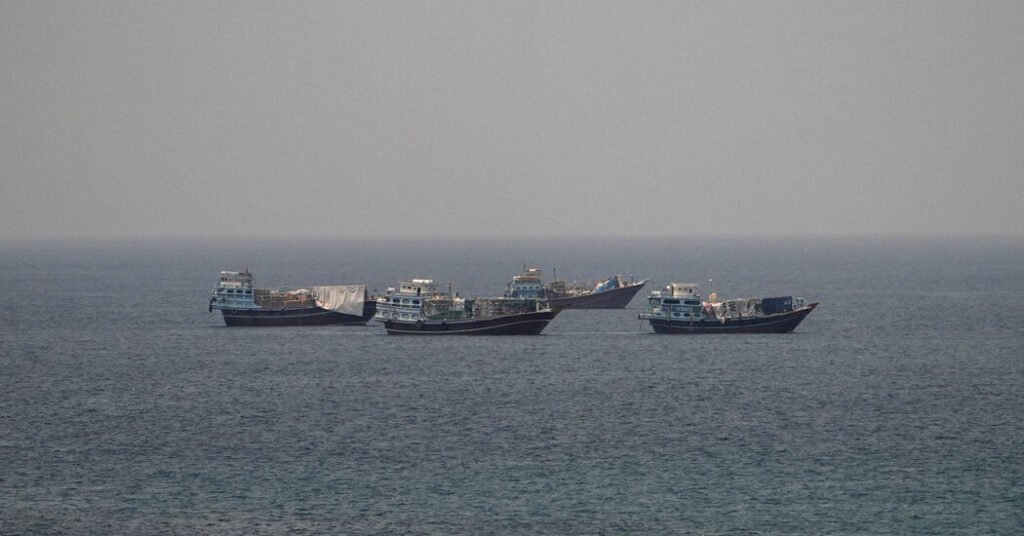
How other outlets are covering this story
Compare narratives across 6 related reports from 6 sources. Real Narrative News aggregates the coverage spectrum so you can see who emphasises what — bias tags reflect the outlet, not the story.
Coverage bias distribution
6 sources
Left 17%
Center 50%
Right 17%
https://cdn.mos.cms.futurecdn.net/gdaiRVCFczRjaBZv3RYELC.jpg
· Jul 12, 2026
James Webb telescope captures never-before-seen glimpse of 'Centaur' galaxy's battle wounds — Space photo of the week
James Webb telescope captures never-before-seen glimpse of 'Centaur' galaxy's battle wounds — Space photo of the week
Live Science
· Jun 28, 2026
'The fate of Earth depends on a delicate balance': Our planet may survive the death of the sun after all, new models hint
'The fate of Earth depends on a delicate balance': Our planet may survive the death of the sun after all, new models hint
The Eastern Herald
· Jul 3, 2026
Webb Detects the First Atmosphere on a Planet That Survived Its Star’s Death
The James Webb Space Telescope has detected methane and cloud particles in the atmosphere of WD 1856 b, a Jupiter-sized planet orbiting a dead star 80 light-years away, the first atmospheric measurement of a planet transiting a white dwarf and a preview of what may survive the death of our own Sun.
NASA
· Jul 6, 2026
NASA Webb Uncovers Unusual Galaxy Shaped by Cosmic Collision
In new images from NASA’s James Webb Space Telescope to celebrate its fourth science anniversary, a familiar galaxy transforms into something far richer, and far more complex, than ever seen before. Webb’s unprecedented sensitivity across near- and mid-infrared wavelengths cuts through the thick lanes of dust that obscure Centaurus A’s center in visible light, showing []
The Week
· Jul 9, 2026
Nasa’s mission to save a sinking space telescope
Nasa’s mission to save a sinking space telescope
Times of India
· Jul 10, 2026
How the Greenland shark's 400-year lifespan could help scientists protect human eyesight
How the Greenland shark's 400-year lifespan could help scientists protect human eyesight
Topics:
Related coverage for "NASA’s Webb Studies How Planet Survived Death of its Star": https://cdn.mos.cms.futurecdn.net/gdaiRVCFczRjaBZv3RYELC.jpg — James Webb telescope captures never-before-seen glimpse of 'Centaur' galaxy's battle wounds — Space photo of the week . Live Science — 'The fate of Earth depends on a delicate balance': Our planet may survive the death of the sun after all, new models hint . The Eastern Herald — Webb Detects the First Atmosphere on a Planet That Survived Its Star’s Death. NASA — NASA Webb Uncovers Unusual Galaxy Shaped by Cosmic Collision. The Week — Nasa’s mission to save a sinking space telescope . Times of India — How the Greenland shark's 400-year lifespan could help scientists protect human eyesight