Today in News History
On June 16, several notable moments in the history of News stand out. In 1871, The Universities Tests Act 1871 allows students to enter the universities of Oxford, Cambridge and Durham without religious tests (except for those intending to study theology). In 1930, Sovnarkom establishes decree time in the USSR. In 1933, The National Industrial Recovery Act is passed in the United States, allowing businesses to avoid antitrust prosecution if they establish voluntary wage, price, and working condition regulations on an industry-wide basis. In 1944, George Stinney, wrongfully convicted African-American teenager (born 1929) passed away. In 1963, In an attempt to resolve the Buddhist crisis in South Vietnam, a Joint Communique was signed between President Ngo Dinh Diem and Buddhist leaders. In 1965, Richard Madaleno, American politician was born. In 1969, Shami Chakrabarti, English lawyer and academic was born. In 1976, Soweto uprising: A non-violent march by 15,000 students in Soweto, South Africa, turns into days of rioting when police open fire on the crowd. In 1999, Snail Mail, American singer-songwriter was born. In 2019, Upwards of 2,000,000 people participate in the 2019-20 Hong Kong protests, the largest in Hong Kong's history. Together, these milestones provide historical context for today's news news and ongoing narratives.
More Than 16,000 Sign SAG-AFTRA Letter Demanding Congress Pass NO FAKES Act, Which Would Ban Unauthorized AI Images and Videos
Narrative Analysis: Name Calling

More than 16,000 people have signed SAG-AFTRA’s open letter demanding Congress pass the revived NO FAKES Act, an anti-deepfake bill that would give individuals control over how their name and likeness are used. Deepfakes have been a constant presence in the AI age as large-language models have made generating depictions of actors, singers and other []
Narrative Intelligence Brief
This article was published by Variety, a source frequently categorized with a lean left bias based in United States of America. Our narrative intelligence engine continuously monitors coverage from this outlet to track framing, bias, and rhetorical patterns. In this specific piece, our systems detected the potential use of the "Name Calling" technique. This narrative approach is often used to shape reader perception by highlighting specific emotional or rhetorical angles. By understanding the editorial perspective of Variety, readers can better contextualize the information presented and compare it across our broader media matrix to find the real narrative.
More from Variety
June 16, 2026
Rapper Mystikal Sentenced to 20 Years in Rape Case
June 16, 2026
‘Rocky Horror Picture Show’ Set to Screen at Sphere Las Vegas in 2027
June 16, 2026
‘The Reluctant Traveler With Eugene Levy’ Renewed for Season 4 at Apple TV (TV News Roundup)
June 16, 2026
Quinta Brunson and ‘Abbott Elementary’ Hair Department Head Break Down Halloween Looks, Melissa’s ’80s Hair and More
June 16, 2026
Yellow Veil Pictures Boards NYC Nightlife Thriller ‘Corpus,’ Launching Sales Before Fantasia Premiere (EXCLUSIVE)
Reliability Insights
P
Technique: Name Calling
System analysis detected use of specific narrative techniques in this piece.Analysis Methodology
This narrative analysis was generated using the CoDataLab Global Intelligence Engine. Our proprietary AI scans thousands of cross-border sources to identify sentiment patterns, framing techniques, and potential media bias. While AI provides the data-driven foundation, our objective is to empower readers with additional context beyond the standard headline.The content displayed above is a structured summary designed for rapid information processing. For the full original report, please visit the source outlet.More Coverage
Discussion
"iran"
Why Trump’s Iran deal is 750 times worse than Obama’s

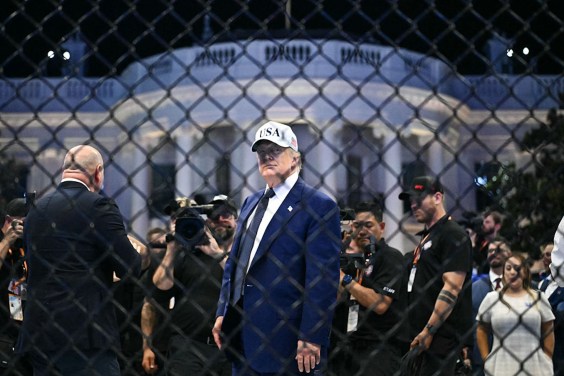
UFC’s White House Fight Night May Have Been An Unforgivable Folly, But At Least It Was Violent And Offensive
‘Most oppressed team’: Iran blasts World Cup treatment