
Today in News History
On June 29, several notable moments in the history of News stand out. In 1897, Fulgence Charpentier, Canadian journalist and publisher (died 2001) was born. In 1916, British diplomat turned Irish nationalist Roger Casement is sentenced to death for his part in the Easter Rising. In 1942, Mike Willesee, Australian journalist and producer (died 2019) was born. In 1972, The United States Supreme Court rules in the case Furman v. Georgia that arbitrary and inconsistent imposition of the death penalty violates the Eighth and Fourteenth Amendments and constitutes cruel and unusual punishment. In 1979, Andy O'Brien, English footballer was born. In 1995, The Sampoong Department Store collapses in the Seocho District of Seoul, South Korea, killing 502 and injuring 937. In 2006, Hamdan v. Rumsfeld: The U.S. Supreme Court rules that President George W. Bush's plan to try Guantanamo Bay detainees in military tribunals violates U.S. and international law. In 2007, Joel Siegel, American journalist and critic (born 1943) passed away. In 2012, Vincent Ostrom, American political scientist and academic (born 1919) passed away. In 2015, Hisham Barakat, Egyptian lawyer and judge (born 1950) passed away. Together, these milestones provide historical context for today's news news and ongoing narratives.
Media frenzy as Alex Murdaugh returns to court for hearing on his new murder trial
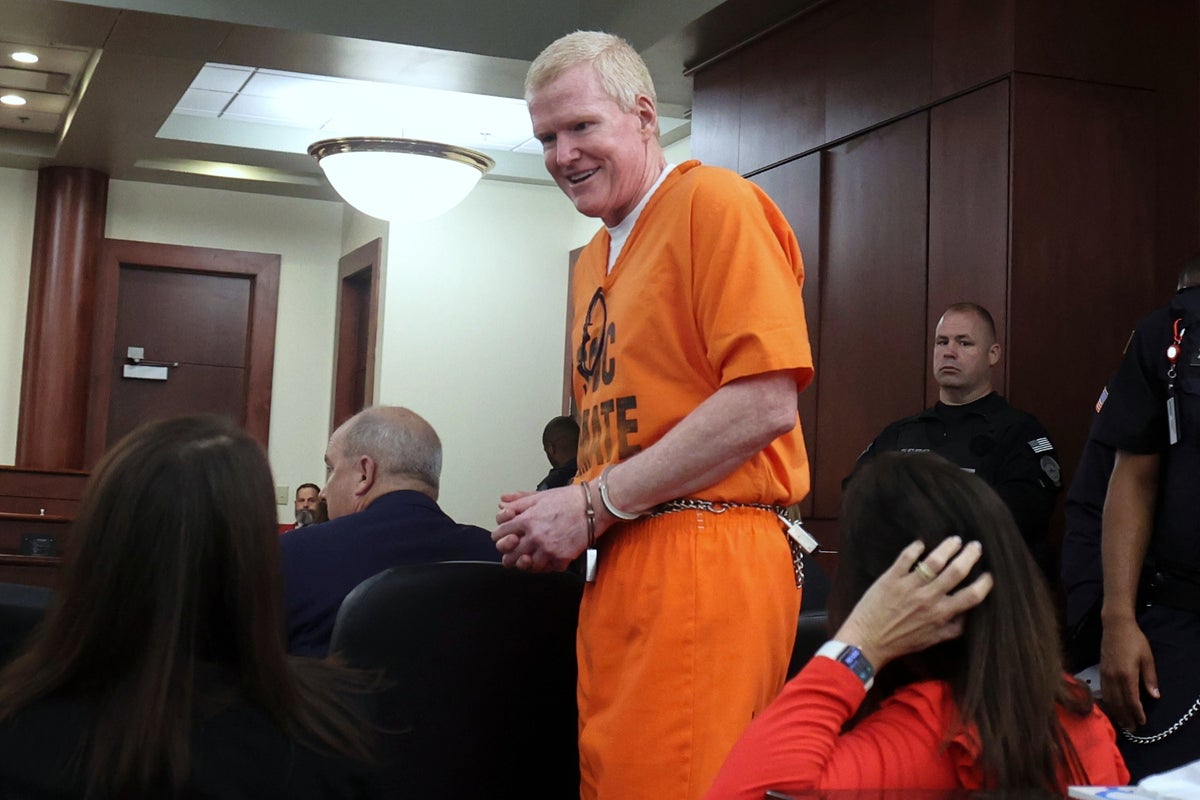
Murdaugh’s murder convictions and sentence of life in prison were overturned last month by the South Carolina Supreme Court
Narrative Intelligence Brief
This article was published by The Independent, a source frequently categorized with a lean left bias based in United Kingdom. Our narrative intelligence engine continuously monitors coverage from this outlet to track framing, bias, and rhetorical patterns. Our initial algorithmic scan of this specific piece did not flag high-confidence rhetorical techniques, suggesting a generally straightforward reporting style or neutral framing. By understanding the editorial perspective of The Independent, readers can better contextualize the information presented and compare it across our broader media matrix to find the real narrative.
More from The Independent
June 29, 2026
Trump bought up to $5M of stock in Taser company right before $220M ICE bid
June 29, 2026
Here’s how long trapped victims can survive following an earthquake
June 29, 2026
Medicare will soon cover costs of weight-loss drugs. Here’s what you need to know
June 29, 2026
Inmates overpower correctional staff and take over North Carolina jail, authorities say
June 29, 2026
San Jose mayor condemns ‘brazen’ shooting near World Cup fan zone
Analysis Methodology
This narrative analysis was generated using the CoDataLab Global Intelligence Engine. Our proprietary AI scans thousands of cross-border sources to identify sentiment patterns, framing techniques, and potential media bias. While AI provides the data-driven foundation, our objective is to empower readers with additional context beyond the standard headline.The content displayed above is a structured summary designed for rapid information processing. For the full original report, please visit the source outlet.More Coverage
Discussion
"cup"
Everyone’s Mad at the World Cup’s New ‘Hydration Breaks’—Except Mr. Moneybags Over Here

Apple’s memory problem is your problem, too

NYPD task force targets ATM skimming scams ahead of FIFA World Cup Final and America’s 250th anniversary events
