Today in News History
On June 29, several notable moments in the history of News stand out. In 1170, A major earthquake hits Syria, badly damaging towns such as Hama and Shaizar and structures such as the Krak des Chevaliers and the cathedral of St. Peter in Antioch. In 1831, Heinrich Friedrich Karl vom und zum Stein, Prussian minister and politician (born 1757) passed away. In 1858, Julia Lathrop, American activist and politician (died 1932) was born. In 1874, Greek politician Charilaos Trikoupis publishes a manifesto in the Athens daily Kairoi entitled "Who's to Blame?" leveling complaints against King George. Trikoupis is elected Prime Minister of Greece the next year. In 1977, Sotiris Liberopoulos, Greek footballer was born. In 1992, Mohamed Boudiaf, Algerian soldier and politician, President of Algeria (born 1919) passed away. In 2006, Fabián Bielinsky, Argentinian director and screenwriter (born 1959) passed away. In 2007, Joel Siegel, American journalist and critic (born 1943) passed away. In 2014, The Islamic State of Iraq and the Levant self-declares its caliphate in Syria and northern Iraq. In 2015, Hisham Barakat, Egyptian lawyer and judge (born 1950) passed away. Together, these milestones provide historical context for today's news news and ongoing narratives.
Lindsey Graham hails Israel-Lebanon deal as a 'giant step forward' for peace
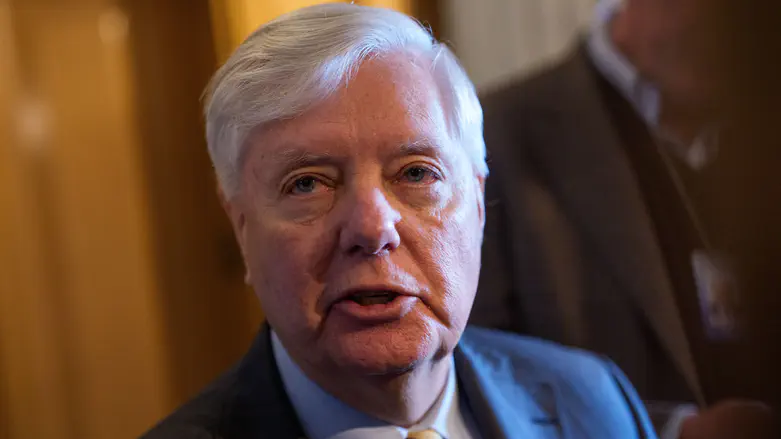
Senator Lindsey Graham and Ambassador Mike Huckabee praise the US-mediated Israel-Lebanon agreement, hailing it as a historic victory despite ongoing threats from Hezbollah.
Narrative Intelligence Brief
This article was published by Arutz Sheva, a source frequently categorized with a lean right bias based in Israel. Our narrative intelligence engine continuously monitors coverage from this outlet to track framing, bias, and rhetorical patterns. Our initial algorithmic scan of this specific piece did not flag high-confidence rhetorical techniques, suggesting a generally straightforward reporting style or neutral framing. By understanding the editorial perspective of Arutz Sheva, readers can better contextualize the information presented and compare it across our broader media matrix to find the real narrative.
More from Arutz Sheva
June 29, 2026
What Pinchas teaches us about Israel's unpopularity
June 29, 2026
Bill to split AG's role may not pass before Knesset dissolves
June 29, 2026
Legal advisor warns against splitting role of Attorney General
June 29, 2026
After deadlock: 70 new judges appointed to Israel's courts
June 29, 2026
Lebanese Army to deploy in two cities, under US supervision
Analysis Methodology
This narrative analysis was generated using the CoDataLab Global Intelligence Engine. Our proprietary AI scans thousands of cross-border sources to identify sentiment patterns, framing techniques, and potential media bias. While AI provides the data-driven foundation, our objective is to empower readers with additional context beyond the standard headline.The content displayed above is a structured summary designed for rapid information processing. For the full original report, please visit the source outlet.More Coverage
Discussion