Today in News History
On June 19, several notable moments in the history of News stand out. In 325, The original Nicene Creed is adopted at the First Council of Nicaea. In 1623, Blaise Pascal, French mathematician and physicist (died 1662) was born. In 1862, Congress prohibits slavery in all current and future United States territories, and President Lincoln quickly signs the legislation. In 1881, Maginel Wright Enright, American illustrator (died 1966) was born. In 1903, Benito Mussolini, at the time a radical Socialist, is arrested by Bern police for advocating a violent general strike. In 1937, André Glucksmann, French philosopher and author (died 2015) was born. In 1945, Tobias Wolff, American short story writer, memoirist, and novelist was born. In 1947, Salman Rushdie, Indian-English novelist and essayist was born. In 1957, Jean Rabe, American journalist and author was born. In 2015, James Salter, American novelist and short-story writer (born 1925) passed away. Together, these milestones provide historical context for today's news news and ongoing narratives.
‘Leviticus’: How the Romantic Horror Movie Was Inspired by a ‘Regression’ of Gay Rights

“Leviticus” was born from a place of anxiety. It’s perhaps a bit obvious, given the premise. In the film that opens in theaters Friday, the first feature-length project from writer-director Adrian Chiarella, two teen boys in Australia fall in love, but after a dark, religious conversion therapy, they’re pursued by demonic forces that look like []
Narrative Intelligence Brief
This article was published by Variety, a source frequently categorized with a lean left bias based in United States of America. Our narrative intelligence engine continuously monitors coverage from this outlet to track framing, bias, and rhetorical patterns. Our initial algorithmic scan of this specific piece did not flag high-confidence rhetorical techniques, suggesting a generally straightforward reporting style or neutral framing. By understanding the editorial perspective of Variety, readers can better contextualize the information presented and compare it across our broader media matrix to find the real narrative.
More from Variety
June 19, 2026
YouTube Creators are Making a Splash This Awards Season. Here’s a Guide to the Platform’s Top Contenders
June 19, 2026
Randy Newman on Scoring ‘Toy Story 5,’ Using a Male Choir for Buzz Lightyear and Having Less Than an Hour’s Notice to Duet With Taylor Swift
June 19, 2026
James Burrows, ‘Cheers’ Co-Creator and Prolific TV Director, Dies at 85
June 19, 2026
From Jordan’s Streets to Indian Mountains to Chinese Campuses, Asian New Talent Contenders Chart Their Creative Paths at Shanghai
June 19, 2026
The TCA Awards Must Bring Back An In-Person Ceremony to Ensure Its Longevity
Analysis Methodology
This narrative analysis was generated using the CoDataLab Global Intelligence Engine. Our proprietary AI scans thousands of cross-border sources to identify sentiment patterns, framing techniques, and potential media bias. While AI provides the data-driven foundation, our objective is to empower readers with additional context beyond the standard headline.The content displayed above is a structured summary designed for rapid information processing. For the full original report, please visit the source outlet.More Coverage
Discussion
"cup"
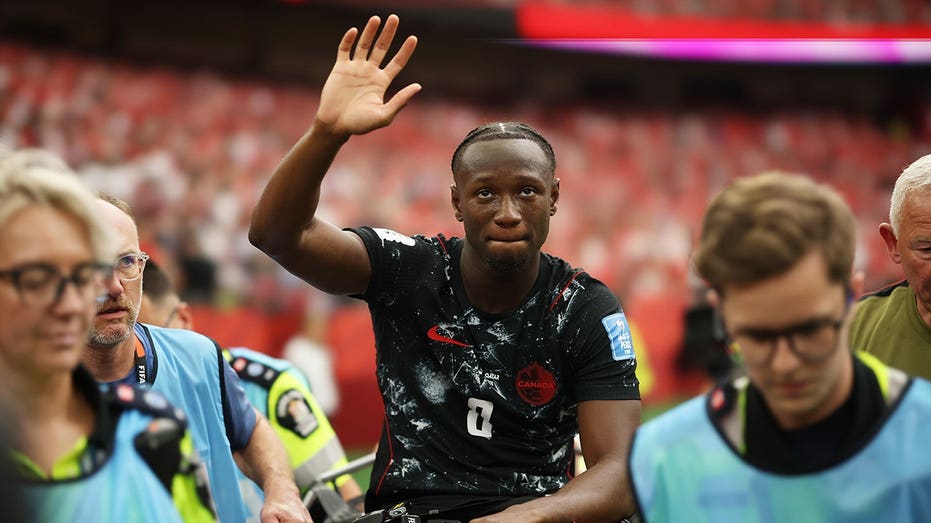
Canada Soccer Star Ismaël Koné Suffers Brutal Leg Injury at World Cup

Cristiano Ronaldo’s Sister Supports Bruno Fernandes’ Criticism After Portugal’s World Cup Draw

Canada's Ismaël Koné suffers horrific injury as Qatar's Assim Madibo gets red card for poor tackle