
Today in News History
On June 19, several notable moments in the history of News stand out. In 1341, Juliana Falconieri, Italian nun and saint (born 1270) passed away. In 1844, Étienne Geoffroy Saint-Hilaire, French zoologist and biologist (born 1772) passed away. In 1861, José Rizal, Filipino journalist, author, and poet (died 1896) was born. In 1861, Émile Haug, French geologist and paleontologist (died 1927) was born. In 1921, The village of Knockcroghery, Ireland, is burned by British forces. In 1947, Pan Am Flight 121 crashes in the Syrian Desert near Mayadin, Syria, killing 15 and injuring 21. In 1977, Ali Shariati, Iranian sociologist and philosopher (born 1933) passed away. In 2007, The al-Khilani Mosque bombing in Baghdad leaves 78 people dead and another 218 injured. In 2007, Ze'ev Schiff, Israeli journalist and author (born 1932) passed away. In 2012, WikiLeaks founder Julian Assange requests asylum in London's Ecuadorian Embassy for fear of extradition to the US after publication of previously classified documents including footage of civilian killings by the US army. Together, these milestones provide historical context for today's news news and ongoing narratives.
Lebanese villagers return to find homes in ruins
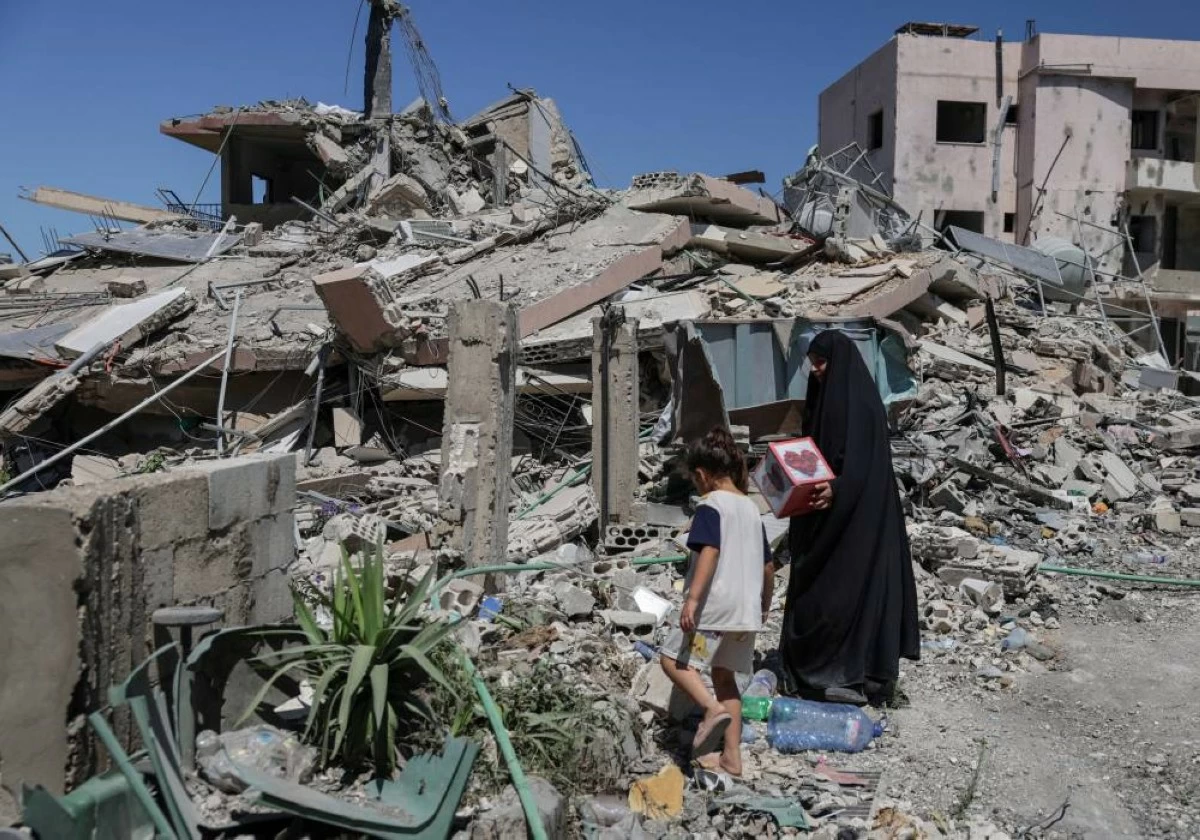
Abed Hachem rebuilt his home when it was damaged in a conflict between Israel and Lebanon's Hezbollah militants in 2024, but is at a loss now that most of his village has been destroyed in Israel's latest round of strikes.Where his house once stood in Qlaileh is now rubble; where his garden bloomed, dust, with more dust covering the toys and furniture strewn around the remains of his living room.Oh dear... Oh God. There was a building here... here... there was a building here, the 46-year-old father of three said as he pointed to the husks of buildings that once housed his neighbors.The spire of the local mosque is one of few structures still standing.The latest round of fighting between Hezbollah and Israel erupted on March 2, when Hezbollah fired at Israel in support of its ally Iran, drawing Lebanon into the regional war. Israel responded with air strikes and a ground invasion that occupied parts of southern Lebanon.More than 3,900 people have been killed, and 1.2 million people have been displaced, with Israel's forced evacuation orders emptying entire villages in southern Lebanon.Israel says its campaign was aimed at Hezbollah's forces and military infrastructure.Now, as people like Hachem return to their homes and try to stitch their lives back together, they are reckoning with the heartbreak of seeing their communities wiped out.The whole village is destroyed. My house is destroyed. The village is destroyed. Where are we supposed to go now? he said. There is nothing left. A lifetime's work is all gone.His neighbor, a man Hachem saw as a brother, and with whom he shared a cup of tea every morning, has been killed, along with his son.They have nothing to do with political parties, nothing to do with weapons, nothing to do with wars, he added, his frustration mounting. The man was just trying to support his family, and he and his son died for nothing.The interim deal announced between the United States and Iran brought a lull to the fighting in Lebanon earlier this week, allowing displaced people like Hachem to return home. Fighting flared again before a new ceasefire came into effect on Friday afternoon.Hachem just wishes peace had come sooner.This agreement they reached, they should have made it from the very beginning, he said. Not after people were destroyed.
Narrative Intelligence Brief
This article was published by Emirates 24/7, a source frequently categorized with a lean right bias based in United Arab Emirates. Our narrative intelligence engine continuously monitors coverage from this outlet to track framing, bias, and rhetorical patterns. Our initial algorithmic scan of this specific piece did not flag high-confidence rhetorical techniques, suggesting a generally straightforward reporting style or neutral framing. By understanding the editorial perspective of Emirates 24/7, readers can better contextualize the information presented and compare it across our broader media matrix to find the real narrative.
More from Emirates 24/7
June 19, 2026
'Dubai taught me to think bigger': Why this Dubai resident is embracing the 'Dubai-it' mindset
June 19, 2026
Dubai Residency controls illegal practices for exploiting visa procedures on social media platforms
June 19, 2026
Israel, Hezbollah agree to ceasefire starting Friday: U.S. official
June 19, 2026
Five largest Indian IPOs to date as Jio Platforms eyes record IPO
June 19, 2026
UAE directive to convert 50% of government operations to Agentic AI in two years: Al Gergawi
Analysis Methodology
This narrative analysis was generated using the CoDataLab Global Intelligence Engine. Our proprietary AI scans thousands of cross-border sources to identify sentiment patterns, framing techniques, and potential media bias. While AI provides the data-driven foundation, our objective is to empower readers with additional context beyond the standard headline.The content displayed above is a structured summary designed for rapid information processing. For the full original report, please visit the source outlet.More Coverage
Discussion


