Today in News History
On June 25, several notable moments in the history of News stand out. In 1715, Joseph Foullon de Doué, French soldier and politician, Controller-General of Finances (died 1789) was born. In 1848, A photograph of the June Days uprising becomes the first known instance of photojournalism. In 1863, Émile Francqui, Belgian soldier and diplomat (died 1935) was born. In 1940, World War II: The French armistice with Nazi Germany comes into effect. In 1943, The Holocaust and World War II: Jews in the Częstochowa Ghetto in Poland stage an uprising against the Nazis. In 1965, Napole Polutele, French politician was born. In 2002, Jean Corbeil, Canadian politician, 29th Canadian Minister of Labour (born 1934) passed away. In 2014, Nigel Calder, English journalist, author, and screenwriter (born 1931) passed away. In 2023, Simon Crean, Australian trade union leader and politician (born 1949) passed away. In 2024, Thousands of people storm Kenya's Parliament Buildings protesting the passing of the government's 2024/25 Finance Bill. Together, these milestones provide historical context for today's news news and ongoing narratives.
Labour has chaos, confusion, dither and a constitutional mini crisis all brewing up at once, says Jacob Rees-Mogg
Narrative Analysis: Name Calling
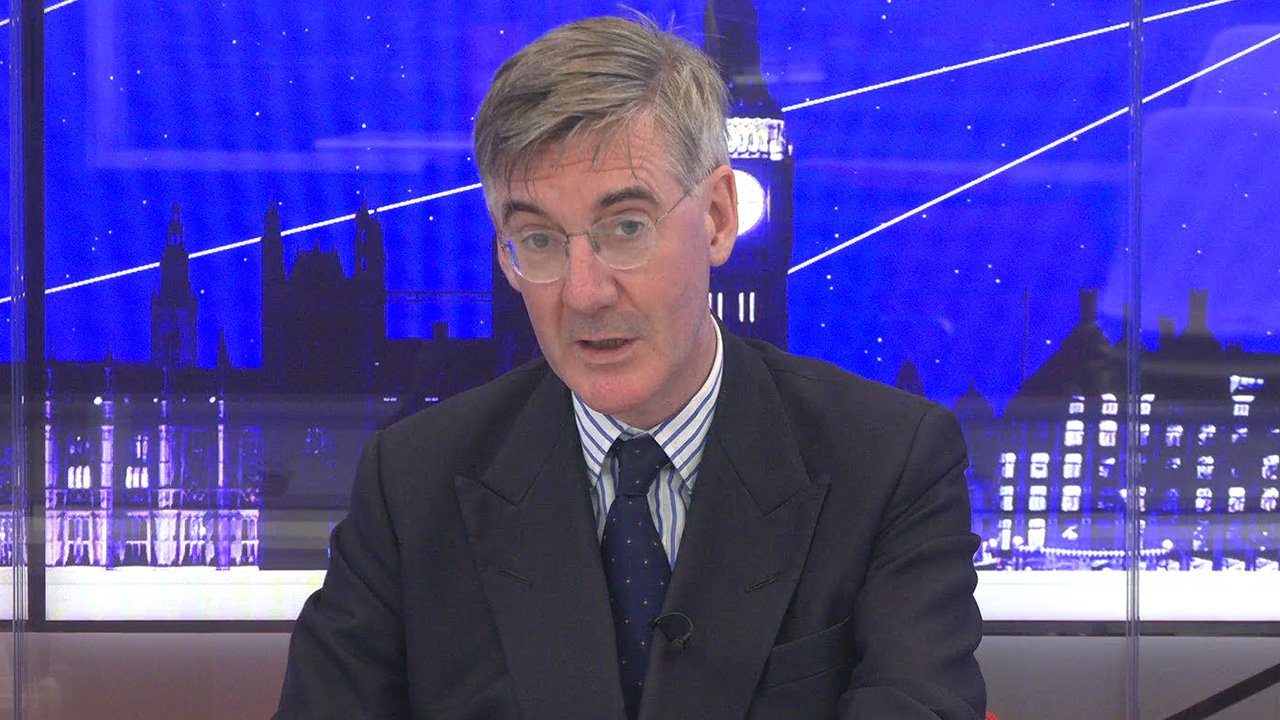
Well, they say treason doth never prosper for when it doth none dare call it treason. And this all seemed to be going swimmingly for the Labour Party.They assassinated a prime minister, they had a new prime minister in waiting, and they could try and pretend that it was a nest of singing birds, that everyone was happy with, as they all ran round Mr. Burnham, sucked up to him, said how much they were supporting him, how marvellous they'd always thought he was, until you get down to policy. And Mike Tapp, a minister in the Home Office, has come up with an immigration policy that is not the Government. TRENDING Stories Videos Your Say Now, collective responsibility is the fundamental constitutional basis of Cabinet Government. They have to agree one policy.Every minister speaks for the Government. The Government speaks with one voice that has been fundamental to our Constitution since at least the 1830s.Mike Tapp thinks otherwise, but Shabana Mahmood isn't best pleased and Shabana Mahmood wants him sacked and says he's broken the ministerial code.Now the ministerial code is the Prime Minister's code of conduct for ministers, it's not an official state document.It's not a constitutional document, it's just what the Prime Minister wants to happen, and he is the interpreter of it, the guardian of it, and he's saying he doesn't want fire Mr Tapp.So you're now beginning to see those real tensions come out, and they come down to policy.Shabana Mahmood wants a tough immigration policy.She wants to clamp down on people, she wants to change the terms and conditions of people being in this country.Mike Tapp has come up with a more left-wing solution. He doesn't want to be as tough minded. He's not as worried about it.This expresses the view of a lot of people in the Labour Party who, frankly, want open borders.And the Prime Minister, well, he's never been able to do anything, even when he had authority, and now he's sitting in Downing Street dithering a little bit longer.But what does Mr. Burnham think? And that unfortunately isn't very clear, because he's hinted possibly everything to everybody over the course of his political career.Though a few months ago he did back Angela Rayner when she said that Shabana Mahmood's reforms weren't British.So chaos, confusion, dither and a constitutional mini crisis all brewing up at once. Politics remains interesting as ever. Our Standards: The GB News Editorial Charter
Narrative Intelligence Brief
This article was published by GB News, a source frequently categorized with a lean right bias based in United States of America. Our narrative intelligence engine continuously monitors coverage from this outlet to track framing, bias, and rhetorical patterns. In this specific piece, our systems detected the potential use of the "Name Calling" technique. This narrative approach is often used to shape reader perception by highlighting specific emotional or rhetorical angles. By understanding the editorial perspective of GB News, readers can better contextualize the information presented and compare it across our broader media matrix to find the real narrative.
More from GB News
June 25, 2026
Bernadette Spofforth speaks out on GB News after being held for 36 hours in police custody for a social media post: 'I was treated like a terrorist'
June 25, 2026
Labour seeking to house THOUSANDS of asylum seekers in three new ex-military sites - is your area one of them?
June 25, 2026
Kemi Badenoch should never apologise to the left's pearl-clutching hypocrites, says Patrick Christys
June 25, 2026
New country cleared to compete in Eurovision next year – and it's not in Europe!
June 25, 2026
Teenage boys 'stuck' reading primary school books while girls move on much faster, new review finds
Reliability Insights
P
Technique: Name Calling
System analysis detected use of specific narrative techniques in this piece.Analysis Methodology
This narrative analysis was generated using the CoDataLab Global Intelligence Engine. Our proprietary AI scans thousands of cross-border sources to identify sentiment patterns, framing techniques, and potential media bias. While AI provides the data-driven foundation, our objective is to empower readers with additional context beyond the standard headline.The content displayed above is a structured summary designed for rapid information processing. For the full original report, please visit the source outlet.More Coverage
Discussion
"trump"
Deadly Cost of Trump’s ICE Crackdown Revealed

Anti-ICE Protestors in Texas Given Harsh, Excessive Prison Sentences

Commies taking over NYC is not shocking when you see how pathetic voter turnout was