Today in News History
On June 17, several notable moments in the history of News stand out. In 1596, The Dutch explorer Willem Barentsz discovers the Arctic archipelago of Spitsbergen. In 1900, Martin Bormann, German politician (died 1945) was born. In 1939, Last public guillotining in France: Eugen Weidmann, a convicted murderer, is executed in Versailles outside the Saint-Pierre prison. In 1940, World War II: The British Army's 11th Hussars assault and take Fort Capuzzo in Libya, Africa from Italian forces. In 1940, World War II: RMS Lancastria is attacked and sunk by the Luftwaffe near Saint-Nazaire, France. At least 3,000 are killed in Britain's worst maritime disaster. In 1944, Iceland declares independence from Denmark and becomes a republic. In 1958, The Ironworkers Memorial Second Narrows Crossing, in the process of being built to connect Vancouver and North Vancouver (Canada), collapses into the Burrard Inlet killing 18 ironworkers and injuring others. In 1991, Apartheid: The South African Parliament repeals the Population Registration Act which required racial classification of all South Africans at birth. In 1992, A "joint understanding" agreement on arms reduction is signed by U.S. President George Bush and Russian President Boris Yeltsin (this would be later codified in START II). In 2013, Michael Baigent, New Zealand-English theorist and author (born 1948) passed away. Together, these milestones provide historical context for today's news news and ongoing narratives.
Labour confirms Port Talbot steelworks will NOT be nationalised - 'No decision has been made and taken'
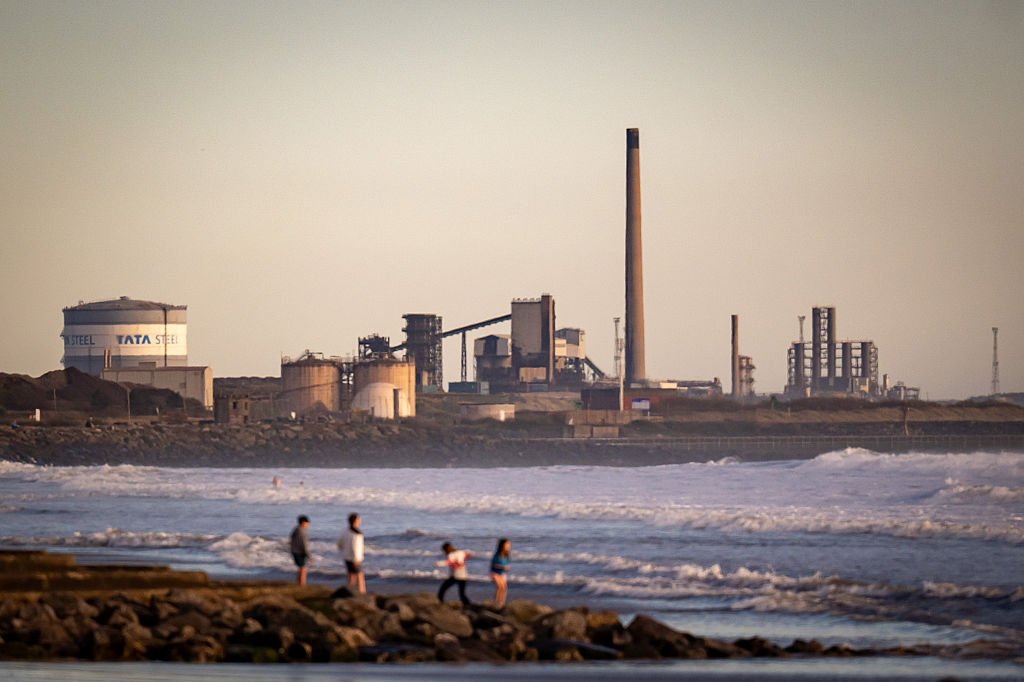
A Labour minister has confirmed the Port Talbot steelworks are not due to be nationalised. Lord Leong said while the Steel Industry (Nationalisation) Bill provides flexibility to intervene if a future need arises, ministers had set their sights on taking only British Steel assets into public ownership.The Bill, which would give ministers the power to nationalise steel businesses’ shares or property, has already cleared the Commons.Peers in the House of Lords backed it at second reading on Tuesday, but the proposal faces further scrutiny at a later date before it can become law. TRENDING Stories Videos Your Say British Steel’s Scunthorpe steelworks, in north Lincolnshire, has been operating under a Government direction since last year, to prevent its Chinese owner Jingye from closing blast furnaces.The company was eventually not nationalised.It is thought the Government previously tried to negotiate with British Steel’s owners on a commercial sale but failed to strike a deal.Lord Leong said: While we are strongly minded to use the powers in the Bill to nationalise the company, no decision has been made and taken, and any decision will be subject to a consideration of the public interest test.He later said: The Government has got no plans to acquire any other steel undertakings but this Bill provides flexibility to intervene if a future need arises and the public interest test is met.The Government remains fully committed to securing the long-term future of steelmaking in Port Talbot through Tata Steel’s £1.25billion transition to a state-of-the-art, electric arc furnace, supported by up to £500million of Government funding.Blast furnaces at Port Talbot, on the South Wales coast near Swansea, closed in 2024.New electric arc furnaces, which use an electric current to melt scrap steel or iron to produce steel, rather than coke, were due to open next year.LATEST DEVELOPMENTSBritish steel industry on brink of renaissance after years of declineMultiple steel firms crash into administration with 93 job losses in huge blow to British manufacturing'It will destroy Scunthorpe!' British Steel worker furiously defends jobs amid plans to close furnacesHowever, Lord Leong said grid delays meant timelines are still evolving and not yet finalised.He continued: We remain fully committed to securing the long-term future of steelmaking in Port Talbot, and are working closely with all parties involved to identify mitigations and explore options to accelerate delivery.Former Plaid Cymru leader Lord Wigley had earlier said steelworks at both Port Talbot and Scunthorpe should be developed in a manner that avoids strategic, economic or defence needs being limited to one location”He added: There is widespread belief that the steel industry at Port Talbot has not been treated on an equal basis with that at Scunthorpe. Lord Wigley, who led Plaid Cymru from 1981 to 1984 and again from 1991 to 2000, continued: Now, we don’t claim that Port Talbot should have preferential treatment but neither should Scunthorpe.Conservative shadow business minister Lord Sharpe of Epsom warned the steel sector has been operating on a tight margin for years and nationalisation does not make any of those problems disappear.He also said: The Government says that the public interest will include considerations of national security, the economy and critical infrastructure.But could ministers be any more vague when they refer to the economic interests of the United Kingdom? Our Standards: The GB News Editorial Charter
Narrative Intelligence Brief
This article was published by GB News, a source frequently categorized with a lean right bias based in United States of America. Our narrative intelligence engine continuously monitors coverage from this outlet to track framing, bias, and rhetorical patterns. Our initial algorithmic scan of this specific piece did not flag high-confidence rhetorical techniques, suggesting a generally straightforward reporting style or neutral framing. By understanding the editorial perspective of GB News, readers can better contextualize the information presented and compare it across our broader media matrix to find the real narrative.
More from GB News
June 17, 2026
Lord Hermer to outline how to rejoin EU in speech raging at Brexit and Nigel Farage
June 16, 2026
Reform to launch seven new by-election bids on same day Nigel Farage challenges Andy Burnham in Makerfield
June 16, 2026
JD Vance admits ‘I feel awful’ as he opens up on meeting Pope just hours before his death
June 16, 2026
King Charles and Queen Camilla suffer major disappointment during first day of Royal Ascot
June 16, 2026
Joe Root dismisses call for alcohol ban on England team insisting 'there is not a drinking culture'
Analysis Methodology
This narrative analysis was generated using the CoDataLab Global Intelligence Engine. Our proprietary AI scans thousands of cross-border sources to identify sentiment patterns, framing techniques, and potential media bias. While AI provides the data-driven foundation, our objective is to empower readers with additional context beyond the standard headline.The content displayed above is a structured summary designed for rapid information processing. For the full original report, please visit the source outlet.More Coverage
Discussion
"cup"
Football Daily | ‘Pico’ Lopes and Cape Verde give Spain’s boys one hell of a neutralising

Son Heung-min Boycotts South Korea Media Over ‘Leaked Derogatory Remarks’

The backlash against AI reveals it’s a terrible scapegoat