
Today in News History
On June 23, several notable moments in the history of News stand out. In 1879, Huda Sha'arawi, Egyptian feminist and journalist (died 1947) was born. In 1945, Giuseppina Tuissi, Italian journalist and activist (born 1923) passed away. In 1954, Salih Omurtak, Turkish general (born 1889) passed away. In 1959, Boris Vian, French author, poet, and playwright (born 1920) passed away. In 1972, Watergate scandal: U.S. President Richard M. Nixon and White House Chief of Staff H. R. Haldeman are taped talking about illegally using the Central Intelligence Agency to obstruct the Federal Bureau of Investigation's investigation into the Watergate break-ins. In 1985, A terrorist bomb explodes at Narita International Airport near Tokyo, killing two and injuring four. An hour later, the same group detonates a second bomb aboard Air India Flight 182, bringing the Boeing 747 down off the coast of Ireland killing all 329 aboard. In 2009, Ed McMahon, American game show host and announcer (born 1923) passed away. In 2012, James Durbin, English economist and statistician (born 1923) passed away. In 2014, The last of Syria's declared chemical weapons are shipped out for destruction. In 2017, A series of terrorist attacks take place in Pakistan, resulting in 96 deaths and wounding 200 others. Together, these milestones provide historical context for today's news news and ongoing narratives.
'It blows my mind': MS NOW host dumbfounded by details of Trump's new oil deal with Iran
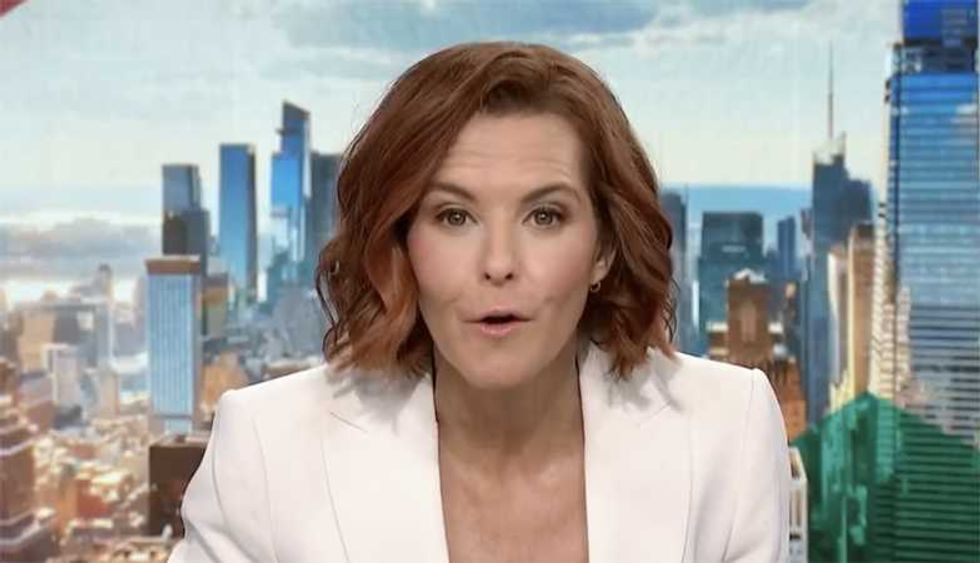
Reacting to reports that Donald Trump has given the okay from Iran to start selling oil to the United States, handing the extremist leadership an immediate source of billions of dollars, MS NOW host Stephanie Ruhle admitted she was dumbfounded.On her “Money Power Politics morning show, Ruhle, a former Wall Street executive, reported, “We learned the administration will allow Iran to sell their oil for US dollars. Why is this a big deal? It is a decision that upends decades of US policy that was meant to make it harder for them to develop their nuclear program.”“Well, now it's on,” she pronounced. “It can export oil to the open market and this time be paid in dollars. According to [Wall Street analyst] Steve Ratner, that could bring in as much as 10 billion bucks for Iran in the next 60 days and, granted it is only 60 days. But do we really believe that these negotiations are going to be done by then, or are they going to be extended? I sure think they are. So the administration is giving Iran one of the things that it has desperately wanted for years and years before Iran has delivered on the number one goal the United States had going into the war: ending its nuclear weapons program.”Introducing her guests, analysts Ron Insana and RiskReversal Advisors executive Dan Nathan, she prompted them with, “I want to talk about who benefits from this move? First, what are like — it blows my mind that we would offer such a concession.”“Well, yeah, and Stephanie, if there's also an unfreezing of assets, the total somewhere in the neighborhood 12 to 24 billion in round benefits distinctly by this,” Insana replied. And there are some military analysts and others who are concerned that Iran will use this to reconstitute its military force, build more missiles, build more drones and maybe even maintain a certain portion of its nuclear program going forward.”“So they're the direct beneficiary of this, he continued before adding, “We are not in any way, shape or form.” - YouTube youtu.be
Narrative Intelligence Brief
This article was published by Raw Story, a source frequently categorized with a left bias based in United States of America. Our narrative intelligence engine continuously monitors coverage from this outlet to track framing, bias, and rhetorical patterns. Our initial algorithmic scan of this specific piece did not flag high-confidence rhetorical techniques, suggesting a generally straightforward reporting style or neutral framing. By understanding the editorial perspective of Raw Story, readers can better contextualize the information presented and compare it across our broader media matrix to find the real narrative.
More from Raw Story
June 23, 2026
Brown Jackson hammers Clarence Thomas' majority opinion giving Trump admin a 'blank check'
June 23, 2026
Hip hop legend hits back at 'creepy racist weirdo' who challenged him to boxing match
June 23, 2026
Elon Musk defends his role at DOGE as death reports tied to USAID cuts increase
June 23, 2026
Reporter catalogs Trump's cascading pet project failures: 'Consumed by botched renovation'
June 23, 2026
GOP group panics after mailers go out with white supremacist messaging
Analysis Methodology
This narrative analysis was generated using the CoDataLab Global Intelligence Engine. Our proprietary AI scans thousands of cross-border sources to identify sentiment patterns, framing techniques, and potential media bias. While AI provides the data-driven foundation, our objective is to empower readers with additional context beyond the standard headline.The content displayed above is a structured summary designed for rapid information processing. For the full original report, please visit the source outlet.More Coverage
Discussion
"cup"
DHS’ bizarre post about the U.S. men’s World Cup advancement got it all wrong

Jeremy Doku’s Belgium World Cup return date confirmed as presenter apologises for "completely useless" comment
/https%3A%2F%2Fsportsmole-media-prod.s3.gra.io.cloud.ovh.net%2Fuploads%2F2026%2F06%2Faaa-jd-6a3a27296adb3055463402.jpg)
“Amazon, War Criminal”
