Today in News History
On June 17, several notable moments in the history of News stand out. In 1876, Edward Anthony Spitzka, American anatomist and author (died 1922) was born. In 1919, William Kaye Estes, American psychologist and academic (died 2011) was born. In 1943, Chantal Mouffe, Belgian theorist and author was born. In 1947, Linda Chavez, American journalist and author was born. In 1951, Starhawk, American author and activist was born. In 1959, Carol Anderson, American author and historian was born. In 1978, Isabelle Delobel, French ice dancer was born. In 1979, Tyson Apostol, American television personality was born. In 1988, Stephanie Rice, Australian swimmer was born. In 2013, Michael Baigent, New Zealand-English theorist and author (born 1948) passed away. Together, these milestones provide historical context for today's news news and ongoing narratives.
Is it true that … you have five seconds’ grace after dropping food on the floor?

Many of us have reassured ourselves with the ‘five second rule’, but bacteria can transfer almost immediately – and sticks around for hoursYou drop a piece of cucumber on the floor. Do you immediately throw it in the bin or reassure yourself of the age-old “five-second rule” and reckon it’s fine to pop it in your mouth after a quick rinse?If you fall into the latter camp, John Tregoning, professor of vaccine immunology at Imperial College London, has some bad news. He refers to three studies into bacteria transfer that all point towards the rule being false. Continue reading...
Narrative Intelligence Brief
This article was published by Health & wellbeing | The Guardian, a source frequently categorized with a left bias based in United Kingdom. Our narrative intelligence engine continuously monitors coverage from this outlet to track framing, bias, and rhetorical patterns. Our initial algorithmic scan of this specific piece did not flag high-confidence rhetorical techniques, suggesting a generally straightforward reporting style or neutral framing. By understanding the editorial perspective of Health & wellbeing | The Guardian, readers can better contextualize the information presented and compare it across our broader media matrix to find the real narrative.
More from Health & wellbeing | The Guardian
June 17, 2026
World Cup 2026: England kick off in Dallas after big-hitting trio make mark – live
June 17, 2026
Which player has scored the highest percentage of their team’s goals at a World Cup? | The Knowledge
June 17, 2026
Students could be required to pass GCSE English to access university loans
June 17, 2026
Grade requirement for student loans would cut a financial lifeline for English universities
June 17, 2026
Austria 3-1 Jordan: World Cup 2026 – as it happened
Analysis Methodology
This narrative analysis was generated using the CoDataLab Global Intelligence Engine. Our proprietary AI scans thousands of cross-border sources to identify sentiment patterns, framing techniques, and potential media bias. While AI provides the data-driven foundation, our objective is to empower readers with additional context beyond the standard headline.The content displayed above is a structured summary designed for rapid information processing. For the full original report, please visit the source outlet.More Coverage
Discussion
"cup"
Football Daily | ‘Pico’ Lopes and Cape Verde give Spain’s boys one hell of a neutralising

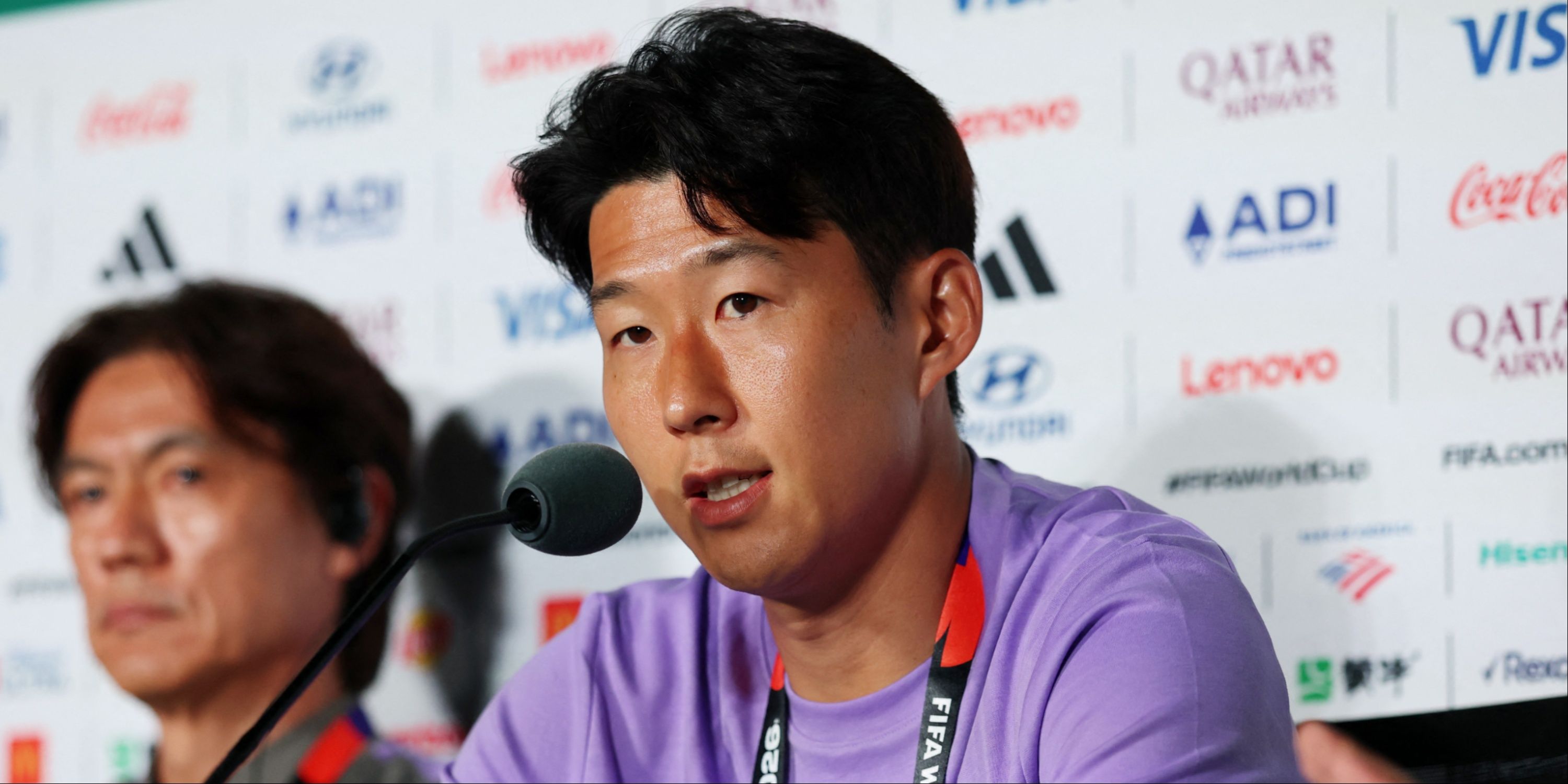
Son Heung-min Boycotts South Korea Media Over ‘Leaked Derogatory Remarks’
The backlash against AI reveals it’s a terrible scapegoat