
Today in News History
On July 12, several notable moments in the history of News stand out. In 927, King Constantine II of Scotland, King Hywel Dda of Deheubarth, Ealdred of Bamburgh and King Owain of the Cumbrians accepted the overlordship of King Æthelstan of England, leading to seven years of peace in the north. In 1191, Third Crusade: Saladin's garrison surrenders to Philip Augustus, ending the two-year siege of Acre. In 1493, Hartmann Schedel's Nuremberg Chronicle, one of the best-documented early printed books, is published. In 1623, William Bourchier, 3rd Earl of Bath (born 1557) passed away. In 1776, Captain James Cook begins his third voyage. In 1821, D. H. Hill, American general and academic (died 1889) was born. In 1909, Herbert Zim, American naturalist, author, and educator (died 1994) was born. In 1935, Satoshi Ōmura, Japanese biochemist and academic, Nobel Prize laureate was born. In 1948, Richard Simmons, American fitness trainer and actor (died 2024) was born. In 2014, Alfred de Grazia, American political scientist and author (born 1919) passed away. Together, these milestones provide historical context for today's news news and ongoing narratives.
Is it true that … we should eat every two to three hours to boost our metabolism?
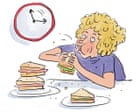
Yes, digesting food requires energy, but you need to do more than snack for a meaningful impactIt helps to understand what people mean when they talk about “metabolism”, says James Betts, professor of metabolic physiology at the University of Bath. Usually, they’re referring to metabolic rate; the amount of energy your body burns in a given time. This is largely determined by factors such as your size, age, sex and body composition.Your daily energy expenditure comes from three main sources: your resting metabolism (the energy needed to keep your organs and tissues functioning), the calories burned processing food, and physical activity. Of those, exercise and movement are by far the most variable. Continue reading...
Narrative Intelligence Brief
This article was published by Health & wellbeing | The Guardian, a source frequently categorized with a left bias based in United Kingdom. Our narrative intelligence engine continuously monitors coverage from this outlet to track framing, bias, and rhetorical patterns. Our initial algorithmic scan of this specific piece did not flag high-confidence rhetorical techniques, suggesting a generally straightforward reporting style or neutral framing. By understanding the editorial perspective of Health & wellbeing | The Guardian, readers can better contextualize the information presented and compare it across our broader media matrix to find the real narrative.
More from Health & wellbeing | The Guardian
July 12, 2026
Jude Bellingham unimpressed after Tuchel criticises ‘lucky’ England’s performance
July 12, 2026
Argentina v Switzerland: World Cup 2026 quarter-final – live
July 12, 2026
Norway 1-2 England (aet): World Cup 2026 quarter-final – live reaction
July 12, 2026
Norway 1-2 England: World Cup quarter-final player ratings from Miami
July 11, 2026
Bellingham’s extra-time winner sinks Norway and sends England into World Cup semi-finals
Analysis Methodology
This narrative analysis was generated using the CoDataLab Global Intelligence Engine. Our proprietary AI scans thousands of cross-border sources to identify sentiment patterns, framing techniques, and potential media bias. While AI provides the data-driven foundation, our objective is to empower readers with additional context beyond the standard headline.The content displayed above is a structured summary designed for rapid information processing. For the full original report, please visit the source outlet.More Coverage
Discussion
"cup semifinals"
Jude Bellingham's star shines as risk-averse England advance to World Cup semifinals over tepid Norway

Bellingham carries England past Norway and into World Cup semifinals

England defeat Norway 2-1 as Jude Bellingham shines in World Cup quarterfinal

How other outlets are covering this story
Compare narratives across 3 related reports from 3 sources. Real Narrative News aggregates the coverage spectrum so you can see who emphasises what — bias tags reflect the outlet, not the story.
Coverage bias distribution
3 sources
Left 0%
Center 67%
Right 33%
NaturalNews.com
· Jun 21, 2026
Late Eating Linked to Poorer Blood Sugar Control, Research Review Finds
(NaturalNews) A growing body of evidence suggests that the timing of meals plays a significant role in metabolic health, with late eating consistently associated wi...
mindbodygreen
· Jul 11, 2026
Do This Stretching Routine Before Bed To Enhance Digestion As You Sleep
The post-dinner content we all need.
Business Today
· Jul 2, 2026
Digestive Boost: Small Habits, Big Impact — Gut Reset Guide Merges Fermented Foods with Safer Cooking
Boost gut health with a week of fermented foods, beta-glucans, and safer cookware habits. Simple, high-impact lifestyle tweaks enhance digestion, immunity, and metabolic wellness.
Topics:
Related coverage for "Is it true that … we should eat every two to three hours to boost our metabolism?": NaturalNews.com — Late Eating Linked to Poorer Blood Sugar Control, Research Review Finds. mindbodygreen — Do This Stretching Routine Before Bed To Enhance Digestion As You Sleep. Business Today — Digestive Boost: Small Habits, Big Impact — Gut Reset Guide Merges Fermented Foods with Safer Cooking