Iranians say addressing Trump’s 'mental illness' head on helped secure deal: journalist
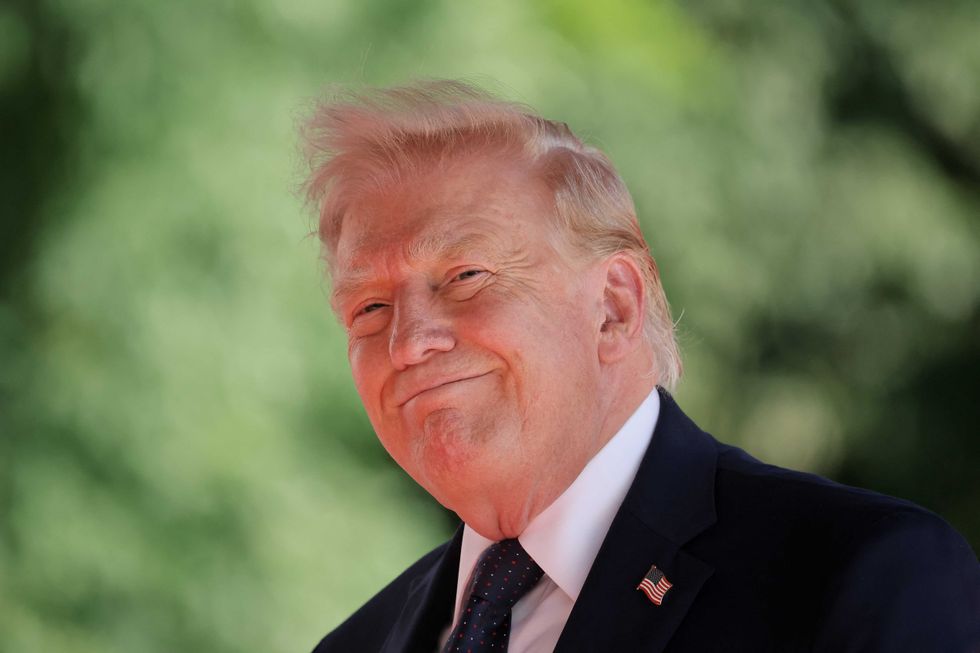
The United States and Iran reached a tentative agreement Sunday to bring about an end to the war, which one Iranian official involved in the negotiations credited, in part, to Tehran’s unorthodox approach to addressing what they considered to be President Donald Trump’s “mental illness.”Investigative reporter Jeremy Scahill shared a startling revelation last week that Iranian negotiators had recruited psychologists to help navigate what they believed was Trump’s “impaired mental state.” And on Monday, Scahill provided an update on Iran’s unique approach to the negotiations, which he said Tehran partially credited for Sunday’s success.“Senior Iranian psychologists began working with the negotiating team to try to cater the messages that the Iranians were sending via mediators back to Donald Trump to try to take into account what they say as his specific mental illness and mental deficiencies,” Scahill said in an interview with Democracy Now published on Monday.“Almost quite clinically, they said [they] began to see this process yielding results as [they] worked with psychologists to send these communications to Donald Trump, and they credit that, in part, with getting to this point where Trump finally accepted some version of his manufactured and almost entirely false victory narrative.”Trump’s cognitive function has come under renewed scrutiny during his second term in office, with The Washington Post reporting last week that the president was assessed by 22 medical specialists during his most recent medical checkup, a figure “nearly double the number of specialists who assessed Trump for his past medical checkups as president.” The president has also been spotted appearing to doze off during important meetings.
Narrative Intelligence Brief
This article was published by Raw Story, a source frequently categorized with a left bias based in United States of America. Our narrative intelligence engine continuously monitors coverage from this outlet to track framing, bias, and rhetorical patterns. Our initial algorithmic scan of this specific piece did not flag high-confidence rhetorical techniques, suggesting a generally straightforward reporting style or neutral framing. By understanding the editorial perspective of Raw Story, readers can better contextualize the information presented and compare it across our broader media matrix to find the real narrative.
More from Raw Story
June 15, 2026
Internet reacts to $300B reconstruction fund in Iran deal
June 15, 2026
Fox News mocked as host heaps praise on Trump for walking: 'Graded on a curve?'
June 15, 2026
'Death warmed over': Trump's France appearance fuels new health concerns
June 15, 2026
Newsom drops bombshell that Trump DOJ is now investigating him and his wife
June 15, 2026
Trump taken to court over plans to redo park with 'barren' MLK Memorial