
Today in News History
On June 27, several notable moments in the history of News stand out. In 1723, After a siege and bombardment by cannon, Baku surrenders to the Russians. In 1821, Bartolomé Mitre, Argentinian soldier, journalist, and politician, 6th President of Argentina (died 1906) was born. In 1924, Kostas Axelos, Greek-French philosopher and author (died 2010) was born. In 1940, World War II: Under the Molotov-Ribbentrop Pact, the Soviet Union presents an ultimatum to Romania requiring it to cede Bessarabia and the northern part of Bukovina. In 1941, World War II: Soviet planes bomb Kassa, Hungary (now Košice, Slovakia), giving Hungary the impetus to declare war the next day. In 1944, World War II: San Marino, a neutral state, is mistakenly bombed by the RAF based on faulty information, leading to 35 civilian deaths. In 1944, World War II: The Battle of Osuchy in Osuchy, Poland, one of the largest battles between Nazi Germany and Polish resistance forces, ends with the defeat of the latter. In 1976, Dave Rubin, American political commentator was born. In 1991, Yugoslav Wars: The Yugoslav People's Army begins the Ten-Day War in Slovenia. In 2015, Five different terrorist attacks in France, Tunisia, Somalia, Kuwait, and Syria occurred on what was dubbed Bloody Friday by international media. Upwards of 750 people were either killed or injured in these uncoordinated attacks. Together, these milestones provide historical context for today's news news and ongoing narratives.
Iran war live: Rubio says zero support from GCC states for Iran Hormuz toll
How minesweeping in the Strait of Hormuz works: A visual guide Navigation through the Strait of Hormuz, a global energy chokepoint, has picked up days after Iran and US signed a framework agreement. But experts said it will take some time for shipping traffic to return to levels seen before the war began on February 28. []
Narrative Intelligence Brief
This article was published by Ya Libnan, a source frequently categorized with a center bias based in Lebanon. Our narrative intelligence engine continuously monitors coverage from this outlet to track framing, bias, and rhetorical patterns. Our initial algorithmic scan of this specific piece did not flag high-confidence rhetorical techniques, suggesting a generally straightforward reporting style or neutral framing. By understanding the editorial perspective of Ya Libnan, readers can better contextualize the information presented and compare it across our broader media matrix to find the real narrative.
More from Ya Libnan
June 26, 2026
Vance, Rubio split on Iran war, Israel in Lebanon
June 26, 2026
Venezuela Live Updates: More Rescuers Join Urgent Search for Quake Survivors as the death rises to 235
June 25, 2026
Iran war transforms Arab Gulf region
June 25, 2026
Trump pledges rapid U.S. response for Venezuela after historic earthquakes
June 25, 2026
Live update- US is mobilizing assistance for Venezuela after eLive-earthquakes
Analysis Methodology
This narrative analysis was generated using the CoDataLab Global Intelligence Engine. Our proprietary AI scans thousands of cross-border sources to identify sentiment patterns, framing techniques, and potential media bias. While AI provides the data-driven foundation, our objective is to empower readers with additional context beyond the standard headline.The content displayed above is a structured summary designed for rapid information processing. For the full original report, please visit the source outlet.More Coverage
Discussion
"venezuela"
Venezuela earthquakes: 589 confirmed dead so far as international rescue teams arrive – as it happened
Forty seconds of chaos that wrecked Venezuela’s comeback
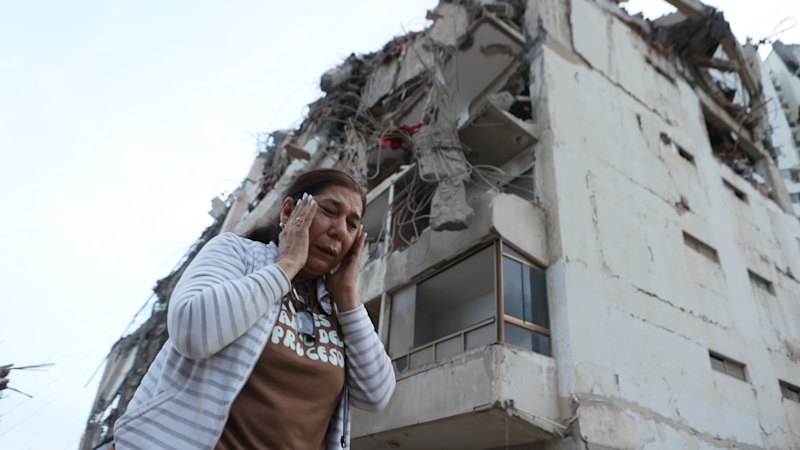
Desperate Search For Quake Survivors in Venezuela’s La Guaira
