
Today in News History
On June 20, several notable moments in the history of News stand out. In 1926, Rehavam Ze'evi, Israeli general and politician, 9th Israeli Minister of Tourism (died 2001) was born. In 1944, World War II: The Battle of the Philippine Sea concludes with a decisive U.S. naval victory. The lopsided naval air battle is also known as the "Great Marianas Turkey Shoot". In 1948, The Deutsche Mark is introduced in Western Allied-occupied Germany. The Soviet Military Administration in Germany responded by imposing the Berlin Blockade four days later. In 1956, A Venezuelan Super-Constellation crashes in the Atlantic Ocean off Asbury Park, New Jersey, killing 74 people. In 1959, A rare June hurricane strikes Canada's Gulf of St. Lawrence killing 35. In 1982, The International Conference on the Holocaust and Genocide opens in Tel Aviv, despite attempts by the Turkish government to cancel it, as it included presentations on the Armenian genocide. In 1982, The Argentine Corbeta Uruguay base on Southern Thule surrenders to Royal Marine commandos in the final action of the Falklands War. In 1990, The 7.4 Mw Manjil-Rudbar earthquake affects northern Iran with a maximum Mercalli intensity of X (Extreme), killing 35,000-50,000, and injuring 60,000-105,000. In 1994, The 1994 Imam Reza shrine bomb explosion in Iran leaves at least 25 dead and 70 to 300 injured. In 2019, Iran's Air Defense Forces shoot down an American surveillance drone over the Strait of Hormuz amid rising tensions between the two countries. Together, these milestones provide historical context for today's news news and ongoing narratives.
Iran says Strait of Hormuz closed again after Israel strikes Lebanon
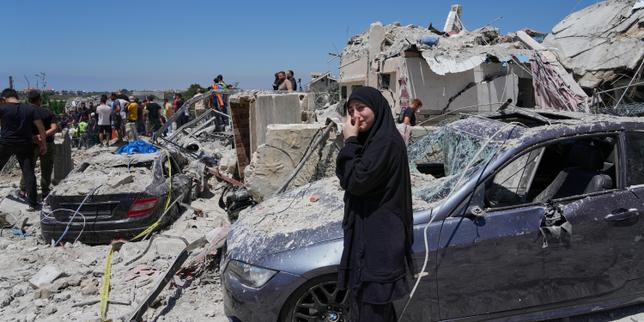
The ongoing hostilities strained the deal signed by US President Donald Trump and his Iranian counterpart Masoud Pezeshkian this week to halt the wider regional war on all fronts, including Lebanon – a key demand of Tehran's.
Narrative Intelligence Brief
This article was published by Le Monde, a source frequently categorized with a lean left bias based in France. Our narrative intelligence engine continuously monitors coverage from this outlet to track framing, bias, and rhetorical patterns. Our initial algorithmic scan of this specific piece did not flag high-confidence rhetorical techniques, suggesting a generally straightforward reporting style or neutral framing. By understanding the editorial perspective of Le Monde, readers can better contextualize the information presented and compare it across our broader media matrix to find the real narrative.
More from Le Monde
June 20, 2026
Bétharram Catholic school abuse scandal: Independent commission recommends financial compensation for victims
June 20, 2026
David Hockney's funeral already held privately, says his publicist
June 20, 2026
France issues red heatwave alert on Sunday for third of country, bans public alcohol consumption at music festival
June 20, 2026
Trump escalates spat with Italy's Meloni over G7 photo claim
June 20, 2026
French presidential candidates capitalize on social media, bypassing journalists
Analysis Methodology
This narrative analysis was generated using the CoDataLab Global Intelligence Engine. Our proprietary AI scans thousands of cross-border sources to identify sentiment patterns, framing techniques, and potential media bias. While AI provides the data-driven foundation, our objective is to empower readers with additional context beyond the standard headline.The content displayed above is a structured summary designed for rapid information processing. For the full original report, please visit the source outlet.More Coverage
Discussion
"trump"
Trump and Netanyahu have overplayed their hand – and lost

Iran closes Strait of Hormuz after Israel and Hizbollah exchange fire

Furious Trump hits back at Italian Prime Minister Meloni and gives her unusual 'nickname' as their photo feud ramps up
